
Most sculptors spend a lifetime trying to see their work more clearly.
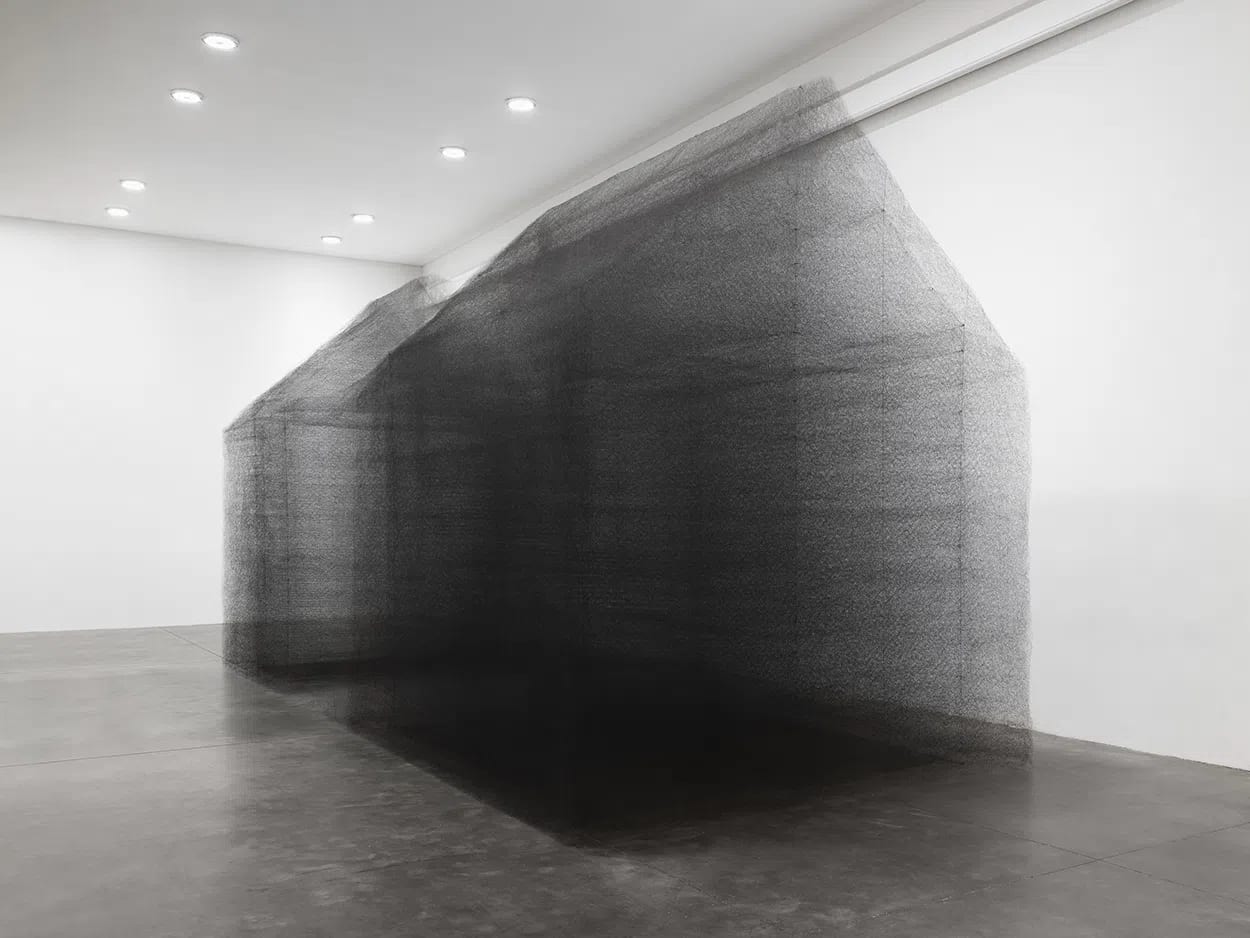
Doris Salcedo has spent decades learning to make work she cannot see at all. The Colombian artist, now 67, premieres House at White Cube New York on November 13, a nearly 30-foot structure woven entirely from human hair.
Salcedo was diagnosed with Stargardt disease at 31. It is a rare genetic condition that has left her legally blind, with only peripheral sight remaining. There is no reversing it. For an artist whose entire practice depends on physical materials, the diagnosis reshaped everything about how she works, not just what she makes.
Before her vision changed, Salcedo built alone. She has described treasuring the privacy of improvising and working directly with materials, back when solitude was still possible in her studio. As Stargardt's progressed, that isolation became unsustainable. She gave up solitude gradually and began working with assistants, a shift she did not take lightly.
Losing central vision meant losing a way of thinking, too. Salcedo has said the adjustment was difficult, especially surrendering her privacy, and she had to think differently, since before she improvised without ever drawing beforehand. That change in method, oddly, is what made a work the size of House possible at all.

House measures 4.2 by 3.5 by 8.24 meters, built entirely from hair. It took three years and dozens of assistants, tying knots strand by strand. Salcedo has estimated that working alone, the piece would have taken two decades, a timeline she says she simply could not afford at her age.
The collaborative studio that vision loss forced into existence turned out to be the only way to build something this large. It is a strange trade: less sight for more scale. In November, at White Cube Gallery in New York, Salcedo will premiere a sculpture that is the culmination of decades of this collaborative way of working, huge in a way that could never be accomplished by one person, a full-sized house woven entirely from human hair.
Sourcing that much hair required a different approach than her earlier work. For Unland, the 1995 to 1998 series where she first threaded hair into furniture, Salcedo gathered material from a neighborhood salon. House demanded something else entirely. Given the scale, she decided to source hair online, learning to look carefully for certain certificates, since there is a lot of violent crime in the human hair trade.
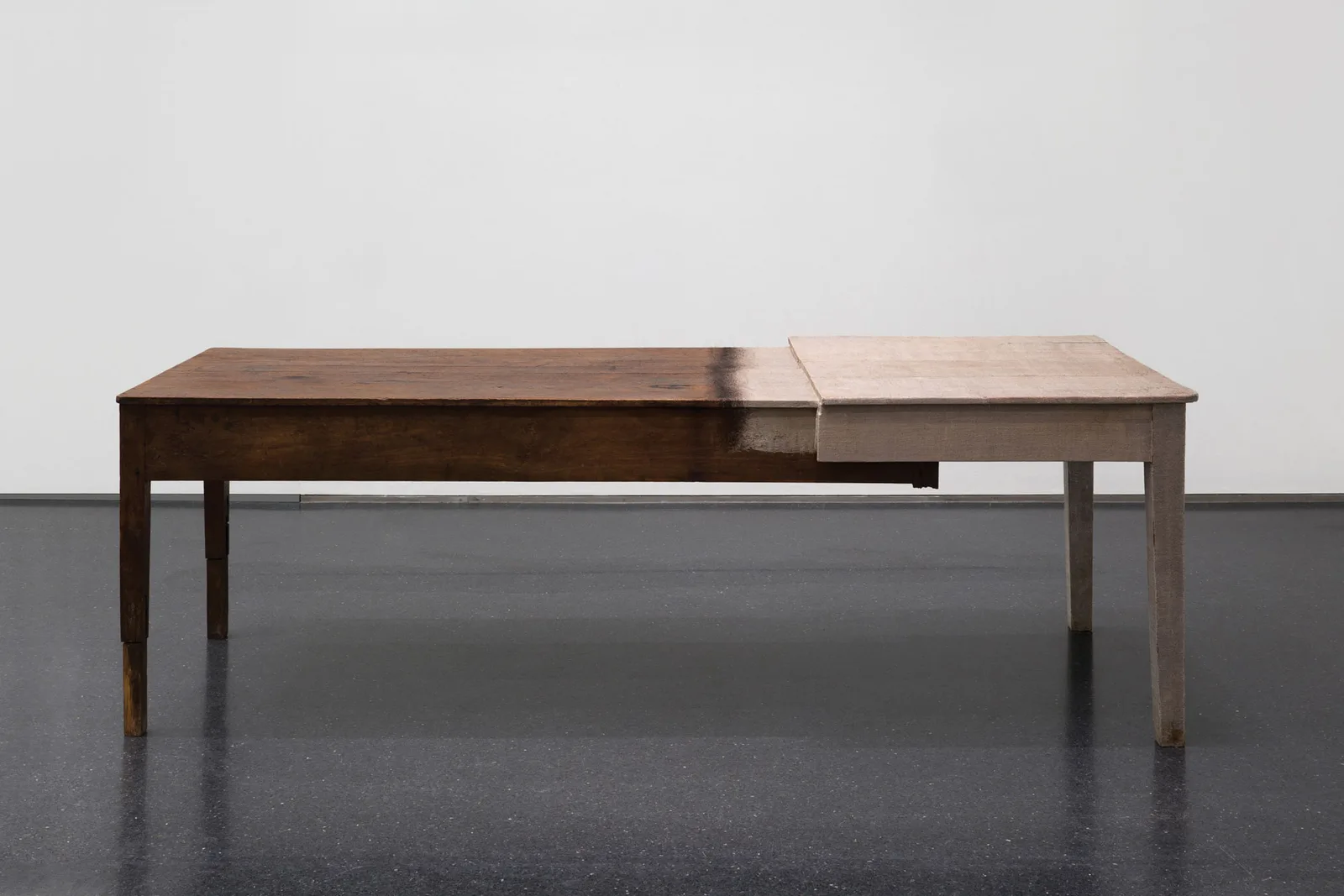
Engineering hair into something load-bearing is its own problem. Salcedo found her model in nature. The structural logic, she has said, is inspired by the ways spiders make webs of silk, material they take from their own bodies, making something ephemeral structural and sturdy. Pairing hair and home lets her draw a line between bodies and buildings, evoking the ways dignity and domesticity are tightly bound.
The shape itself came from reading, not just instinct.
Salcedo keeps two books scanned onto a screen so she can read them in large print, Domicide: The Global Destruction of Home and Dreamhouse: Stories of Art and Shelter. The term domicide, coined by scholars J. Douglas Porteous and Sandra E. Smith, describes the deliberate destruction of homes, and it is the conceptual spine of the piece.

Salcedo has been explicit about where her mind went while building it. She was thinking of the house of hair in relation to shelter as a pillar of human life when the war in Gaza began, and the image of the knot appeared in her mind. She calls it a kind of anti-architecture, built on the premise that when you look at a recent photo of Gaza or Khartoum, there is nothing left to build with, so what is left is the body.
Domicide, Salcedo points out, never stops at bricks. Victims lose not just a structure but their communities, access to privacy and respite, and places to cook and sleep. She has also invoked a terrible companion phenomenon she calls memoricide, the erasure of a home's accumulated identity alongside its walls. That is why, despite the piece's grim grey coloring, she insisted every knot in House carry infinite devotion and love.
None of this is Salcedo's first attempt at monumental, politically charged form. Shibboleth, her best-known piece, installed in Tate Modern's Turbine Hall in 2007 as one giant, scar-like crack in the concrete, rerouting foot traffic to evoke the disruption of borders. The gash ran 167 meters across the floor, nicknamed Doris's crack by visitors, before being filled in and left as a permanent scar.

In 2018, she turned to Fragmentos, a site-specific installation built into the ruins of a colonial-era house in Bogotá, made from melted-down rifles surrendered under Colombia's peace accord. House extends that same instinct toward architecture carrying political memory, just rendered in the most intimate material she has ever used.
The exhibition runs at White Cube's Madison Avenue space from November 13, 2026 through January 16, 2027. Alongside House, the gallery presents smaller companion works, including Grains of Sorrow, a bowl made from rice, hair, resin, and coated thread that premiered at the 2023 Sharjah Biennial.
What Salcedo's story ultimately argues is uncomfortable but clear. Her diminished sight did not shrink her ambition. It rebuilt her entire working method, and that method produced her biggest work to date. Whether audiences read House through Gaza, Ukraine, Syria, or Sudan, the structure asks viewers to look at what remains when shelter is stripped away, body and knot, and nothing else.
Check topics and authors from this story to see more stories like this in your personalized feed and receive updates when new work is published.


