
Few television shows right now can split a fanbase down the middle faster than HBO's flagship prequel.
House of the Dragon Season 3, Episode 7 featured some of the most questionable storytelling to date, and almost none of it landed for a vocal chunk of viewers, while others are calling it the strongest installment of the season. The penultimate hour included plenty of prophecy, several betrayals, and an uncomfortable amount of incest. Titled "The Dragon in Winter," it tossed viewers into a blender of dragon combat, maternal betrayal, dragonrider defection, and a romance that nobody seems to know how to feel about. Reactions online have been volcanic. Not the fun kind.
How is Sunfyre alive?
Easily the most audible gasp of the episode came during its final stretch. Sunfyre returned dramatically to rescue Aegon from Rhaenyra's advancing soldiers, after the deposed king refused to flee and declared he would make his final stand. The dragon emerged from the forest and burned hundreds of enemy troops alive.
The problem? Season 3, Episode 3 suggested that Sunfyre was decaying based on Daemon's report to Rhaenyra, and Episode 4 appeared to confirm the dragon's death when Aegon visited the corpse and took a golden scale as a memento. The show never gave audiences a definitive shot proving the beast was gone, though. That ambiguity was apparently by design.

The most likely explanation is that Sunfyre was lying completely dormant where he fell during the Battle of Rook's Rest and appeared dead. Aegon had been adamant he could feel that the dragon was alive, despite the fact Sunfyre hadn't moved, breathed, or eaten since the fall. The return is most likely going to be hand-waved as a dormant or meditative state. Sunfyre is severely injured with half a wing torn off and unable to fly, but has remained alive and healing near the crash site all along.
Readers of George R.R. Martin's Fire & Blood likely weren't surprised, as the dragon still has a significant role to play in the endgame of the Targaryen Civil War. For show-only audiences, though, this felt like a deus ex machina dropped out of thin air with zero setup. One review summed it up bluntly: Sunfyre "wasn't dead; he was just out partying."
Why fans are furious/confused about Alicent/Mysaria/Sheepstealer
Three separate threads tangled this week, and all three are generating fierce debate.
Start with Alicent Hightower. Not only does Olivia Cooke's former queen poison her own son Aemond, but her other son Aegon reunites with his newly-resurrected dragon, and her daughter Helaena is seemingly inching toward her death. Alicent stole a knife from a corpse and drugged Aemond at her first opportunity before fleeing, leaving him to stagger to Alys Rivers and collapse. Alicent's journey this season has been, to put it charitably, a mess. The "dragon effect" provides a thematically evocative yet convenient justification for what critics have called a Harrenhal detour.

Cooke does well with the material she's given, but Alicent doesn't have a story of her own. She's wholly dependent on everyone else, bouncing between characters to service their narratives. One could argue it's about survival, but there's nothing else to her. She's hollow. That said, the poisoning attempt is the first interesting thing she's done all season.
Then there's Mysaria. Sonoya Mizuno's spymaster dials up the manipulation, trying to pit Rhaenyra against Daemon in a way that feels so clearly forced it almost seems sloppy. It's still not fully clear why she's so insistent. The episode closes their arc with Rhaenyra visiting Mysaria's quarters, receiving reassurance and a pep talk, before the two sleep together. The issue is that the show jumped from a single kiss in Season 2 to a full intimate scene in Season 3 with nothing in between for these two characters, leaving the moment feeling unearned for many viewers.

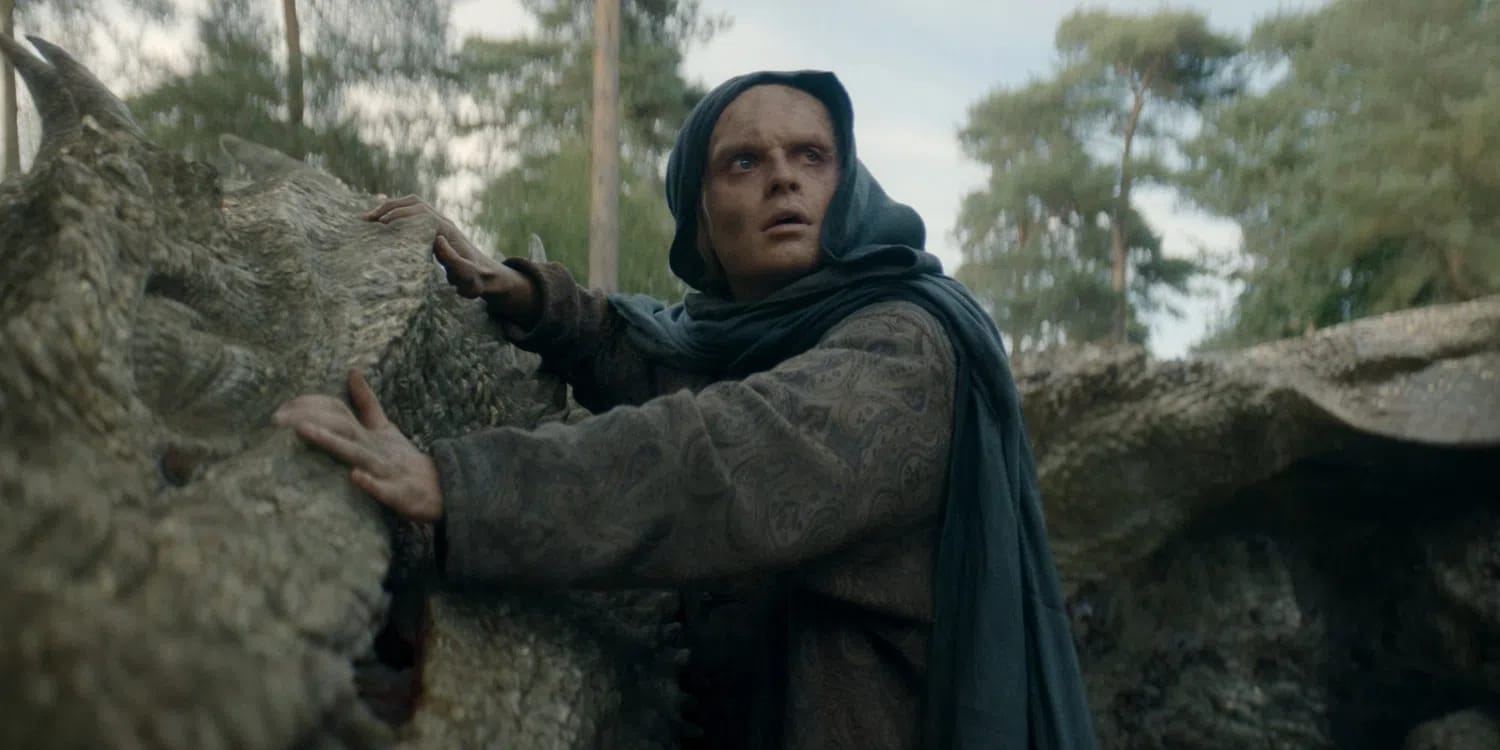
And Sheepstealer. The wild dragon initially attacked Syrax before Seasmoke and Caraxes joined the brawl. Caraxes sank his jaws into Sheepstealer's neck and delivered near-fatal bites, but Daemon ultimately held his dragon back from the killing blow. Sheepstealer crawled away badly wounded and unable to fly. Some viewers found the sequence thrilling. Others compared it to watching oversized digital lizards bounce off each other, with complaints about the dragon's reduced scale and unconvincing visual effects circulating widely across social media.
Book readers vs show viewers after Episode 7
Here's where the fandom fractures cleanly in half.
Martin concluded a 2024 blog post with a warning about "larger and more toxic butterflies to come" if the show proceeded with certain changes planned for Seasons 3 and 4. In a later interview with The Hollywood Reporter, Martin said he and showrunner Ryan Condal were partners through Season 1, where he would read early drafts and give notes. "Then we got into Season 2, and he basically stopped listening to me." According to THR's reporting, Martin declared on a Zoom call, "This is not my story any longer."
Condal, in an interview with Entertainment Weekly, responded: "I made every effort to include George in the adaptation process. I really did. But at some point, he just became unwilling to acknowledge the practical issues at hand in a reasonable way."

That tension is playing out in real time across the fandom. Ulf's impending betrayal of Rhaenyra is no real surprise, both because it suits his character and because it's precisely how Martin wrote it in Fire & Blood. That particular thread has landed. Others haven't. In the source material, Alicent spent most of Rhaenyra's reign imprisoned yet defiant in the Red Keep. The show's writers have instead concocted increasingly curious interpretations of her "defiance," from reasoning with Rhaenyra to chugging moon tea to fleeing through tunnels to riding to Harrenhal to murder her own son.
Book readers are pulling their hair out over what they see as character assassination. Show-only viewers, for the most part, are more forgiving of the changes but frustrated by pacing. The Winter Wolves marched with Criston Cole's head on a spike after his death in the previous episode, yet the show barely paused to acknowledge the weight of that moment before lurching into entirely new crises.
With just one episode remaining before House of the Dragon moves into its fourth and final season, things are starting to get down to the wire. Corlys's fate still hangs in the balance, Sunfyre is back in play, and Aemond's loyalties are more tangled than ever. The finale needs to deliver the First Battle of Tumbleton, resolve at least two cliffhangers, and convince a fractured audience that the writers still have a plan.
Good luck with that.
Check topics and authors from this story to see more stories like this in your personalized feed and receive updates when new work is published.


