
Heritage work in Sindh often starts with what is missing.
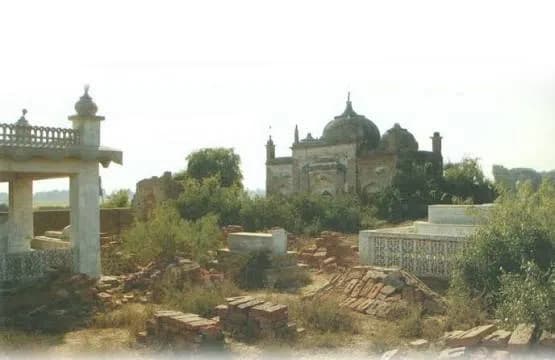
Officials and experts keep finding monuments that stand without clear origins or steady care. One such structure now draws fresh notice from the state news agency. The Miani Mosque sits in the Miani Forest outside Hyderabad. It stands metres from a burial ground locals call the Graveyard of the Martyrs.
That ground holds Talpur soldiers killed on 17 February 1843. The Battle of Miani that day handed Sindh to the British East India Company. General Charles Napier led roughly 2,800 troops against a much larger Talpur force under Mir Nasir Khan Talpur. British losses stayed low. Talpur dead numbered in the thousands. A follow-up fight at Dubbo on 24 March sealed the annexation.
The mosque itself is a three-domed, arched brick building. Its prayer hall measures just 32 by 12 feet. Plaster peels away. The main entrance has partly collapsed. Interior damage shows clearly. A 2017 heritage inventory noted the decay. No new on-site check has followed.
Pakistan’s Associated Press of Pakistan picked up a recent social-media heritage note on the site. The agency report stands out for its candour. It states there is no verified record of who built the mosque. No firm date exists. No known patron or architect appears in the files. Local talk sometimes credits a Talpur Mir. The official account warns against treating that claim as fact.
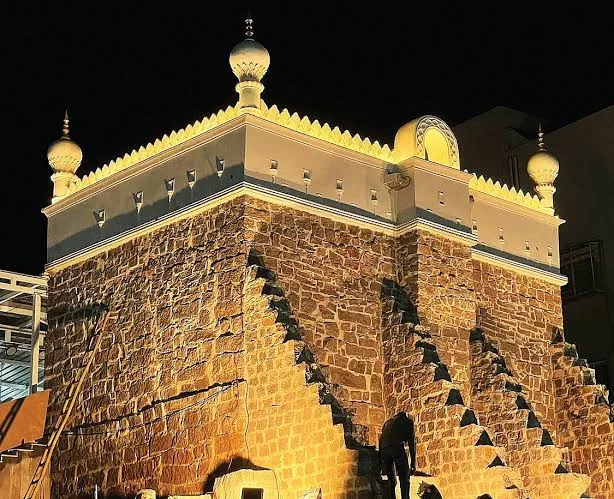
Talpur families still bury relatives in the adjoining graveyard. The community calls it Shaheedan jo Qabrustan. The forest lies about 18 kilometres from Hyderabad. Coordinates place the mosque near the old battleground. A British memorial tower also stands nearby. Napier ordered it for his fallen men.
Sindh holds nearly 3,000 heritage sites and monuments. About 1,600 enjoy protection under the Sindh Cultural Heritage (Preservation) Act of 1994. Roughly 1,200 remain unprotected. The Miani Mosque does not appear on the protected list in available records. The provincial Antiquities and Archaeology Department holds the main responsibility for historic mosques and monuments. Funding and staff shortages leave many structures exposed.
Experts now urge a full, measured survey. They want fresh photographs and conservation-led repairs. Without that work, the brick and plaster will keep failing. Weather and time take their toll. The small scale of the prayer hall makes the loss feel sharper.
Who raised the domes remains an open question. Was it built before the battle, or soon after as a memorial? Did Talpur patrons fund it, or later caretakers? No inscription settles the matter. No archival paper names a builder. These gaps form the core of the story.
The 2017 inventory already flagged crumbling plaster and interior harm. That document remains the last formal record. Social-media posts and local visits keep the site in view. Yet formal action lags.
Battle memory still draws visitors to the forest. Graves of figures such as Mir Jan Muhammad Khan Talpur lie close by. Annual remembrances mark the February losses. The mosque stands as quiet witness. Its silence on origins only deepens the pull.
Conservation voices call for urgent steps before more fabric falls. A proper survey would map every crack and joint. Photographic records would fix the present state. Supervised repair could then follow with matching materials. Lime plaster, not modern cement, would respect the original fabric.
Sindh’s heritage list grows and shrinks with each survey cycle. The last broad review dates to 2017. Fresh work could add or secure sites like this one. Without it, the Miani Mosque risks joining the many undocumented ruins already lost.
The structure’s brick arches and domes still hold. They speak of craft once common across the Indus plain. Their exact makers remain unknown. That fact alone sets this mosque apart. State media has now placed the gap on record.
What comes next depends on the Antiquities Department and provincial funding. A measured plan could save the hall and its setting. Delay leaves the martyrs’ graves with a fading neighbour. The forest keeps its quiet. The unanswered questions grow louder.
Check topics and authors from this story to see more stories like this in your personalized feed and receive updates when new work is published.


