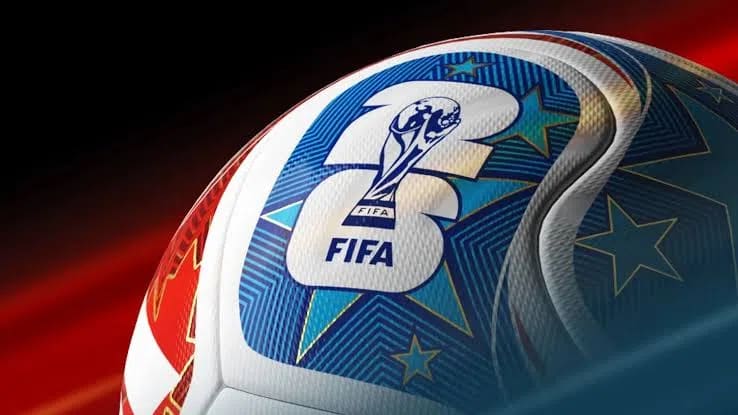

Pakistan sits, as of this writing, 198th in the FIFA world rankings. Its national team has never come close to qualifying for a World Cup. And yet, every four years, the country that cannot get to the tournament makes the ball that defines it.
That is the central paradox worth understanding before a single match at the 2026 FIFA World Cup is fully processed. Pakistan is not in North America competing. It never is. But its hands are on the tournament in ways that go far beyond football, touching manufacturing, visual art, and the kind of quiet cultural pride that does not need a stadium to be real.
The Sialkot Story
Start with the ball. The tournament's official match ball, the Adidas Trionda, is being manufactured in Sialkot, a city long regarded as the global hub for football production. That sentence alone deserves a moment.
The manufacturing of Trionda takes place in Sialkot, Pakistan, known globally as the capital of football production. This city has produced every official Adidas World Cup ball since 1982, combining human craftsmanship with advanced robotics to achieve perfection. That is not a recent development or a lucky contract. It is a decades-long relationship between one city and the sport's governing body.
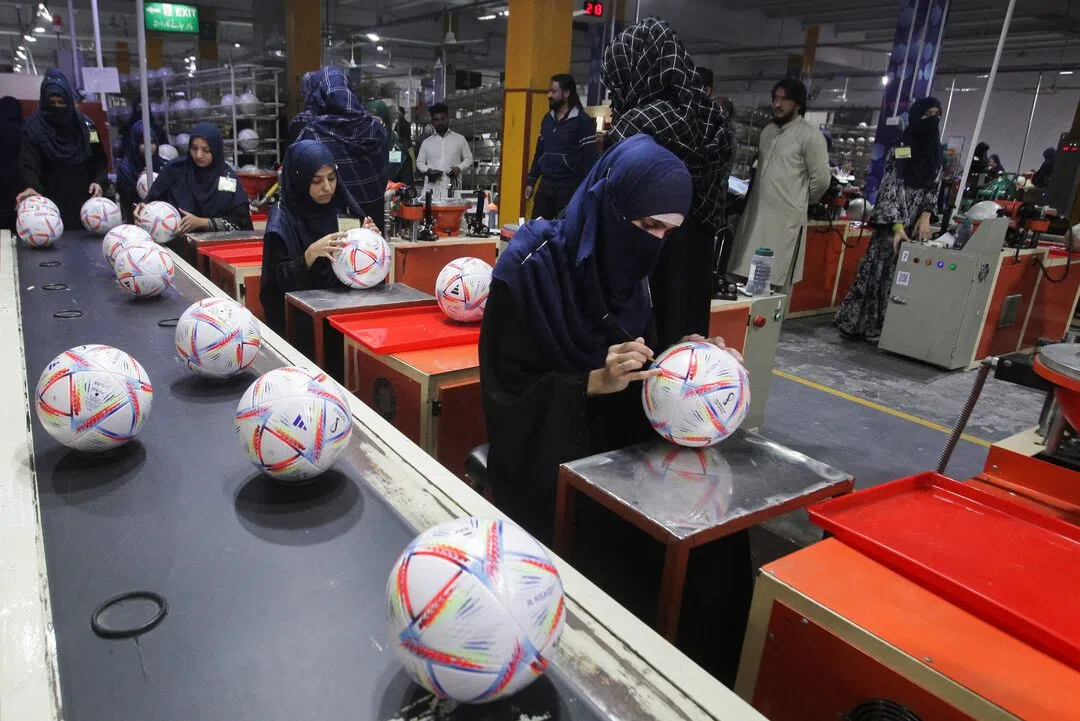
Khawaja Masood Akhtar founded Forward Sports Private Limited in Sialkot in 1991 with 20 employees and a single room. Thirty-five years later, his company produces approximately 20.5 million footballs a year and has made the official match ball for four consecutive FIFA World Cups: the Brazuca for Brazil 2014, the Telstar 18 for Russia 2018, the Al Rihla for Qatar 2022 and now the Trionda for the 2026 tournament.
Sialkot is known for producing nearly 70% of the world's footballs and exporting over 43 million balls worth $191 million in 2021-22. The football industry is not a side project for this city. The sports goods industry connects roughly 8% of the city's population, making football production a vital part of the local economy.
What the Trionda Ball Actually Is
The Trionda is not just a stitched sphere. The name is inspired by the words "Tri" meaning three, and "Onda" meaning wave in Spanish. Together, they symbolize "Three Waves," a reflection of the three host nations coming together to celebrate the world's most popular sport.
The technology inside it matters too. The ball has connected-ball technology and a precise 500Hz motion-sensor chip inside, allowing real-time tracking of the ball's movement and sending accurate data to the video assistant referee system. The technology helps officials make faster, more accurate decisions, especially on close offside calls. Pakistani workers are not just making a sporting object. They are making the most technologically advanced piece of equipment in the most-watched event on Earth.
The ball is manufactured by Forward Sports Pvt. Ltd., Adidas's long-term partner, recognized for its world-class facilities and commitment to ethical, eco-friendly production.
Art From the Shoreline
The industrial story from Sialkot has a quieter, more unexpected counterpart along Pakistan's coastline. Sand murals of the FIFA World Cup trophy and official logo on Gadani beach have gone viral online, highlighting Balochistan's artistic flair. Artist Sameer Shaukat and his team have won acclaim for their exquisite art.
The sand mural reflects the love of people of Balochistan for football. Gadani is not a city associated with global art moments. It sits along the Arabian Sea, roughly 50 kilometres west of Karachi, a town better known for its ship-breaking yard than its cultural output. That an artist and his team chose this beach as a canvas for their response to FIFA 2026 says something specific about how the tournament resonates across every corner of Pakistan, not just its industrial centres.
What Pakistan's Government Said
Pakistani Deputy Prime Minister Ishaq Dar marked the tournament's opening with a public statement that captured the national mood precisely. He wrote: "The official match balls, 'Trionda', being used at this World Cup have been manufactured in Pakistan, reflecting the skill and craftsmanship of our people." Pakistan may not be among the competing teams, but a piece of Pakistan is present in every pass, every save and every goal.
That framing matters. It is not a consolation. It is a different kind of presence, and arguably a more durable one. Players rotate, squads change, tournament hosts shift. The Sialkot connection to the World Cup ball has been continuous since 1982.
A Larger Pattern Worth Noticing
Thanks to its skilled workers and large-scale production, Pakistan plays a major role in the global football supply chain, even if this is not always widely known. That last clause is the honest part. Most of the billion people watching FIFA 2026 will not know where the ball comes from. They will not know Sialkot. They will not have heard of Forward Sports or Khawaja Masood Akhtar.
But cultural contribution does not require recognition to be real. Every match at the World Cup will showcase not only the players on the field, but also the craftsmanship behind one of football's most important pieces of equipment. That craftsmanship has a postcode. It is Sialkot, Pakistan.
Meanwhile, the FIFA World Cup 2026 is set to begin with a historic series of opening ceremonies across the tournament's three host nations, Mexico, Canada and the United States, offering fans a unique celebration of culture, music and unity before the football action gets underway. Those ceremonies showcase the host nations. No ceremony announces Pakistan. No performer carries a green flag onto a stage in Los Angeles or Toronto. The contribution arrives differently: in the weight of the ball at kickoff, in the data chips tracking each touch, in sand sculptures on a Balochistan beach that no broadcaster will cut to.
That is Pakistan's role in FIFA 2026. Not a seat at the table, but fingerprints on everything on it. The tournament's most iconic object was made there. Its artists responded to it with the materials at hand. Its government pointed to it with pride. None of that requires a qualifying campaign to mean something.
Sialkot has been making the world's footballs for over forty years. At some point, that stops being a behind-the-scenes detail and becomes the story itself.
Check topics and authors from this story to see more stories like this in your personalized feed and receive updates when new work is published.


