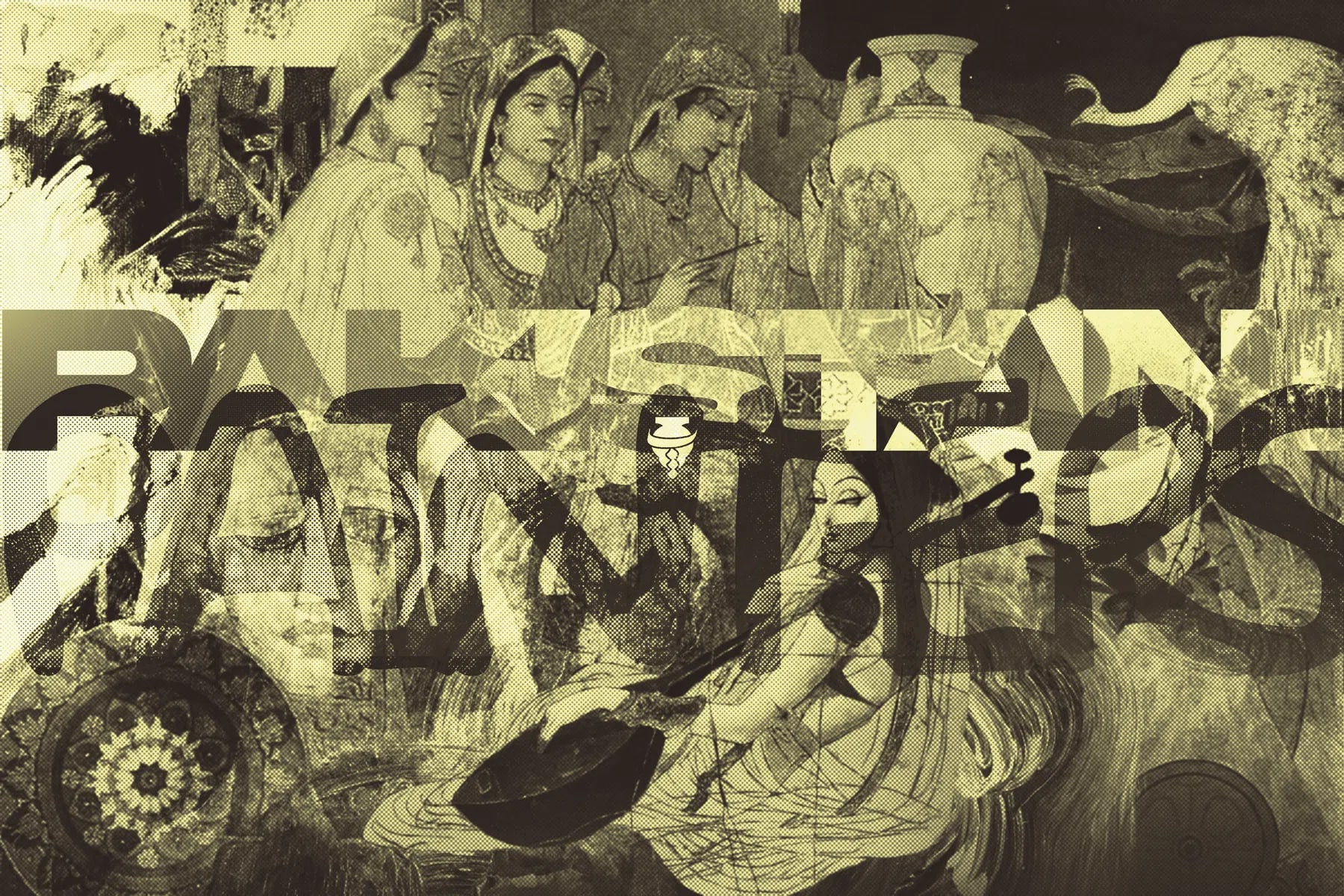
Pakistan's painting tradition is one of the most layered and least understood in the global art world.
Rooted in Mughal court artistry, Persian manuscript illumination, and later shaped by British colonial art education, the country's painters have spent more than a century fusing inherited visual languages with entirely new ones.
These painters have made significant contributions to the art world both in Pakistan and internationally, blending traditional and modern techniques with a lasting impact on the country's cultural and artistic heritage.
What follows is a ranked survey of the 20 most famous Pakistani painters, judged on the strength of their artistic innovation, institutional influence, international visibility, and lasting cultural footprint.
The list moves from foundational modernists to living contemporary forces, and the quick-reference table below gives you names, life dates, primary medium, and the movement or style each painter is most associated with, so you can scan before you read.
| # | Painter | Life Dates | Primary Medium | Movement / Style |
|---|---|---|---|---|
| 1 | Sadequain | 1930-1987 | Painting, calligraphy | Calligraphic modernism |
| 2 | Abdur Rahman Chughtai | 1897-1975 | Watercolour, printmaking | Mughal/Art Nouveau fusion |
| 3 | Shakir Ali | 1916-1975 | Oil painting | Cubist abstraction |
| 4 | Anna Molka Ahmed | 1917-1994 | Oil painting | Expressionism |
| 5 | Zubeida Agha | 1922-1997 | Oil painting | Abstract expressionism |
| 6 | Ismail Gulgee | 1926-2007 | Oil, calligraphy | Abstract calligraphy |
| 7 | Zahoor ul Akhlaq | 1941-1999 | Mixed media | Miniature modernism |
| 8 | Ahmed Parvez | 1926-1979 | Oil painting | Abstract expressionism |
| 9 | Jamil Naqsh | 1939-2019 | Oil, printmaking | Figurative miniature |
| 10 | Anwar Jalal Shemza | 1928-1985 | Oil, relief | Islamic geometric abstraction |
| 11 | Ustad Allah Bakhsh | 1895-1978 | Oil painting | Romantic figurative |
| 12 | Shahzia Sikander | b. 1969 | Mixed media, animation | Neo-miniature |
| 13 | Rashid Rana | b. 1968 | Photo-mosaic, painting | Digital/conceptual |
| 14 | Imran Qureshi | b. 1972 | Gouache, installation | Neo-miniature |
| 15 | Askari Mian Irani | 1940-2004 | Oil painting | Figurative expressionism |
| 16 | Bashir Mirza | 1941-2000 | Mixed media | Modernist abstraction |
| 17 | Salima Hashmi | b. 1942 | Mixed media | Political figurative |
| 18 | Saeed Akhtar | b. 1938 | Oil painting | Portraiture/realism |
| 19 | Khalid Iqbal | 1929-2014 | Oil painting | Modern realism |
| 20 | Mashkoor Raza | 1948-2025 | Oil painting | Impressionism/equestrian |
1. Sadequain

No conversation about Pakistani painting begins without Syed Sadequain Ahmed Naqvi. Born on June 30, 1930, he was known for his bold style in fine arts, especially calligraphy and painting.
His signature achievement was the wedding of Islamic script to large-scale mural composition, a combination nobody in the region had attempted with such ambition before him. He mixed traditional Islamic calligraphy with modern forms, creating a new visual vocabulary in Pakistani art.
The painted ceiling of Frere Hall in Karachi remains one of the most recognized works in the country, full of vibrant colours, cultural patterns, and scenes reflecting Pakistani history and local traditions.

Key Facts
- Syed Sadequain Ahmed Naqvi, painter and calligrapher
- Awarded the President's Medal for Pride of Performance and the Sitara-e-Imtiaz
- Passed away on February 10, 1987
- Major works include the Frere Hall ceiling murals (Karachi) and Aftaab-e-Taaza
2. Abdur Rahman Chughtai

Abdur Rahman Chughtai is routinely called the first significant modern artist from Pakistan.
He was a Pakistani painter noted for his work inspired by a variety of sources that included traditional miniature, Mughal, Art Nouveau, Orientalist, and Islamic styles of painting. His best-known paintings are portraits, featuring their subjects existing in a flattened pictorial space rendered in rich golds and pastels.
Beyond easel work, Chughtai was renowned for his distinctive style influenced by Mughal, Islamic, and Art Nouveau traditions, and he also designed coins and stamps for Pakistan.

Key Facts
- Abdur Rahman Chughtai, painter, printmaker, stamp designer
- Born 1897 in Lahore, died 1975
- Received both the Sitara-e-Imtiaz and Hilal-e-Imtiaz
- Created thousands of watercolours, drawings, and prints over the course of his life
3. Shakir Ali
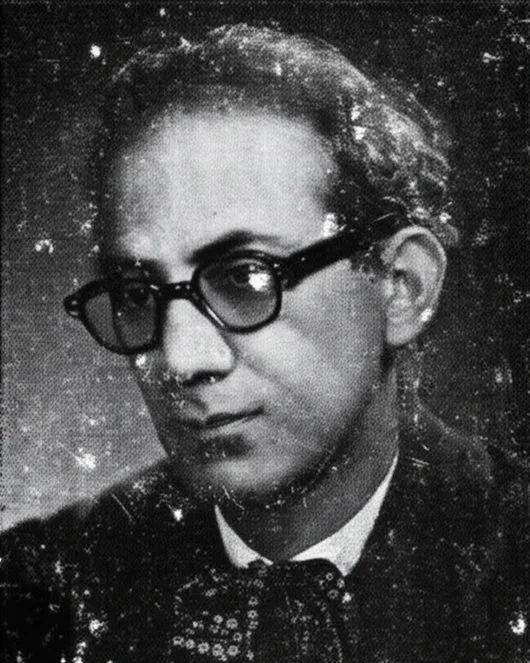
A key figure in modern Pakistani art, Shakir Ali was known for his abstract and cubist-influenced figurative paintings; as the first principal of the National College of Arts, he was a deeply influential teacher and is often referred to as the "father of modern art in Pakistan."
Born in 1916, Ali had extensive art training from the prestigious J.J. School of Art in Bombay and the Slade School of Art in London. His international knowledge, from training in Paris and Prague, was imperative in redefining the art of the newly formed nation.
He brought European modernism back with him, but filtered it through a sensibility shaped by the cultural upheaval of Partition, producing canvases that feel simultaneously Western in technique and deeply South Asian in emotional register.

Key Facts
- Shakir Ali, painter and educator
- Joined Mayo School of Arts as a lecturer in 1954 and became the first Pakistani principal of the NCA in 1962
- Died January 27, 1975
4. Anna Molka Ahmed

Anna Molka Ahmed (1917-1994) was a Pakistani artist and a pioneer of fine arts in the country after its independence in 1947; she was a professor of fine arts at the University of the Punjab in Lahore.
She established the Fine Arts Department at Punjab University in Lahore, and strong brushstrokes and vibrant colours characterize her bold, expressionistic paintings. Her institutional contribution is inseparable from her artistic one.
She trained an entire generation while producing expressionist landscapes and figurative works that drew on everyday life across Punjab.

Key Facts
- Anna Molka Ahmed, painter, educator, institutional founder
- Founded the Fine Arts Department at the University of the Punjab
- Active from the late 1940s until she died in 1994
5. Zubeida Agha

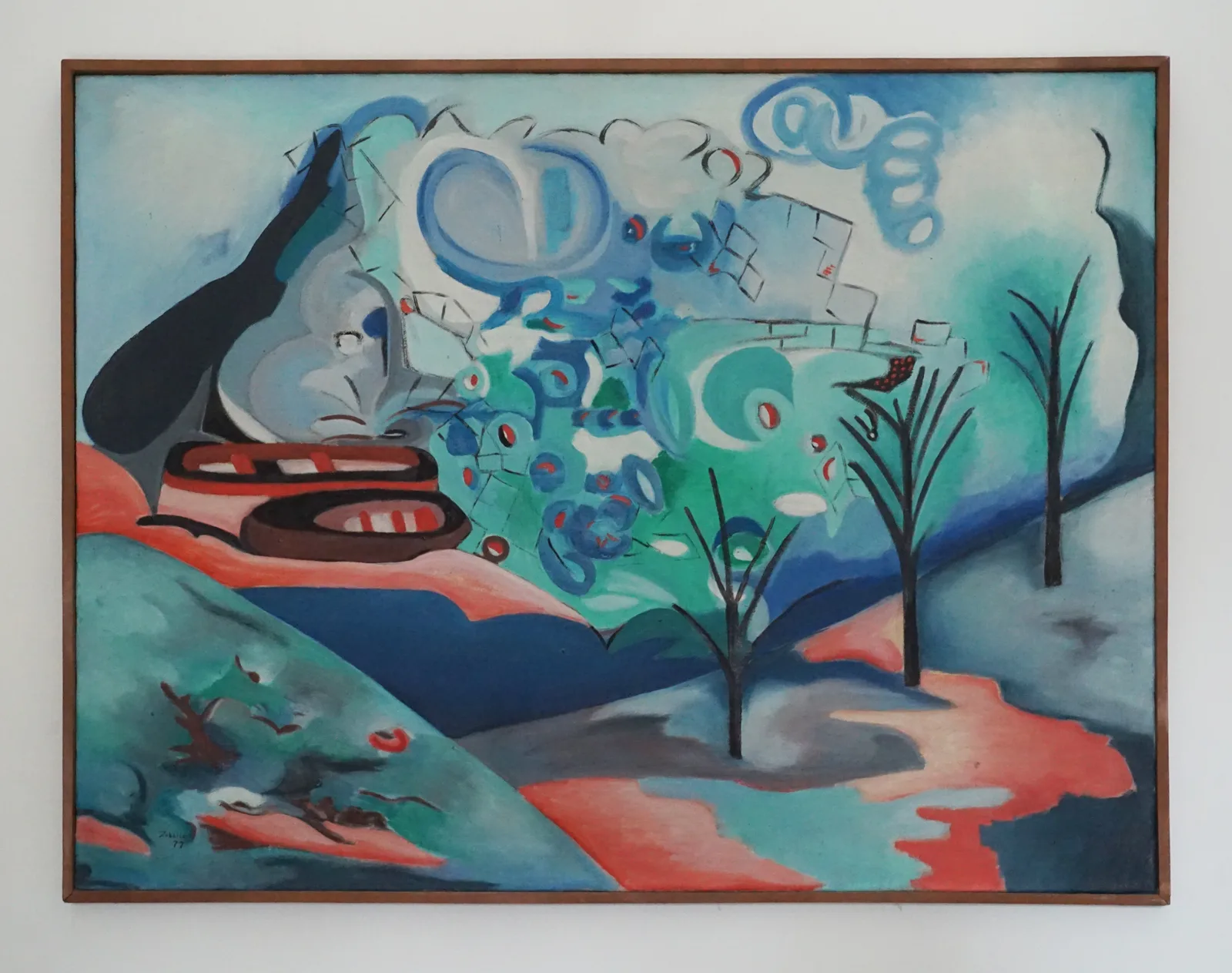
Zubeida Agha was a leading figure in modern art who introduced avant-garde styles and was one of the first Pakistani artists to embrace abstract expressionism.
Her 1949 solo exhibition in Karachi is widely cited as the first-ever solo show of abstract art held in Pakistan, an event that rattled the prevailing figurative consensus. Agha painted with a fierce chromatic energy, layering colour in ways that owed as much to Kandinsky as to the ornamental geometry she grew up around.
Key Facts
- Zubeida Agha, painter
- Born 1922, died 1997
- Held what is considered Pakistan's first abstract art solo exhibition (1949)
6. Ismail Gulgee

Famous for his abstract expressionist and calligraphic paintings, Ismail Gulgee was a prolific and celebrated artist with a worldwide following; he began his career as a portrait painter and developed his distinctive style over time.
Gulgee gained international acclaim for his distinct style that merged traditional Islamic calligraphy with modern abstract expressionism. That trajectory, from realistic portraiture to enormous calligraphic canvases dripping with gold and lapis-like blues, makes his body of work one of the most visually dramatic evolutions in South Asian art.
He painted official portraits of heads of state before abandoning representation entirely.

Key Facts
- Ismail Gulgee, painter, calligrapher
- Born October 25, 1926; died 2007
- Works held in collections worldwide, including institutional holdings across the Middle East and Asia
7. Zahoor ul Akhlaq
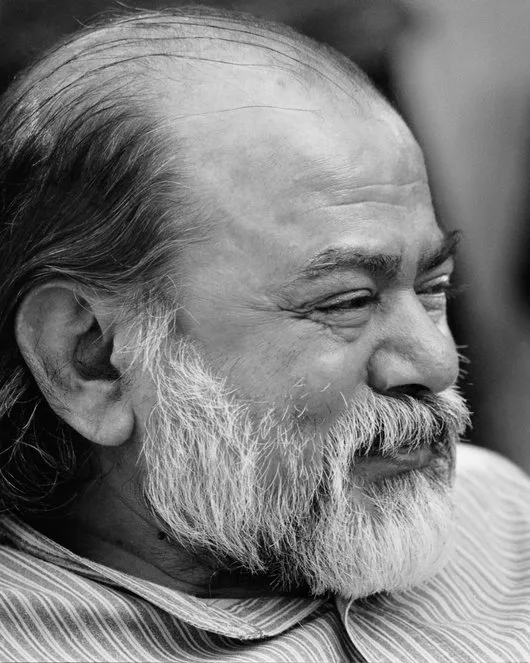
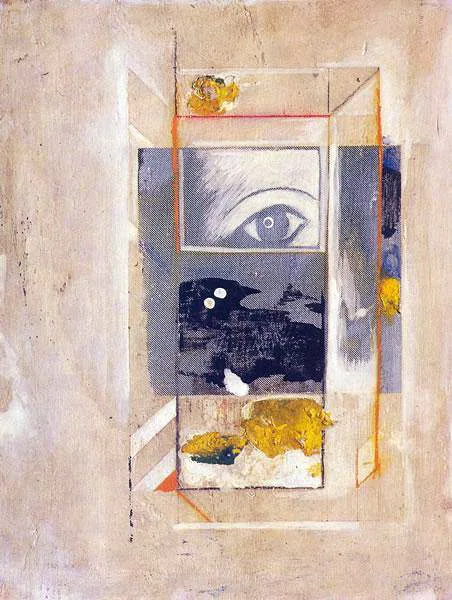
Zahoor ul Akhlaq was a profoundly influential artist in contemporary Pakistani art, working as a painter, sculptor, and printmaker; he is credited with reviving miniature painting by introducing elements of experimentation and modernism.
Many artists turn to Akhlaq as that underrated Pakistani artist who many say was on the cusp of both modern and contemporary. His canvases took the spatial logic of Mughal miniatures and exploded them into flat, almost architectural compositions that anticipated much of what the neo-miniature generation would later do.
At the National College of Arts in Lahore, Akhlaq, followed by Salima Hashmi and others, designed an ingenious curriculum that continues to bring the best out of students.
Key Facts
- Zahoor ul Akhlaq, painter, sculptor, printmaker, educator
- Born 1941, died 1999
- His teaching at NCA directly influenced the neo-miniature movement
8. Ahmed Parvez

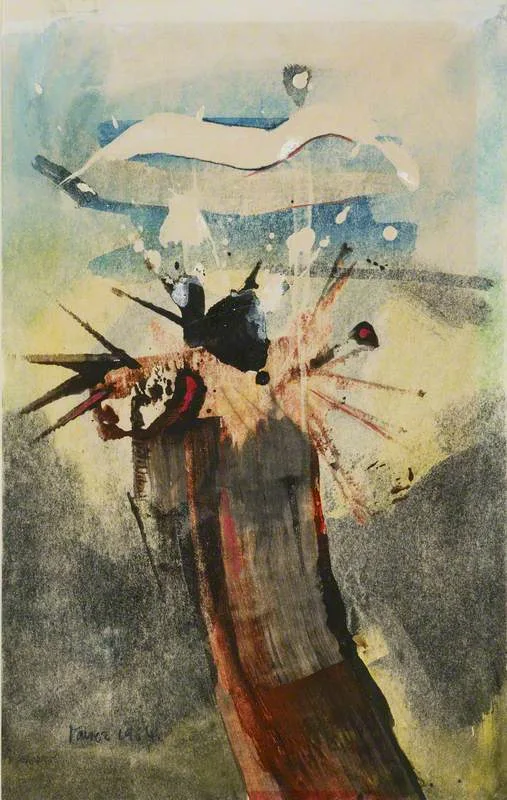
Ahmed Parvez was celebrated for his innovative use of colour and form in abstract expressionist paintings.
Having relocated to London in the 1950s, Parvez developed his approach in relative isolation from the Lahore and Karachi scenes, absorbing the energy of British post-war abstraction while retaining a palette that felt unmistakably rooted in the subcontinent.
His canvases pulse with reds, ochres, and greens that never quite abandon the suggestion of landscape or human presence, even in their most non-figurative stretches.
Key Facts
- Ahmed Parvez, painter
- Born 1926, died 1979
- Lived and worked extensively in London from the 1950s onward
- Classified among the "old masters" of Pakistani painting alongside Shemza, Mirza, and Naqsh
9. Jamil Naqsh

A painter celebrated for his figurative work and mastery of miniature techniques, Jamil Naqsh's art often revolved around a few key themes, including the female form and the pigeon; he was known for his meticulous style and subtlety.
Those recurring motifs gave his oeuvre a rare kind of visual coherence. A pigeon in a Naqsh painting is never merely decorative; it anchors the composition the way a bass note anchors a chord.
He spent decades refining this vocabulary without exhausting it, which is a harder trick than inventing something new.

Key Facts
- Jamil Naqsh, painter, printmaker
- Born 1939, died 2019
- His Jamil Naqsh Museum was established in London
10. Anwar Jalal Shemza

Anwar Jalal Shemza combined Islamic geometric patterns with modern abstract compositions, receiving international acclaim.
His work has been exhibited at the Tate Gallery in London, the Lahore Museum in Pakistan, and the National Gallery of Modern Art in New Delhi. Shemza's approach was almost mathematical in its precision. His paintings often depict abstract forms of city walls and structures, exploring themes of space, structure, and the built environment.
He spent much of his career in Britain, where his work spoke quietly but persistently across two cultural traditions.

Key Facts
- Anwar Jalal Shemza, painter, relief artist
- Born 1928, died 1985
- Work held in collections including Tate (London) and Lahore Museum
11. Ustad Allah Bakhsh

Unlike some of his contemporaries who aimed to push forward a new indigenous art style.
Allah Bakhsh took his understanding of Western art and style to create elaborate figurative and scenic paintings much like a Romantic painter, often taking inspiration from Shakespearean plays and the works of Eugène Delacroix.
He was awarded the Pride of Performance award in 1963 and is considered the pioneer of modern landscape and figurative painting in Pakistan. His canvases belong to an older world, pre-Partition and pre-abstraction, and that is precisely what makes them irreplaceable as a historical anchor for everything that came after.
.jpg%3Fmode%3Dmax)
Key Facts
- Ustad Allah Bakhsh, painter
- Born 1895, died 1978
- Received the Pride of Performance award in 1963
12. Shahzia Sikander

Shahzia Sikander (born 1969) is a Pakistani-American visual artist who works across a variety of mediums, including drawing, painting, printmaking, animation, installation, performance, and video.
Alongside her near-contemporary Imran Qureshi, she is one of the best-known artists of Pakistani origin alive today; both are known for their contemporary miniatures, a genre almost uniquely associated with Pakistan.
Sikander's 1991-92 undergraduate thesis work, The Scroll, is often cited as a turning point. She debuted at the Whitney Biennial in 1997, just two years after completing her MFA.

Key People
- Ustad Bashir Ahmed, her miniature painting teacher at NCA
Key Facts
- Shahzia Sikander, painter, multimedia artist
- Awards include a MacArthur Fellowship
- Received her MFA in 1995 from the Rhode Island School of Design
13. Rashid Rana
%3Aquality(60)%2Fhttps%3A%2F%2Fpublicydn4hdgozyjrg.blob.core.windows.net%2Fpublic%2Fdd%2Fimages%2FRashid_Rana_IMG-4290_RGB_1200x800.17f2c49.jpg&cx=55&cy=50&cw=1080&ch=607)
Rashid Rana is one of the unique Pakistani painters known for his unusual yet innovative approach to art, blending tradition and contemporary techniques.
He is well known for commanding high prices for his photomontages in global auctions. Rana's signature pieces assemble thousands of tiny photographs into grid-like compositions that, from a distance, resolve into a single recognizable image but fracture into something disturbing up close.
That tension between surface beauty and hidden complexity runs through everything he makes.

Key Facts
- Rashid Rana, painter, multimedia artist
- Born 1968
- His work explores themes of culture, identity, globalisation, and his perspective on modern life
14. Imran Qureshi

The Deutsche Bank conferred Imran Qureshi with their "Artist of the Year" award.
That recognition, among many others, confirmed what the Pakistani art community had known for years: Qureshi had taken the miniature tradition and stretched it into something genuinely global. Contemporary miniatures are a genre almost uniquely associated with Pakistan and particularly with the National College of Arts in Lahore.
His site-specific installations, where crimson and white gouache patterns sprawl across gallery floors, carry the formal discipline of miniature technique into an entirely different spatial register.

Key People
- His teacher at NCA was Ustad Bashir Ahmed, who also taught Shahzia Sikander and Saira Wasim
Key Facts
- Imran Qureshi, painter, installation artist
- Born 1972
- Deutsche Bank Artist of the Year recipient
15. Askari Mian Irani
Askari Mian Irani worked in a figurative-expressionist mode that leaned toward psychological drama over formal innovation.
His compositions frequently placed solitary figures in ambiguous, emotionally charged spaces. He is counted among the ten most important painters alongside Laila Shahzada, Zubeida Agha, Sadequain, Ali Imam, Shakir Ali, Anna Molka Ahmed, Zahoor ul Akhlaq, Ahmed Pervez, and Bashir Mirza.
Irani preferred to let the paint itself carry the tension, and his surfaces often have a worked, almost sculpted quality.
Key Facts
- Askari Mian Irani, painter
- Born 1940, died 2004
- Active primarily in Karachi
16. Bashir Mirza
Bashir Mirza (1941-2000), also known as BM, was a Pakistani painter and artist; born in Amritsar, British India, he joined the Mayo School of Arts, where he was one of Shakir Ali's favourite students.
Mirza's paintings resist easy classification. He moved between figuration and abstraction with the kind of restlessness that suggested genuine intellectual curiosity rather than indecision. He received the Pride of Performance Award in 1994.
Key Facts
- Bashir Mirza, painter
- Born 1941, died January 19, 2000
- Pride of Performance Award recipient (1994)
17. Salima Hashmi
Salima Hashmi's career has never separated art from activism.
As a painter, her works use layered, semi-abstract compositions to address political suppression, gender, and displacement in Pakistan. At the National College of Arts in Lahore, she was instrumental in paving the road for the next generation of artists and believed in the talents of her students.
Beyond the studio, she has authored extensively on Pakistani art history and served as the founding dean of the School of Visual Arts at Beaconhouse National University.
Key Facts
- Salima Hashmi, painter, author, art educator
- Born 1942
- Daughter of the poet Faiz Ahmed Faiz
- Founding dean, School of Visual Arts, BNU Lahore
18. Saeed Akhtar
Saeed Akhtar (born 1938) is a Pakistani portrait painter who has received the Sitara-e-Imtiaz Award from the President of Pakistan.
Where many of his contemporaries moved toward abstraction, Akhtar committed to figuration and portraiture with a discipline that recalls classical Western realist traditions. He was commissioned to design Pakistan's largest stamp issue consisting of 27 stamps (1990) on pioneers of freedom.
Key Facts
- Saeed Akhtar, painter
- Born 1938
- Sitara-e-Imtiaz recipient (2011); Pride of Performance Award (1993)
- His work hangs in the State Bank of Pakistan building in Islamabad
19. Khalid Iqbal
Khalid Iqbal spent decades painting the landscapes and everyday life of Pakistan with a luminous, almost photographic clarity that owed little to the abstract currents swirling around him.
He is considered a pioneer of modern realism in Pakistan. His refusal to chase trends gave his body of work a coherence that has aged remarkably well. He taught for years at NCA Lahore, where his insistence on observational rigour shaped students who went on to very different styles.
Key Facts
- Khalid Iqbal, painter, art educator
- Born 1929, died 2014
- Long-standing professor at National College of Arts, Lahore
20. Mashkoor Raza
Mashkoor Raza (1948-2025) was a Pakistani painter and art educator, known for works in realism, abstract art, and impressionism, calligraphy, and recurring equestrian themes.
His paintings of horses in motion carry an almost cinematic sweep. Born in 1948 in Moradabad, Uttar Pradesh, India, his family migrated to Pakistan when he was a child. He trained at the Karachi School of Art and later became one of the country's prominent art educators.
His calligraphic landscapes glow with an inner light that owes something to Sufi spiritual aesthetics.
Key Facts
- Mashkoor Raza, painter, educator
- Born 1948, died February 3, 2025
- Received the Pride of Performance award
Patterns Across the List
Three threads run visibly through this ranking.
The first is the inescapable gravity of the National College of Arts in Lahore. NCA appears in nearly every biography here, either as a school, a workplace, or both. Shakir Ali built it into a modern institution. Zahoor ul Akhlaq, Salima Hashmi, and Ustad Bashir Ahmed turned its miniature department into a globally significant programme. Sikander, Qureshi, and Rana all emerged from its corridors.
No single institution has shaped the output of a country's painting tradition more directly.
The second thread is the persistent dialogue between calligraphy and painting. Sadequain, Gulgee, and Raza all built major bodies of work around the idea that Arabic and Urdu letterforms could carry visual weight far beyond their linguistic meaning. In this, Pakistani painting staked out territory that no other national tradition occupied in quite the same way.
The third is migration. Parvez painted in London. Shemza spent most of his career in Britain. Sikander works from New York. Rana exhibits globally. The Pakistani painting story has never been confined to Pakistan, and the tension between local identity and international audience is not a sidebar; it is central to the work itself.
Where to See Their Work Today
For readers wanting to encounter these painters beyond digital reproductions, several key venues hold significant collections.
The Lahore Museum and the National Art Gallery in Islamabad house extensive holdings of the modernist generation, particularly Chughtai, Sadequain, and Shakir Ali. Frere Hall in Karachi remains the site of Sadequain's monumental ceiling murals.
Internationally, the Tate in London holds work by Shemza, while major auction houses including Sotheby's and Christie's regularly feature Pakistani painters in their South Asian art sales.
Sikander's work can be found in the collections of the Whitney Museum of American Art, the Hirshhorn, and many other leading institutions.
Stay Connected With Pakistan's Art Scene
Keeping up with Pakistani painters, emerging talents, and the broader creative landscape can be difficult when coverage is scattered across dozens of sources.
PakistaniArt brings it all into one place. Whether you are tracking new exhibitions, following auction results, or simply curious about what contemporary Pakistani artists are working on right now, the platform covers art and pop culture content from Pakistan and across the globe.
Subscribe to our newsletter for free and get the latest updates on exhibitions, artist profiles, cultural events, and trending stories delivered straight to your inbox. No clutter, no spam, just the stories that matter to anyone who cares about Pakistani art and culture.
For faster access to news, artist features, and well-researched guides like this one, prefer us on Google Search as well. It is the simplest way to make sure our content shows up first when you are looking for reliable, up-to-date information on Pakistan's art world.
Frequently Asked Questions
Who is the No. 1 painter in Pakistan?
Sadequain tops the list as Pakistan's most famous painter. Known for merging Islamic calligraphy with monumental mural compositions, his painted ceiling at Frere Hall in Karachi remains one of the most recognized artworks in the country.
Who are the top 10 Pakistani painters?
The top 10 are Sadequain, Abdur Rahman Chughtai, Shakir Ali, Anna Molka Ahmed, Zubeida Agha, Ismail Gulgee, Zahoor ul Akhlaq, Ahmed Parvez, Jamil Naqsh, and Anwar Jalal Shemza, ranked by their artistic innovation, institutional influence, and lasting cultural impact.
Which famous Pakistani painters are still alive today?
Among the 20 most famous, Shahzia Sikander, Rashid Rana, Imran Qureshi, Salima Hashmi, and Saeed Akhtar are all living painters who continue to exhibit and shape Pakistan's art scene both locally and internationally.
Who was the first famous Pakistani painter?
Abdur Rahman Chughtai is routinely called the first significant modern artist from Pakistan. Active from the early twentieth century, he fused Mughal, Islamic, and Art Nouveau traditions and even designed coins and stamps for the newly formed nation.
Who started the miniature painting revival in Pakistan?
Zahoor ul Akhlaq is credited with reviving miniature painting in Pakistan by introducing elements of modernism and experimentation. His teaching at the National College of Arts directly influenced the neo-miniature movement later led by Shahzia Sikander and Imran Qureshi.
What is the top institute to learn painting in Pakistan?
The National College of Arts (NCA) in Lahore is the most significant painting institution in Pakistan. Nearly every major Pakistani painter on this list either studied or taught there, and its miniature department is recognized as globally important.
Which Pakistani painters are famous internationally?
Shahzia Sikander, Rashid Rana, and Imran Qureshi are among the most internationally visible Pakistani painters today. Sikander holds a MacArthur Fellowship, Qureshi received the Deutsche Bank Artist of the Year award, and Rana's photomontages command high prices at global auctions.
Who are the 20 most famous Pakistani artists?
The full ranked list includes Sadequain, Abdur Rahman Chughtai, Shakir Ali, Anna Molka Ahmed, Zubeida Agha, Ismail Gulgee, Zahoor ul Akhlaq, Ahmed Parvez, Jamil Naqsh, Anwar Jalal Shemza, Ustad Allah Bakhsh, Shahzia Sikander, Rashid Rana, Imran Qureshi, Askari Mian Irani, Bashir Mirza, Salima Hashmi, Saeed Akhtar, Khalid Iqbal, and Mashkoor Raza.
Check topics and authors from this story to see more stories like this in your personalized feed and receive updates when new work is published.


