Landscape is still the picture most people hang at home, and the one most serious painters treat with suspicion.
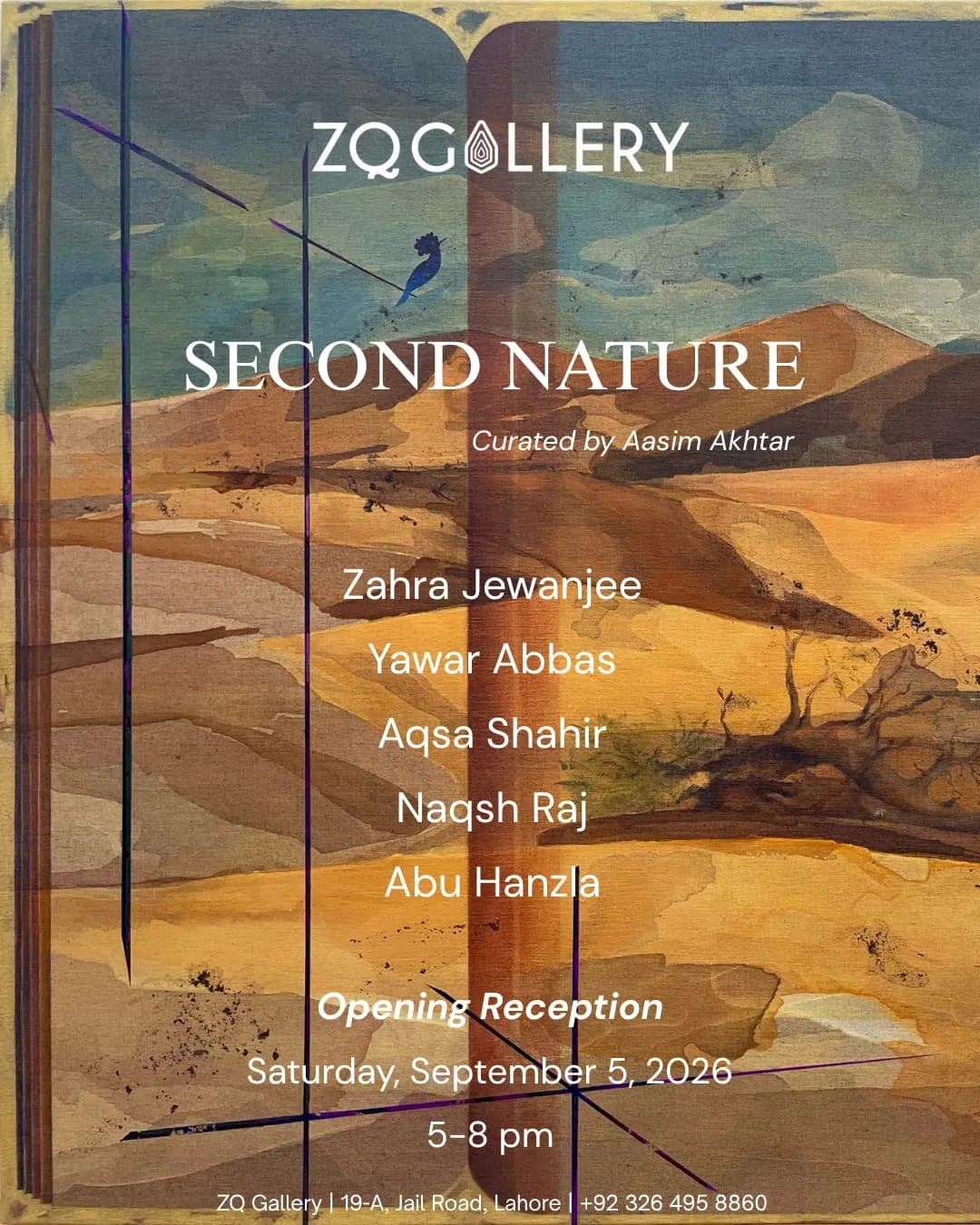
That tension is the premise of Second Nature, a five-artist group show opening at ZQ Gallery in Lahore. The opening reception runs Saturday, 5 September 2026, from 5 to 8 pm at 19-A Jail Road. Critic and curator Aasim Akhtar has assembled Zahra Jewanjee, Yawar Abbas, Aqsa Shahir, Naqsh Raj and Abu Hanzla for it.
Akhtar's curatorial statement starts with the framed reproduction over the family sofa. He calls that kind of image "pastoral therapy, visual Prozac."
The text then turns to Vitaly Komar and Alexander Melamid. Their mid-1990s polling project asked people across several countries what they wanted in a painting. A blue-toned landscape came back again and again.
Simon Schama gets a nod too, for arguing in Landscape and Memory that landscape is culture before it is nature.
None of that is fresh ground. Where the show gets interesting is its claim that these five painters work inside the pastoral convention while quietly taking it apart.

Shahir's canvases are the most openly lyrical of the group. Her flurries of marks read as grass moving in wind, and the terrain works as a state of mind rather than a surveyed place. Raj takes the opposite tack.
Those paintings look topographic, with thin coastlines and sprawling outer suburbs, but the realism borrows the postures of abstraction. What results is a picture that claims documentary authority and then withholds it.
Hanzla paints foliage and stands of trees so still that nothing in them seems able to move. Landscape becomes the subject there, not the setting. Abbas works outdoors from the motif, in a loose, layered handling that the curator links to Van Gogh.
His pastoral is thin and windswept, sitting under a high grey sky rather than an Arcadian sun.
Jewanjee brings the widest résumé to the room. Born in 1983 in Karachi, she now lives and works in Dubai, with an MFA in painting from the Rhode Island School of Design and a BFA from the National College of Arts. A Pollock-Krasner Grant followed in 2024, and she teaches at the American University in Dubai.
Her paintings here are barren and close to monochrome, pigment sitting stubbornly on a matte ground. Akhtar reads that resistance as a metaphor: a world so stripped back it could only exist in a picture.
Compression is the curatorial through-line. Foreground and background collapse into a shallow depth of field, and the "scape" nearly drops out of the word. Akhtar also plays on "sublime" as a verb, the chemical term for a solid passing straight into gas.
A neat conceit for paintings built on shifts of light that refuse to settle.
Lahore has its own landscape lineage to reckon with. Ustad Allah Bakhsh is considered by many to be a pioneer of modern landscape and figurative painting in the early years of Pakistan. Khalid Iqbal later spent decades painting the flat Punjab plains from his base at the NCA.
Against that inheritance, a show treating the genre as a problem rather than a comfort has some local bite.
The venue is young. Beaconhouse National University faculty member Ammar Aziz launched ZQ Gallery, and its inaugural exhibition, The Shape of Seeing, curated by Aziz, was opened by Rashid Rana as guest of honour. The space is named after the late educationist Zeenat Qureshi. It occupies a brick building that carries the nostalgia of old Lahore.
Second Nature arrives roughly a year into that experiment.
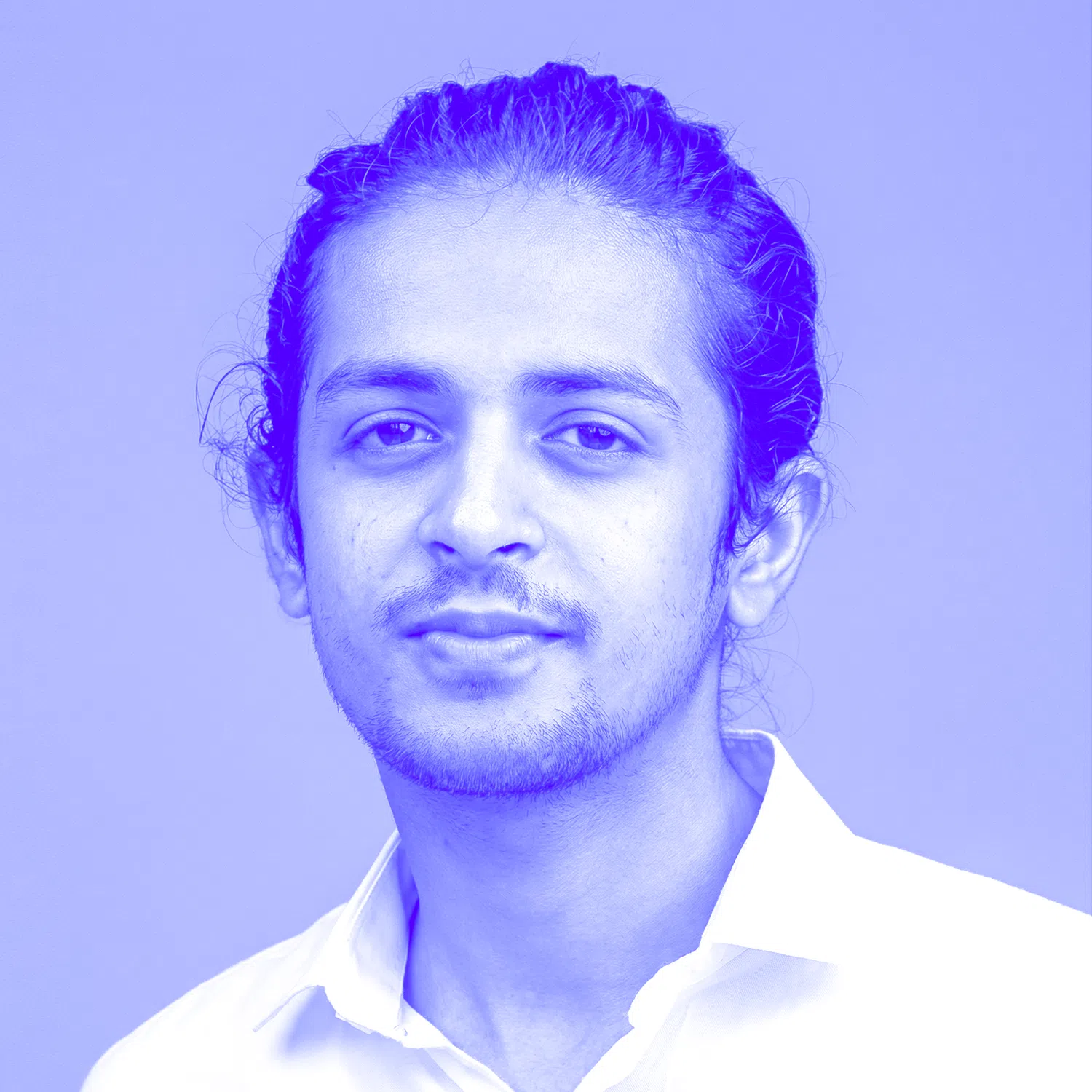
Akhtar himself is a familiar figure on this circuit. Born in Rawalpindi in 1967, he studied English literature alongside a BA in design from the NCA in Lahore. He now teaches art appreciation and studio practice at the college's campus in his home city.
His artwork was shown at Whitechapel Gallery, London, in the 2010 commemorative exhibition Where Three Dreams Cross. Writer residencies at Ledig House and Ucross Foundation came in 2000, and a curatorial residency at the Fukuoka Asian Art Museum in 2002.
In Japan, he focused on fashion designers and textile artists, and how Japanese ideas of nature filter into their work. He is the author of Regards Croisés (1996) and The Distant Steppe (1997), with a third book on embroidery traditions in Hazara recently finished.
He also has a record of getting reluctant artists into the same room. In 2015, Satrang Gallery in Islamabad hosted Private Mythologies, which brought together ten of Pakistan's most respected artists, among them Salima Hashmi, Naazish Ataullah and Anwar Saeed.
Hashmi said at the time: "The fact that he has brought the 10 of us together tells us about his excellent powers of persuasion."
Whether the same persuasion sells a room of unpicturesque landscapes is another matter. Nothing here offers the fluffy trees or chintzy cottages the curatorial text describes as the framers' shop staple.
That is the point.
For a gallery still defining its programme, a show that argues with the country's most popular genre is a statement of intent.
Closing dates have not been announced.
Check topics and authors from this story to see more stories like this in your personalized feed and receive updates when new work is published.


