Few corners of internet fan culture remain as volatile as the space where anime aesthetics collide with real-world body politics.
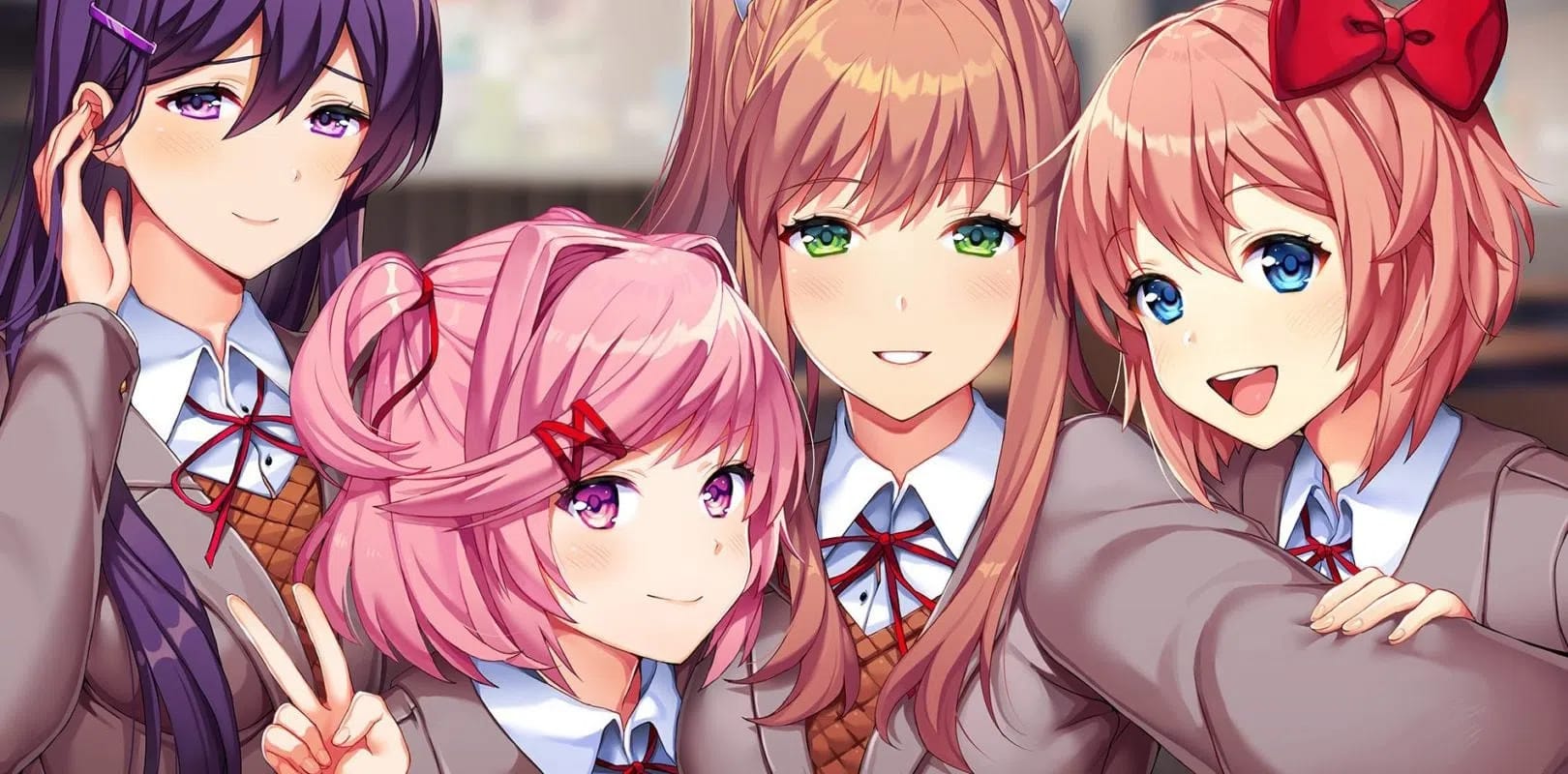
Doki Doki Literature Club, the free-to-play visual novel released in 2017 by Dan Salvato's studio Team Salvato, has long occupied an unusual position in gaming. Although it initially appears to be a light-hearted dating simulator, it is a metafictional psychological horror game that extensively breaks the fourth wall.
With over 20 million downloads, it has become a cultural icon in the psychological horror and visual novel spaces alike. Its four central characters, Sayori, Natsuki, Yuri, and Monika, are drawn in a stylized anime register that deliberately leans into genre tropes. Salvato was inspired to create the novel by his "love-hate relationship" with anime. That tension between surface sweetness and narrative subversion has made the game's fan art community a surprisingly fraught arena.
In early July 2026, the dispute flared again. Drama erupted over fan artist Lalato's DDLC artwork, whose highly rendered, semi-realistic portraits of the game's cast departed from strict anime convention. Supporters noted the artist uses their own face as reference, while critics continued mocking the work for "not looking like real women." Some detractors called the characters masculine simply because they had "stronger features" and were "less exaggeratedly feminine."
The pile-on was swift and cross-platform. Videos debating the work amassed hundreds of thousands of likes on TikTok alone. One viral post defended the art, urging fans to "GET A GRIP" and insisting the artist did not deserve the hate. Comments were disabled. Supporters rallied around the hashtag #ddlcfanart.
A parallel flashpoint involved Melalato, another fan artist whose stylized interpretations provoked similar hostility. Critics accused both artists of "same face syndrome" while simultaneously praising others who "fixed" the art by adding sharp jawlines and exaggeratedly large eyes. That contradiction sits at the heart of the controversy. What counts as correct anatomy when the source material is intentionally non-realistic?
The roots of this tension predate the current cycle. The 2017 visual novel has maintained its popularity largely through fan drawings, cosplay, and rallying behind its high-school-aged characters. While all four are canonically eighteen or older, the character Natsuki's petite frame has repeatedly drawn scrutiny.
In 2019, Reddit administrators briefly threatened to ban artwork of her under revised content policies. The platform eventually backtracked, clarifying the rules on what it would deem bannable.
What makes the current episode distinct is its entanglement with broader cultural arguments about beauty standards and misogyny.
Defenders of the realistic fan art point out that rounder faces, visible noses, and less exaggerated proportions are simply closer to how actual teenagers look. Opponents frame such departures as ideologically motivated attacks on the original designs. Neither side shows signs of backing down.
Salvato himself has reacted positively to fan-made interpretations of the game, once stating that the Ren'Py engine makes it "excellent and highly accessible for modding." That openness to transformation, built into the game's DNA, makes the gatekeeping around its visual identity especially paradoxical.
As one user on X wrote of Lalato, calling the artist a teenager: "Leave this teenager alone you freaks."
The fallout carries consequences beyond one fandom. Young artists watching this unfold learn a disheartening lesson about what happens when creative experimentation meets entrenched online tribalism.
Whether platforms can moderate these cycles meaningfully, or whether fan communities can self-correct, remains an open question with no comfortable answer in sight.


