On the very day the United States marked 250 years since the Declaration of Independence, a different kind of declaration landed in Washington.
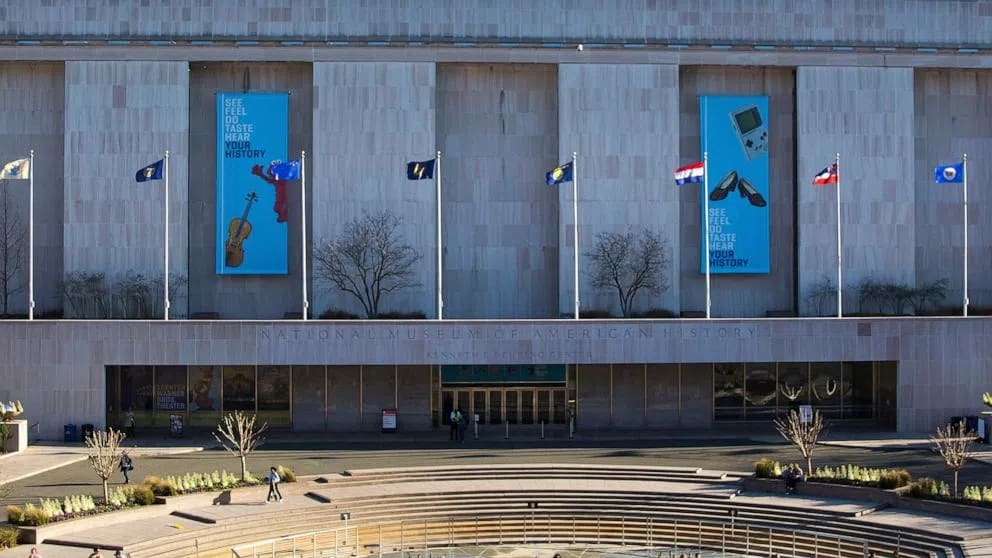
The White House Domestic Policy Council released a 162-page report on July 4 titled Saving America's Story: How Ideological Capture at the Smithsonian Institution's National Museum of American History Erases Our Heritage. It faults the museum on multiple fronts, claiming it underemphasized the Founding Fathers, was insufficiently celebratory of the nation's 250th anniversary, and engaged in what it terms "anti-white," "illegal alien," and transgender activism.
The report stems from President Trump's March 27, 2025 executive order, Restoring Truth and Sanity to American History, which directed a review of Smithsonian exhibits, educational programs, and policies. That August, the White House requested a "comprehensive internal review" of eight Smithsonian museums. What followed was a yearlong pressure campaign.
By late 2025, the administration threatened to withhold federal funding unless the Smithsonian handed over all documentation for a content review.
The report specifically criticizes museum director Anthea Hartig, who has led the institution since 2019, calling her "an activist advancing an ideological agenda contradictory to the museum's founding purpose of fostering patriotism." NBC News reported that the document's language indicates Trump may be preparing to install his own team at the Smithsonian.
Several seats on the Board of Regents are already vacant or expiring. John Fahey and Risa J. Lavizzo-Mourey, both appointed under Barack Obama in 2014, left the board earlier this year. Three more terms will expire in the autumn. New members are appointed via congressional joint resolutions that the president must sign into law, giving the administration direct leverage.
Lonnie G. Bunch III, the Smithsonian's fourteenth secretary, responded in a staff memo on July 8. "While there will always be room for improvement, this report is not a fair characterization of the work and totality of the National Museum of American History," he wrote. He reaffirmed the institution's "steadfast commitment to scholarship, nonpartisanship, independence, accuracy and integrity."
Professional organizations pushed back hard. The Organization of American Historians rejected the report's claims, accusing the administration of "executive branch overreach" and describing it as "part of an ongoing and multi-pronged assault by the Trump administration against accurate and evidence-based history in American public life." Its president, Marc Stein, did not mince words. "Released on July 4, 2026, the 250th birthday of the U.S. Declaration of Independence, the report is a declaration of independence from history," he told the New York Times.
The American Historical Association issued its own warning: "Political interference into professional curatorial practices and museum and educational content places at risk the integrity and accuracy of historical interpretation." AHA executive director Sarah Weicksel was blunt: "Only historians and trained museum professionals are qualified to conduct such a review."
The 180-year-old Smithsonian, which includes 21 museums, galleries, and the National Zoo, receives most of its budget from Congress but is independent of the government in decision-making. Established by Congress in 1846 as a unique and independent agency, it has never been under the authority of the executive branch. That structural independence is precisely what is now being tested.
Trump's escalating pressure on the Smithsonian is part of a broader effort to transform cultural institutions he considers out of step with conservative sensibilities. He previously installed himself as chairman of the Kennedy Center for the Performing Arts and overhauled its programming.
What happens next remains uncertain. The report could lead to leadership changes and potential funding restrictions on exhibits deemed inconsistent with federal policy. Historians and concerned citizens have already begun documenting existing exhibits throughout the Smithsonian network, an act of preservation born from anxiety about what might be altered or removed.
For an institution whose collection holds more than 1.7 million objects, the question is no longer abstract. It is a question about who decides what a nation remembers.
Check topics and authors from this story to see more stories like this in your personalized feed and receive updates when new work is published.


