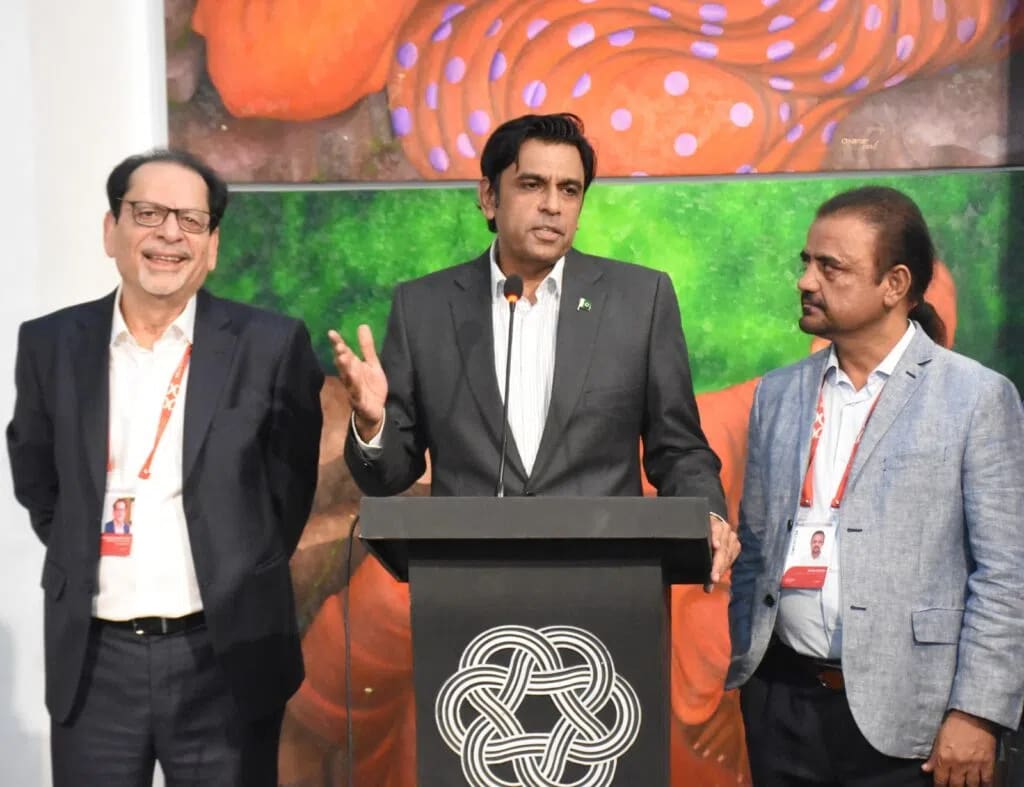

Karachi has spent late autumn positioning itself as a meeting ground for global creatives. The third World Culture Festival keeps that momentum going at the Arts Council of Pakistan.
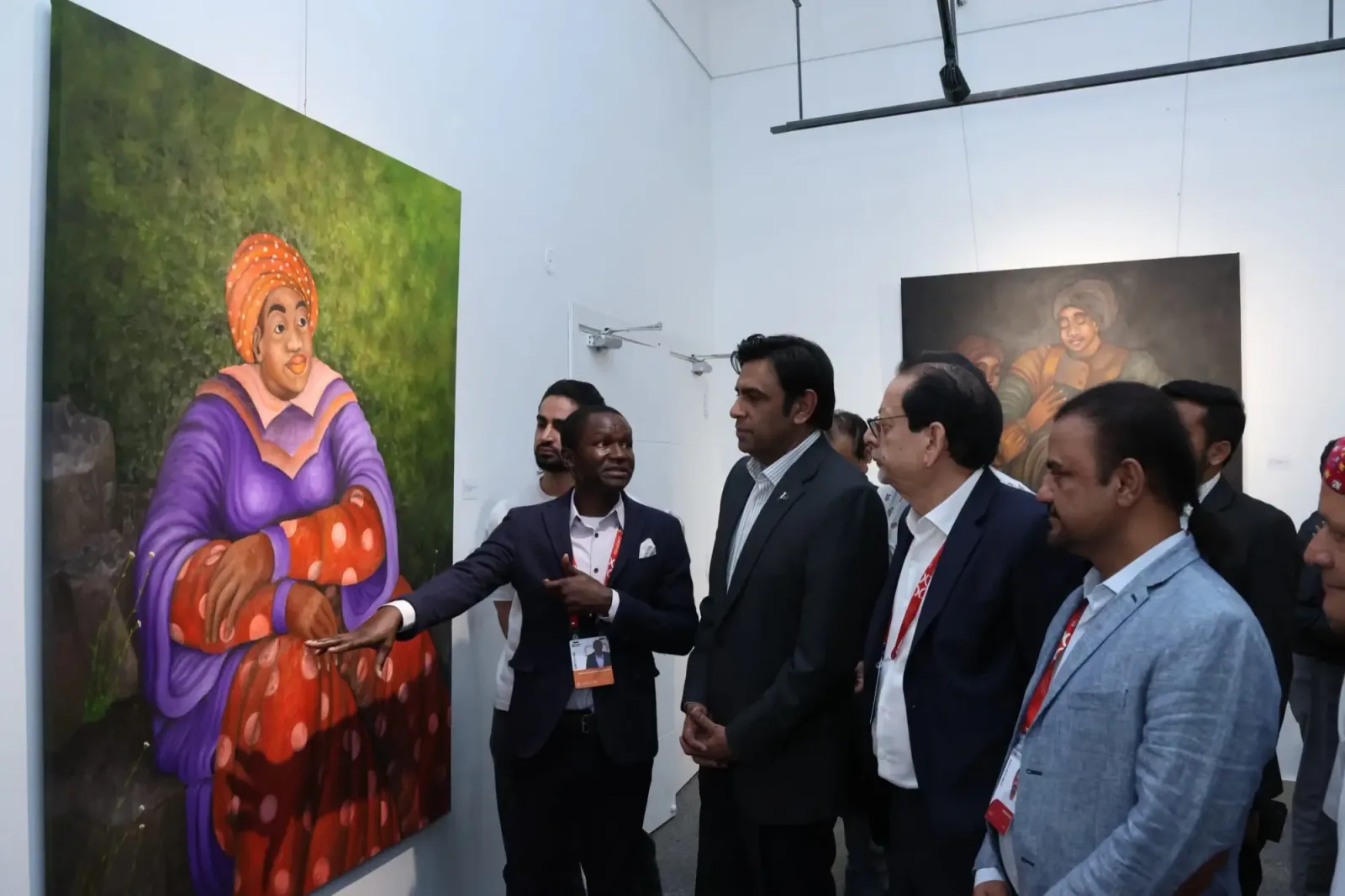
On its eighth day the second major visual art presentation opened at the Ahmed Pervaiz Gallery. Titled Constellations, the show gathers pieces by 22 Pakistani artists and six from abroad. Sindh Chief Secretary Asif Hyder Shah cut the ribbon. “Art goes beyond boundaries, it goes across continents and imagination goes beyond galaxies. That is the beauty of art,” he told the gathering.
Shah noted the event’s expanding reach and urged the public to attend the remaining programmes. Arts Council President Ahmed Shah praised the chief secretary’s backing for inclusivity and pluralism. The pair also handed awards and bouquets to visiting artists.

Singapore muralist Yip Yew Chong unveiled Mera Karachi on an exterior wall of the council. The large work captures historic streets, markets, Sindhi motifs, the Arts Council itself and Empress Market. Chong, a self-taught former accountant known for heritage scenes across Singapore and beyond, then led a live painting session. Students and enthusiasts watched him work and asked questions.
Earlier, children filled seats for Troy! Stowaways in the Trojan Horse. German playwright Henner Kallmeyer wrote the piece. Pakistani director Uzma Sabeen staged it with the Goethe-Institut. The evening also listed Lilith from America’s Anikaya company. The day closed with the Urdu production Taleem-e-Balighan, directed by Farhan Alam Siddiqui, to a packed Auditorium I.
Film programmes screened works from Italy, Türkiye and France. UK artists Josh Middleton and Rebecca Solomon ran an Afro-Brazilian jazz dance workshop that mixed movement styles.
The 25-day festival runs until 22 November. It draws more than 1,000 international participants from around 150 countries plus over 500 Pakistani artists. Most events stay free with registration. Earlier editions grew from dozens of countries to well over a hundred. Organisers frame the gathering as a bridge across conflict zones, with artists from places that rarely share stages elsewhere.
Constellations stays on view through 9 November, noon to 8 p.m. daily. Free entry. The mural remains a permanent outdoor addition. Visitors keep arriving for the mix of visual work, stage pieces and workshops that define this edition.
Karachi’s cultural calendar rarely packs this density of international names into one stretch. The festival’s scale tests the city’s capacity as host while giving local practitioners direct contact with peers from six continents.
What sticks after the final day will be the collaborations and the public murals that outlast the temporary shows.
Check topics and authors from this story to see more stories like this in your personalized feed and receive updates when new work is published.


