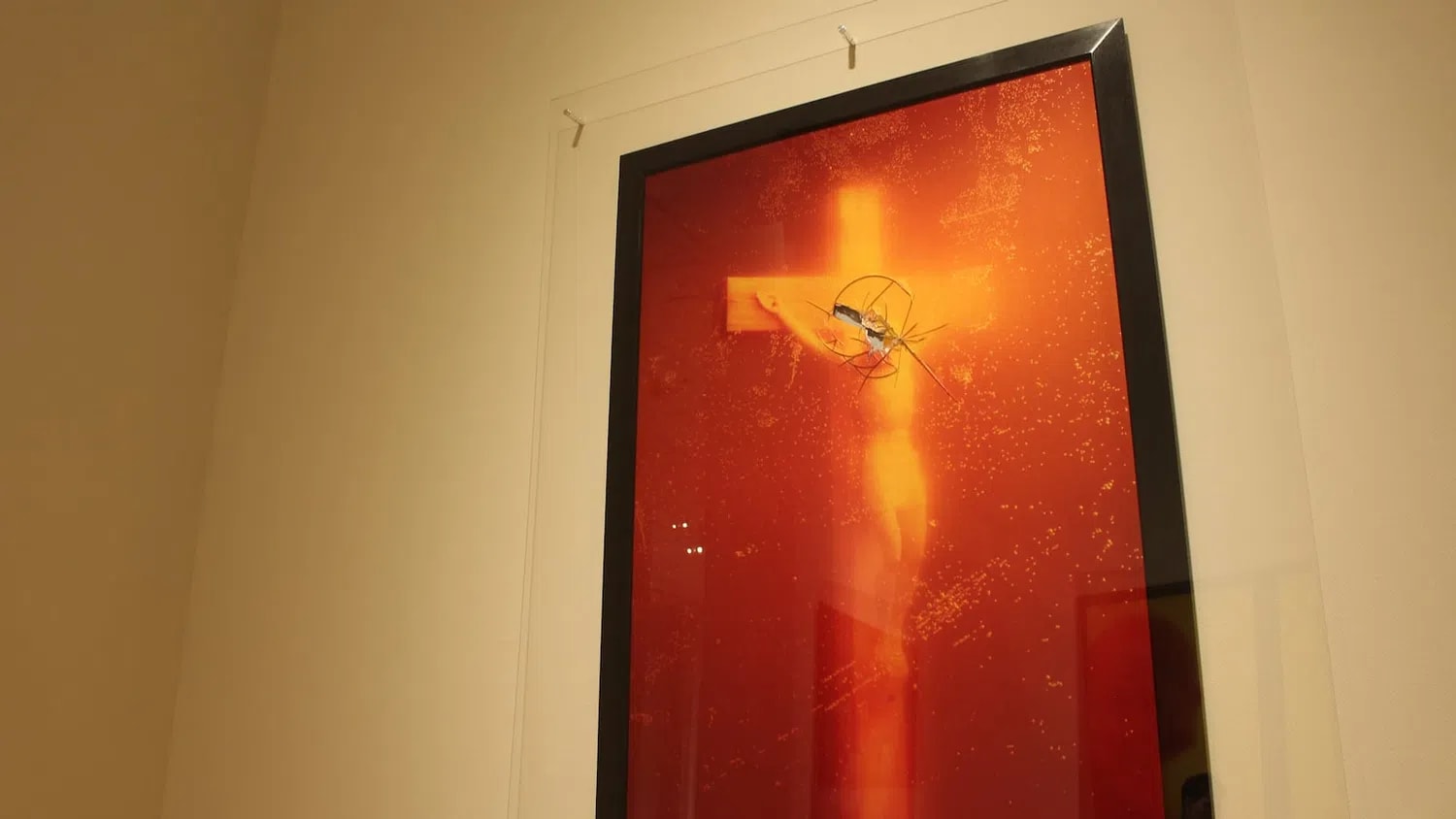
Andres Serrano: Incarnate opened at the Beaverbrook Art Gallery in Fredericton on June 18, 2026, bringing together three works on loan from Vancouver's Rennie Collection. It marks Serrano's first solo exhibition in Canada in decades, and the first time his work has been shown in Atlantic Canada.
The centerpiece is what may be the most discussed photograph in the history of American art censorship. Immersion (Piss Christ) is a 1987 photograph depicting a small plastic crucifix submerged in a glass tank of the artist's urine. The print measures 60 by 40 inches, rendered as a Cibachrome, glossy, with deeply saturated color and a warm amber glow punctuated by tiny rising bubbles. Seen without context, the image reads almost like a sacred relic caught in celestial light. That gap between appearance and material is precisely where its power sits.
The piece caused a scandal when it was exhibited in 1989, with detractors including United States Senators Al D'Amato and Jesse Helms, who were outraged that Serrano had received $15,000 for the work and $5,000 in 1986 from the taxpayer-funded National Endowment for the Arts. Harsh criticism on the Senate floor, spearheaded by conservative Republican senators, intensified the controversy and secured this specific photograph's scandalous status within the entire Immersion series. The NEA's budget was subsequently cut.
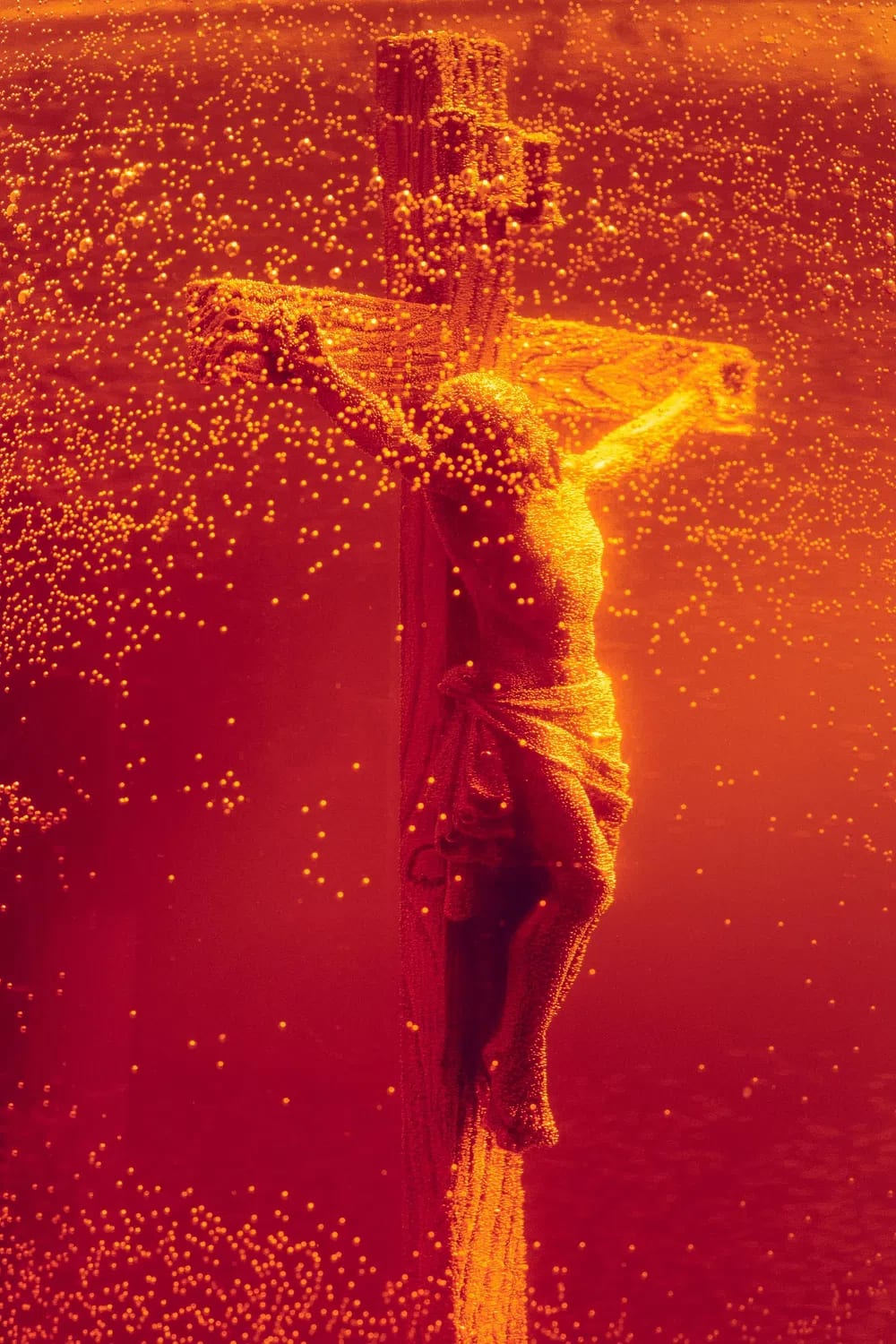
In 2011, Christian protesters used a hammer to attack the print while it was on display at the Collection Lambert Avignon in France, shattering the protective glass before an axe was used to damage the print itself. The French museum kept the damaged work on view so the public could see what had been done. Serrano and the print's owner chose not to restore it, feeling the damage only deepened the work's meaning. The Fredericton showing marks the third time it has appeared in a gallery since that attack.
Serrano maintains he is a Christian and has described the work as a personal expression of faith. "It's not an attack on God or the Church, but instead a celebration of both," he said in a statement provided to the gallery. "I not only believe in God, I believe in religious art and the beauty and power of such art."
Bernard Doucet, the gallery's executive director, said: "Museums are also community infrastructure, with a responsibility to provide the impetus for conversation and dialogue." He has framed Serrano's photographs as a way of demonstrating that religious art is not confined to prior centuries. "It shows audiences that religious art isn't just from the 18th century, that it exists in a very, very contemporary context," Doucet said. "And it enables this institution to show the beauty and meaning and relevance of all of the other works, too."
Andres Serrano: Incarnate is the inaugural exhibition in the gallery's Dalí Chapel Focus Series, which places contemporary works in conversation with Santiago El Grande to explore the enduring and contested role of religion in art and culture. That painting is a 13-foot-tall canvas by Salvador Dalí depicting Saint James the Great riding a white horse, completed in 1957. The exhibition also includes Serrano's 1985 Blood Cross (Bodily Fluids) and his 1988 works Piss Pope, Part I and II (Immersions). The curatorial logic is clear: place the provocateur beside the canonical and let them argue.
Political reaction arrived quickly. Conservative MP John Williamson criticized the work as "not great art in any serious sense," saying in a statement: "The Beaverbrook Art Gallery is recycling a controversy that peaked long ago. This is nostalgia for transgression, which is perhaps the most banal category of art programming imaginable." It's the kind of critique that lands with some force, and yet the photograph's staying power across four decades of attacks, Senate hearings, and institutional cold shoulders suggests something more durable than nostalgia.
Andres Serrano: Incarnate is on view at the Beaverbrook Art Gallery until November 29, 2026. Whether audiences in Fredericton arrive in protest or curiosity, the fact that a regional Canadian gallery has absorbed this kind of heat, and held its position, may itself signal something shifting in how institutions outside major art capitals are willing to define their own cultural mandate.
Check topics and authors from this story to see more stories like this in your personalized feed and receive updates when new work is published.


