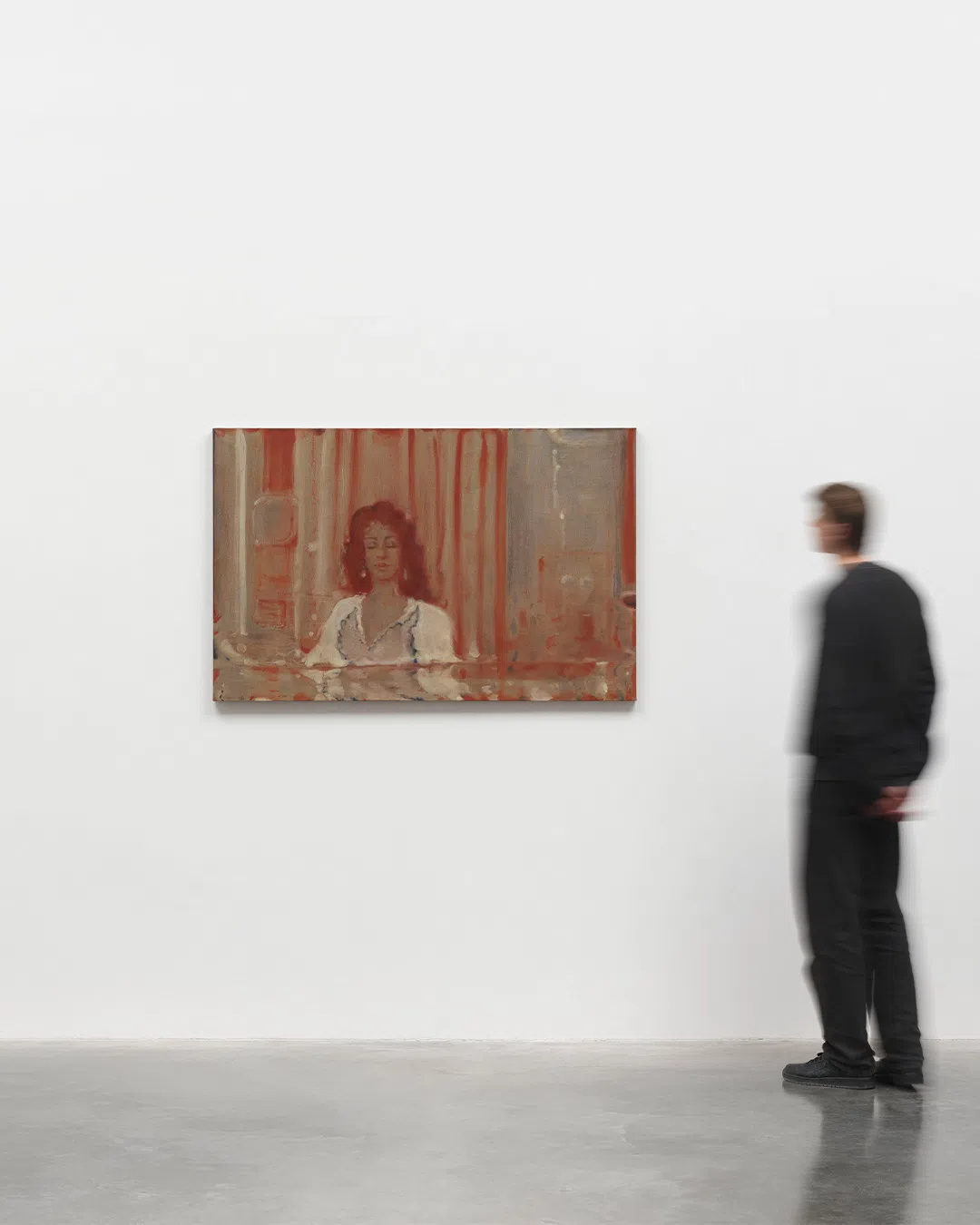
Suleman Aqeel Khilji's "Transmission | نشریات" opened at White Cube Paris on 11 June 2026 and runs through 25 July. The exhibition presents a solo body of new paintings and works on paper and marks the artist's first presentation with the gallery. For a painter who has spent years working largely within South Asian exhibition circuits, the shift to a major Paris venue signals a meaningful institutional turn.
Born in Quetta in 1985, Khilji received his BA from the National College of Arts, Lahore, in 2011 and completed an MA at the Royal Academy of Art, London, in 2025. His works are held in collections including the DIL Foundation, New York, and the Luciano Benetton Collection. Prior to White Cube, his gallery relationships included Jhaveri Contemporary and STANDARD, Oslo, where he showed "A visit to an Old Friend / ملاقات" in early 2026 and "Mark / نشاں" in early 2025.
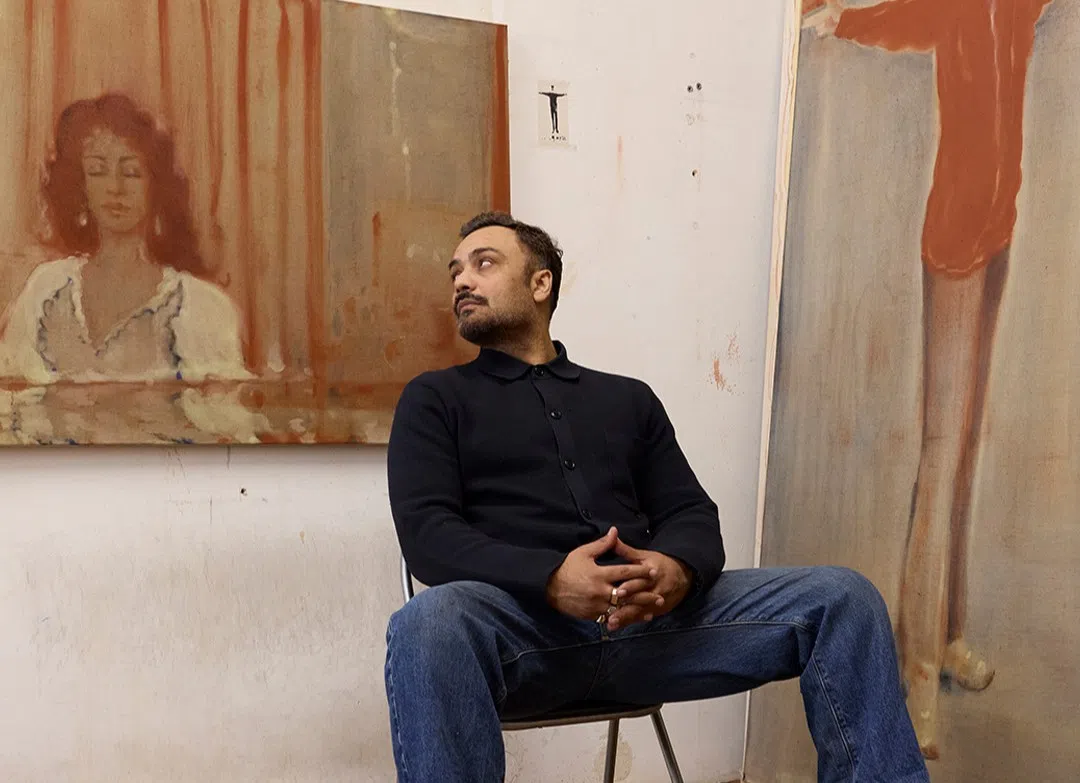
The figurative paintings in "Transmission | نشریات" express what the gallery describes as the indeterminate nature of memory and the passage of time. Khilji paints on linen, found book covers, and used cigarette packets, treating memory as something provisional, composite, and subject to interference. The choice of found surfaces is not incidental. It enacts the very themes the work proposes: nothing in these paintings arrives without a prior life.
His technique is equally deliberate. The surfaces of Khilji's paintings, his use of earth pigments and their mode of application, offer a palette and a sensibility that resonate with a particular arid landscape. Regional materials anchor that sensibility: the works integrate marble dust alongside pigments such as Pozzuoli Earth and Persian indigo, pulling color directly from the geology of Pakistan. Urdu script runs across the canvases from right to left, functioning not as decoration but as a visual carrier for thoughts that resist resolution.
As a young boy, Khilji watched elaborate scenes rendered with oil-based enamel on the backs of rickshaws at a workshop in Quetta. It was during a student exchange trip to Paris in 2009, when a teacher asked him to spend time in front of a Rothko to understand how it was made, that he began to see the possibilities of oil paint. That formative encounter with slow, luminous surfaces has shaped everything since.
Khilji examines the process of painting and drawing through research and experimentation, mostly revolving around notions of time and space, while looking at contradictions through the lenses of urban and social growth and examining visuals sourced from history and contemporary culture.
Journeys play a recurring role in his compositions, particularly the transitional landscapes and figures encountered traveling between Quetta and Lahore. That mobility, between cities, between languages, between registers of belonging, gives the work its particular texture of displacement without sentimentality.
For White Cube, whose Paris space at 10 avenue Matignon positions it within the city's most commercially active gallery corridor, programming a Pakistani painter working in this vein reflects a broader institutional shift toward artists from outside the traditional Western canon. White Cube now operates across Mason's Yard and Bermondsey Street in London, with international locations in Hong Kong, New York, and Paris. Khilji's show runs alongside that infrastructure, and the question going forward is whether the institutional attention translates into sustained critical engagement with his broader practice. The exhibition remains open through 25 July 2026.
Check topics and authors from this story to see more stories like this in your personalized feed and receive updates when new work is published.


