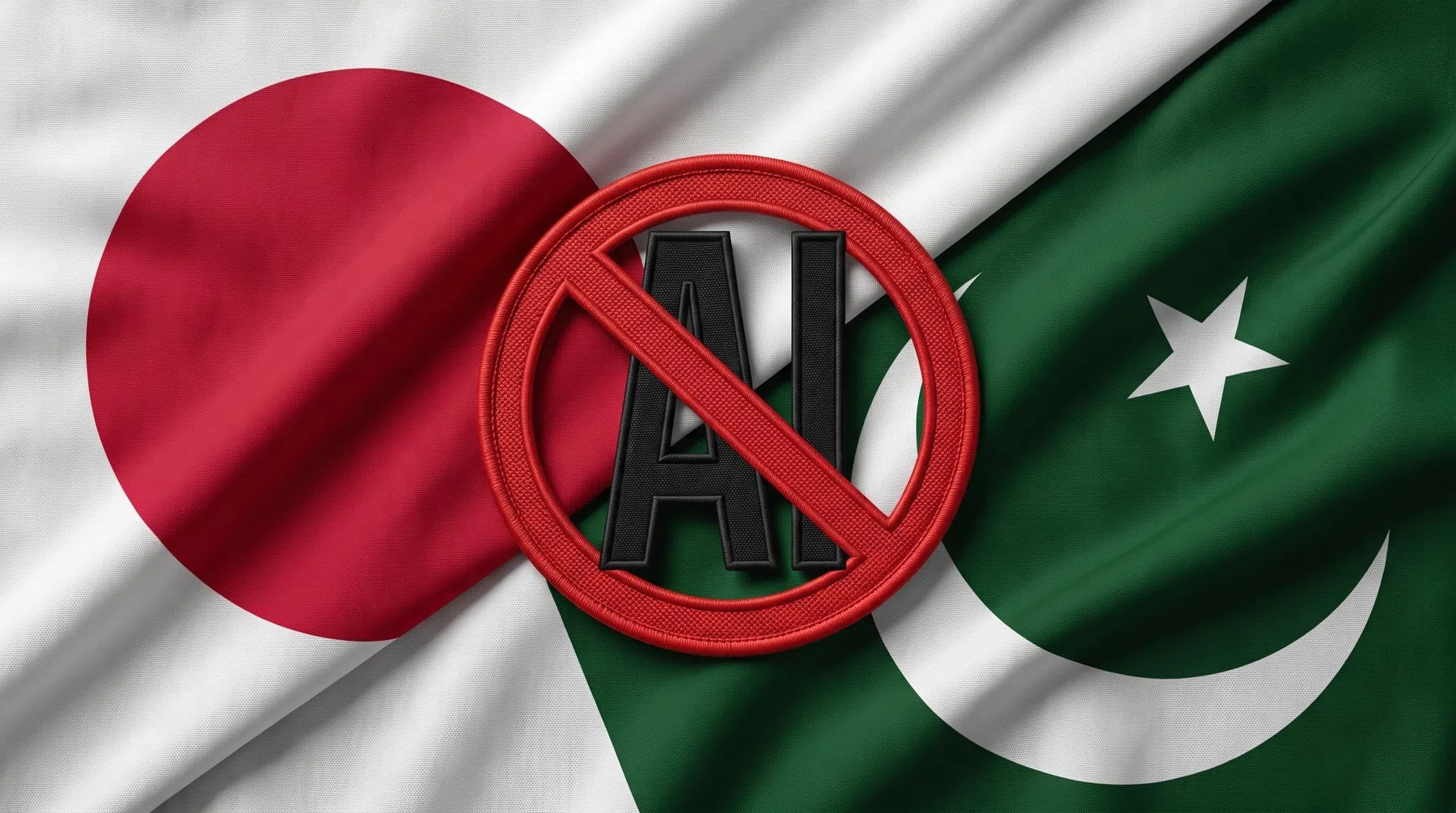

Design contests tied to diplomatic anniversaries rarely draw much attention outside government bulletins.
Japan's Ministry of Foreign Affairs just gave this one a reason to be noticed. The ministry has opened a public competition for the official logo marking 75 years of diplomatic relations between Japan and Pakistan, a milestone arriving in 2027. Entry is open to citizens of both Japan and Pakistan of any age and current place of residence.
Submissions close Wednesday, October 23, 2026, while results are expected around late December 2026 on the Japanese Ministry of Foreign Affairs website. That part sounds routine enough.
The fine print is where things get interesting.
There is no cash on offer here. The winning designer will not receive monetary compensation or prizes, but will be publicly credited by name and affiliation with their consent. A byline, essentially, on a ministry webpage. That's the full reward.
Then comes the copyright clause, and it is not subtle. Every right to the winning design transfers permanently to Japan's foreign ministry once a winner is chosen, according to a Pakistani wire report on the contest rules. The designer keeps nothing beyond the credit line.
Generative AI tools are barred outright. The use of generative artificial intelligence is strictly prohibited to prevent copyright complications. In an industry still arguing over whether AI-assisted work can even be copyrighted, a G7 government has just picked a side.
Worth noting: this isn't a Pakistan-only policy. The near-identical contest Japan ran for India back in August carried the same restriction. Designs created using generative Artificial Intelligence are not permitted there either, per contest guidance published by Indian outlets. So the AI ban looks less like a jab at one country and more like standard operating procedure for Tokyo's anniversary logos.
What isn't standard is the coverage gap. Japan opened its India version of this contest on August 17, and the Japanese Foreign Ministry launched a public design contest to select an official logo, with citizens of India and Japan eligible regardless of age or current residence. Indian outlets picked it up within hours, from ANI's wire feed to regional sites like webindia123. The deadline for submissions is September 15, 2026, for that edition, already closed by the time Pakistan's version launched.
Pakistan's contest arrived roughly six weeks later and has moved quietly by comparison. Coverage so far sits with a handful of Pakistani wire services, not a single design-trade outlet in sight. No design-press pickup. No social pile-on, at least not yet.
There's an odd contrast sitting right inside Pakistan's own foreign ministry. Months ago, a logo competition organised for the 75th anniversary of Pakistan-China relations ended with the foreign secretary Amna Baloch and China's ambassador Jiang Zaidong handing out certificates and cash prizes to winners. Islamabad paid for that one. Tokyo isn't paying for this one.
For anyone actually weighing whether to enter, the mechanics are straightforward. Files go to the Southwest Asia Division of Japan's foreign ministry by email, with the subject line reading "Logo Entry," following the pattern used for every other MOFA anniversary contest this year. The email must include the applicant's name and affiliation, with the logo explanation kept out of the email body.
Technical requirements are tight. Files need to be JPEG, PDF, or EPS, capped at 3 MB, with a resolution of 300 DPI or higher. Layout runs roughly 160 by 160 pixels for portrait orientation or 250 by 150 pixels for landscape. Entrants must submit both colour and black-and-white versions, plus a separate file carrying an 80-word design explanation that gets published alongside the winning logo.
One entry per person. No postal submissions. No second chances if the format's wrong, though the ministry can request adjustments before a final decision.
What happens next is fairly predictable, going by precedent. Japan has run versions of this exact contest for Nepal, Brunei, and across ASEAN over the years, always with the same unpaid, full-copyright-transfer structure baked in. It's a template, not an improvisation.
The bigger question is whether Pakistani designers bite. Unpaid competitive labor has become a sore subject across creative industries generally, and a foreign ministry offering only a name credit for permanent copyright surrender sits awkwardly against that backdrop. Whether this draws the same scrutiny the India edition got, or slips by quietly until the December announcement, depends largely on whether Pakistani design circles start talking about it the way Indian outlets already have.
For now, the clock is the only hard fact. October 23 is the cutoff, and after that, the only thing left is waiting to see whose name ends up on a logo they no longer own.
Check topics and authors from this story to see more stories like this in your personalized feed and receive updates when new work is published.


