The question of who gets to decide the fate of a public mural has rarely felt more urgent than it does in Dallas this summer.
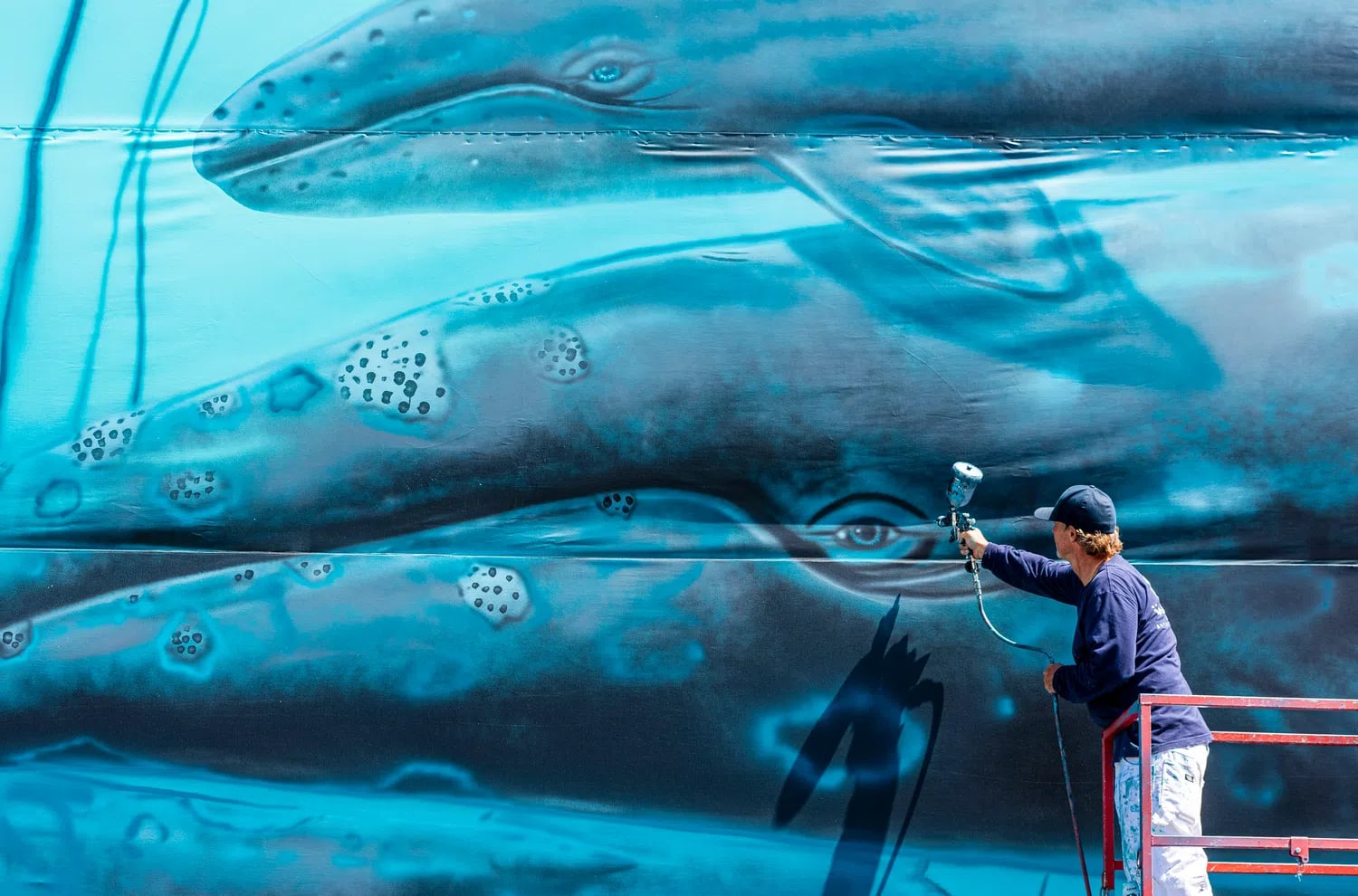
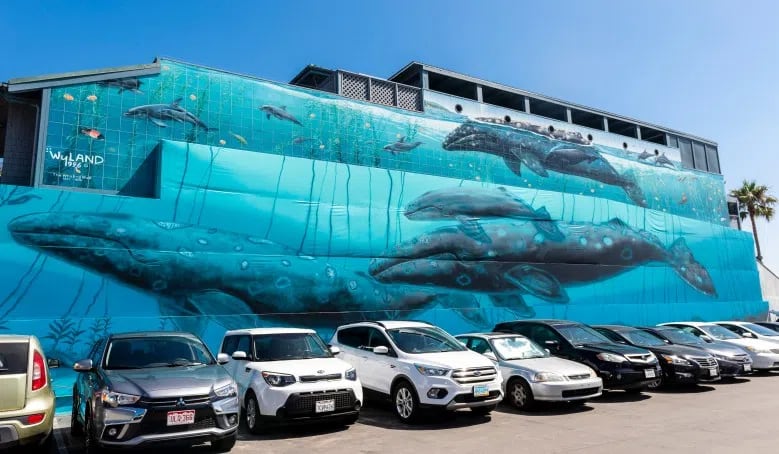
At the center of the dispute is Ocean Life, also known as Whaling Wall 82, an approximately 17,000-square-foot mural completed in 1999 on the side of a downtown building. Featuring life-sized whales and other marine life, it had long been a recognizable part of the city's skyline. In mid-May 2026, Dallas residents watched the iconic mural disappear beneath layers of blue paint. Crews began covering the artwork to make way for FIFA World Cup 2026 branding, and by May 18, most of it had vanished.
On June 1, 2026, Robert Wyland filed a federal lawsuit in the U.S. District Court for the Northern District of Texas against FIFA, FIFA Americas, FWC2026 US, building owner 3PZ Property Company, and Slate Asset Management. The suit seeks at least $25 million in damages and alleges violations of the federal Visual Artists Rights Act, a law that provides protections for certain works of visual art.
Known simply as Wyland, the artist is best known for his more than 100 Whaling Walls, large outdoor murals featuring images of life-size whales and other sea life, created to call attention to the plight of whales throughout the world. The sight of a mother and baby gray whale migrating near the California shore eventually inspired him to paint those same two whales on a life-size scale on an adjacent building in 1981, after which he committed himself to creating one hundred ocean murals around the world as a gift to communities. The Dallas mural was given to the city free of charge, paid for through donations from Wyland's foundation and his own time and money.
"This mural was created as a message of hope, conservation, and respect for our oceans. It was a gift to the people of Dallas and a reminder that protecting our oceans is a responsibility we all share. To see an important public artwork with that kind of meaning treated as disposable is deeply painful," Wyland said in a statement.
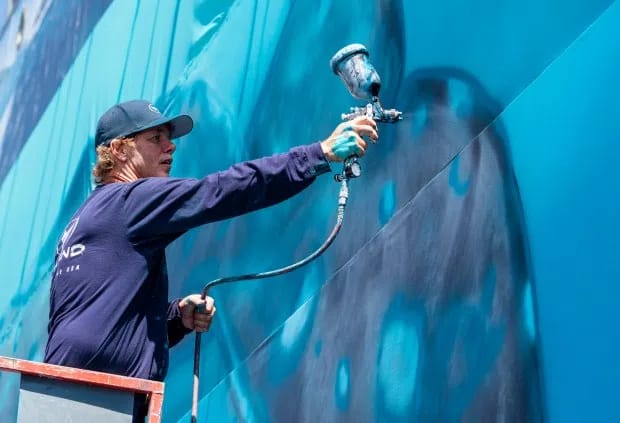
Wyland filed suit, saying that World Cup organizers, the building's owner, and management company painted over his mural without his consent or even notifying him. The property manager disputes this. A spokesperson for Slate Asset Management said the company was approached by Downtown Dallas Inc. and the North Texas FIFA World Cup organizing committee in March 2026 with a request to donate the wall space for a new public art installation, and was told: "by the local groups that Mr. Wyland had been notified." Wyland flatly denies it, telling FOX 4 that the claim was "a lie with a capital L." FIFA, for its part, told ESPN in a statement that it has "no involvement in this whatsoever" and referred inquiries to the host city committee.
The legal mechanism at the heart of the case matters beyond this single wall. Wyland's lawsuit alleged violations of the Visual Artists Rights Act, a 1990 federal law that protects artwork of "recognised stature" even if someone else owns the physical artwork. VARA was the first federal copyright legislation to grant protection to moral rights. Under the act, works meeting certain requirements afford their authors additional rights regardless of subsequent physical ownership, meaning a painter may sue the owner of the physical painting for destroying it even if that owner lawfully possessed it.
The precedent most relevant here is the 5Pointz case. On February 12, 2018, a federal judge cited VARA in awarding $6.7 million to 21 graffiti artists whose works were destroyed by the developer who owned the property on which they had been painted. Wyland's legal team contends that Whaling Wall 82, which stood for nearly 30 years and belongs to a globally recognized series, qualifies for that same protection.
"Artists bring beauty, identity, and economic value to our cities. Their rights deserve the same protection we give to any cornerstone of civic life," said one of Wyland's attorneys, Andrea Perez, a partner at Carrington Coleman.
"If they can get away with it, then all the public art in Dallas and all the public art in America is at risk," Wyland said.
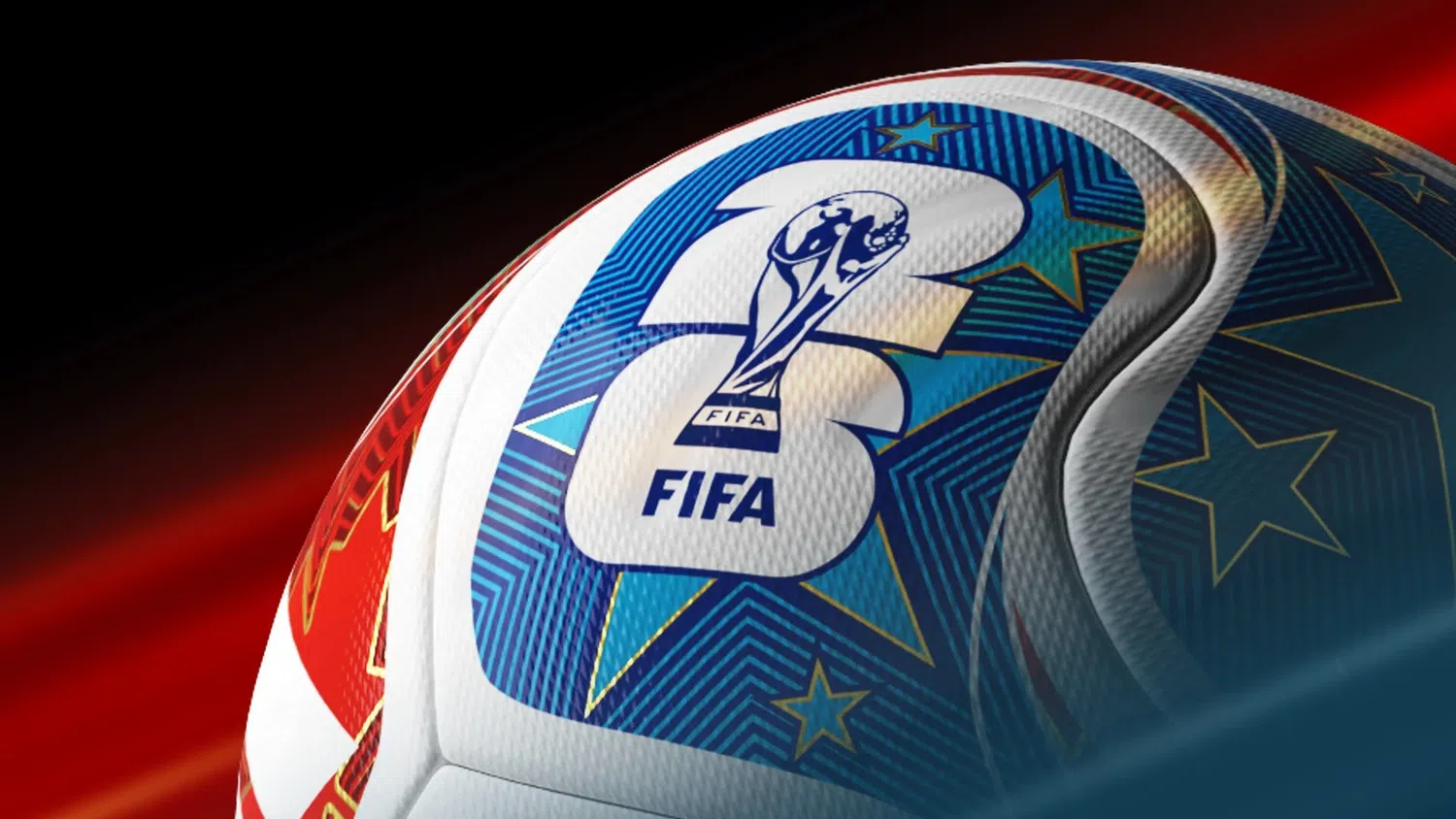
An online petition protesting the mural's destruction and calling for the protection of public artwork in Dallas has received more than 2,600 signatures. Wyland has said that if the lawsuit results in a recovery, he intends to put those resources "back into the work that gave rise to the mural in the first place: public art, ocean and waterway conservation, and environmental education through the Wyland Foundation."
Dallas is hosting more World Cup matches than any other site in the tournament, co-hosted by the U.S., Canada, and Mexico, with nine matches set to be played at AT&T Stadium in suburban Arlington. That context makes the erasure feel less incidental and more symptomatic. Major sporting events have long reshaped the urban fabric of host cities, and public art has rarely emerged from those processes unscathed. What this case may ultimately settle is whether a federal moral-rights law, still young by legal standards, has real teeth when the pressure comes from the world's most-watched sporting event.
Check topics and authors from this story to see more stories like this in your personalized feed and receive updates when new work is published.


