
Provenance disputes at the upper end of the auction market tend to arrive slowly, then all at once.
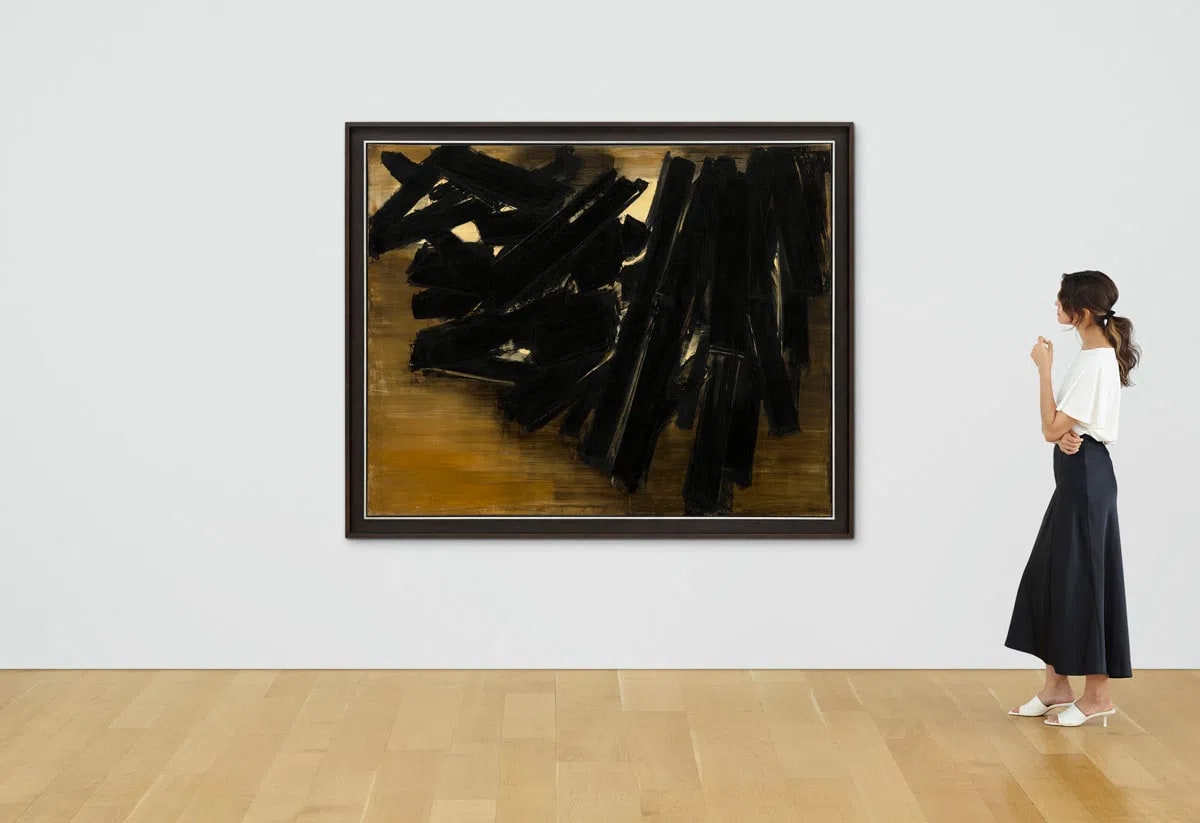
A 1958 painting by Pierre Soulages that sold at Christie's last fall now sits at the center of a new lawsuit. Filed in New York State Supreme Court, the suit concerns Peinture 161 x 200 cm, 14 novembre 1958, which sold for just under $5 million during an evening sale of the collection of Patricia G. Ross Weis and Robert F. Weis.
The Zeckendorf family, prominent New York real estate developers, alleges the work was stolen between 1977 and 1980. They are not seeking the canvas itself. Instead, they want the proceeds from the sale.
Soulages, born in Rodez in 1919, became one of postwar Europe's most significant abstract painters before his death in October 2022 at 102. He gained international recognition as a figure of both Art Informel and Abstract Expressionism, and from the 1940s to the 1970s, black progressively conquered the surface of his calligraphic paintings, which incorporated subtle hints of ocher and blue. His aesthetics radically shifted toward monochrome in 1979, when he initiated his lifelong series Outrenoir. The painting at issue predates that turn, belonging to a period when Soulages was building his reputation across galleries in Paris and New York.
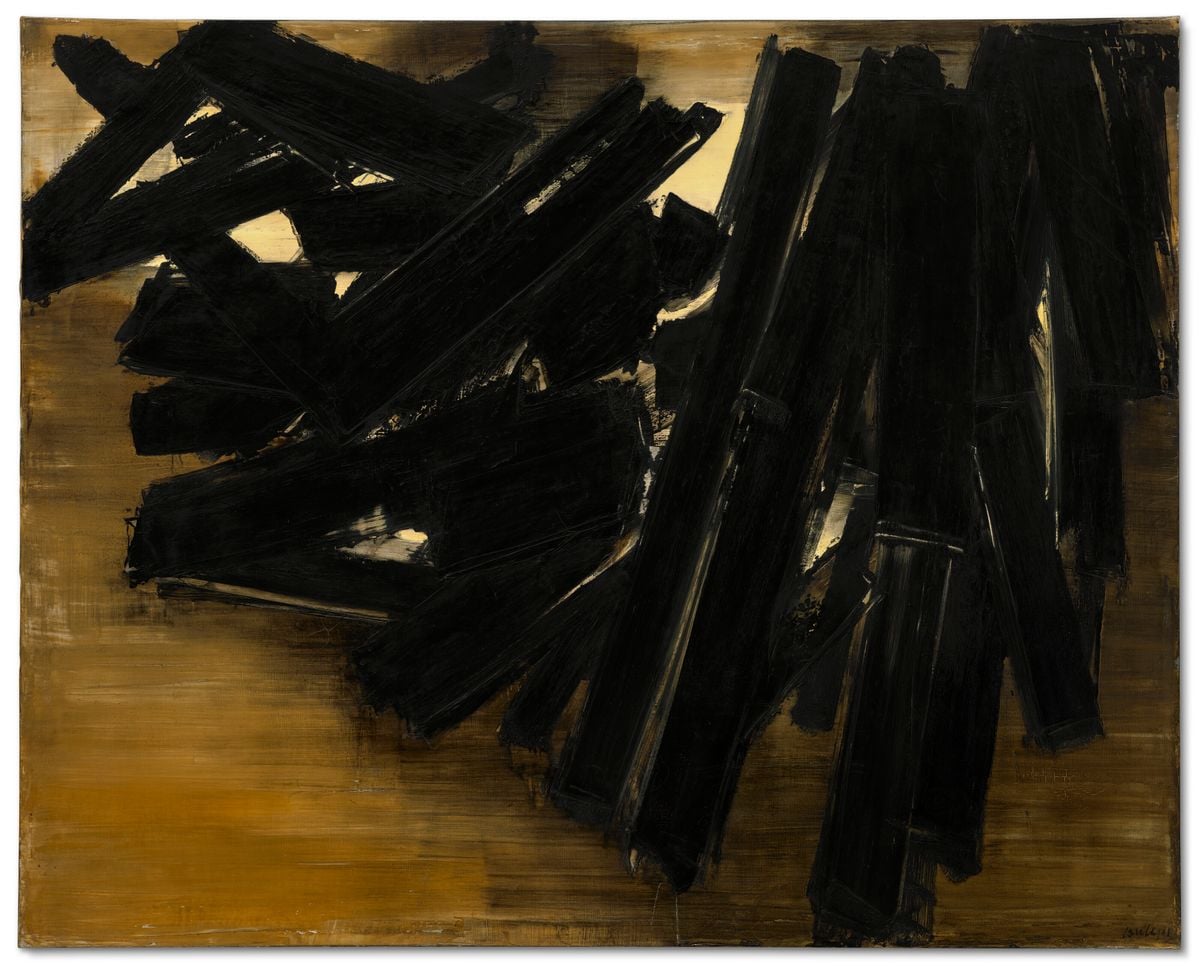
According to both the suit and Christie's own provenance notes, the work was originally sold in 1959 by the Kootz Gallery to Marion Zeckendorf. Marion died in 1968, and the painting was included in her estate's inventory. After her widower, William Zeckendorf Sr., died in 1976, the work passed to a trust. The suit claims it was likely stolen in 1977 and found missing by 1980.
Christie's provenance records note that Gimpel and Weitzenhoffer Gallery in New York sold the painting to the Weis family in 1984. The lawsuit contests a gray invoice from the now-defunct Niveau Gallery, also dated 1984, that the Weises offered as proof of ownership, noting that the gallery had switched to blue invoices in 1961. "If there was a consignment to Niveau Gallery, it was by a thief or the successor in interest to a thief," reads the complaint.
A critical detail involves the Art Loss Register, the world's largest database of stolen art. The ALR confirmed it had a registration for this Soulages title in its database, active from 2008 to 2025. However, no images accompanied the registration, making it "difficult to be absolutely certain that the works are one and the same," according to ALR director James Ratcliffe. The ALR did remove the listing and notified Christie's. A Christie's spokesperson told ARTnews the auction house "was aware of and resolved this issue ahead of the sale."
Robert Weis, who died in 2015 at age 96, was the former chairman of Weis Markets, a grocery chain his father founded in 1912 in Sunbury, Pennsylvania. The Weis collection tranche brought in $218 million at Christie's November 17 sale. The Weis children, Jennifer, Colleen Ross, and Jonathan, are listed as defendants.
The case raises persistent questions about due diligence in high-value auction transactions. Gaps in provenance, disputed invoices, and a seventeen-year ALR listing all preceded a sale that cleared without public incident. On social media, self-appointed researchers are already combing through other Weis lots, a kind of open-source scrutiny reminiscent of the amateur sleuthing that followed the exposure of Shaun Greenhalgh's forgery operation. Over seventeen years, Greenhalgh produced a vast number of fakes, selling them internationally to museums, auction houses, and private buyers. Scotland Yard called his family "possibly the most diverse forgery team in the world, ever."
Whether the current wave of online investigation yields anything beyond speculation remains open. But the Soulages dispute has already crystallized a familiar anxiety: that provenance, the chain of custody meant to guarantee trust, may be the weakest link in the system tasked with protecting it.
Check topics and authors from this story to see more stories like this in your personalized feed and receive updates when new work is published.