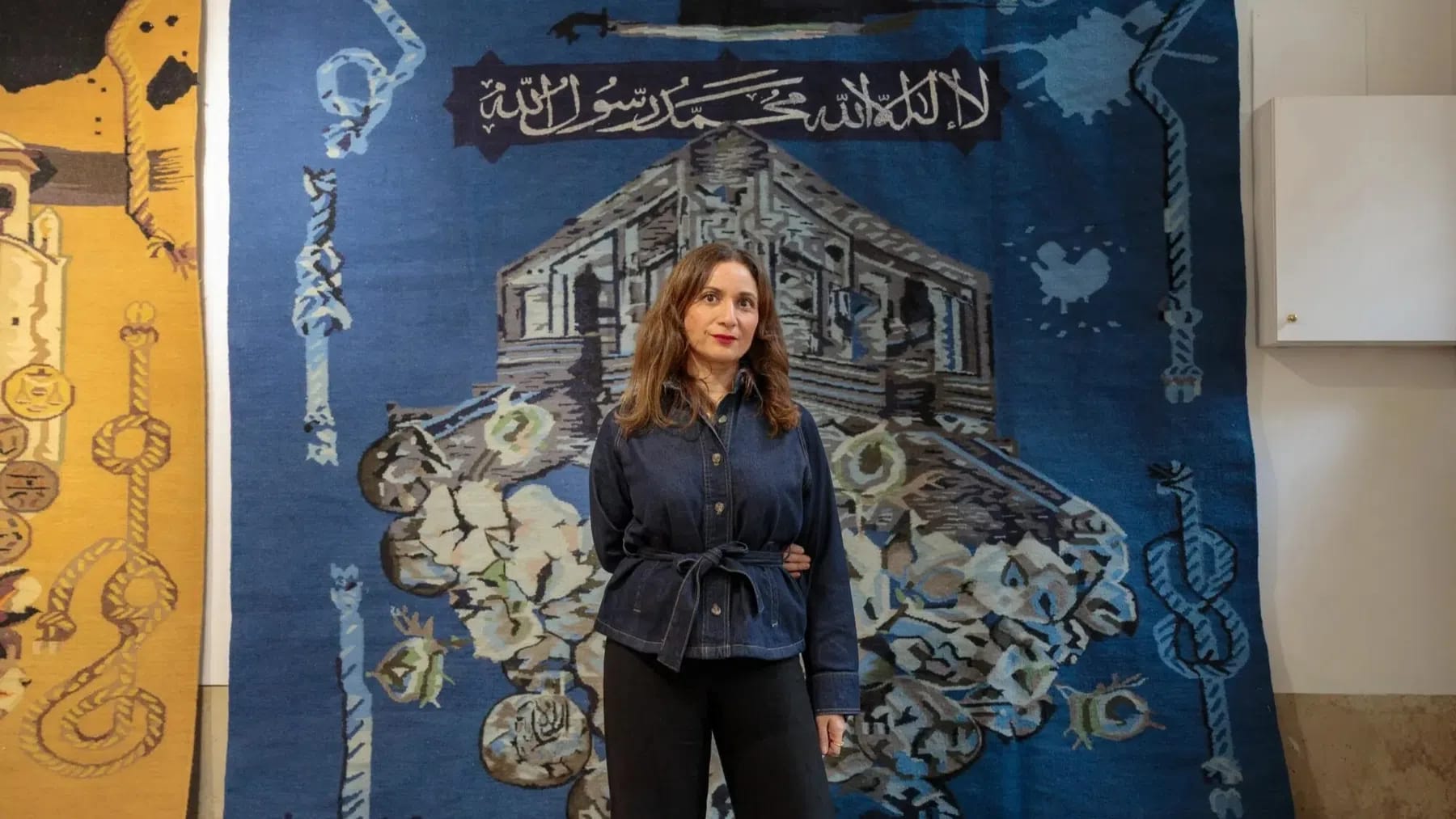
For only the second time in its history, Pakistan has a national pavilion at the Venice Biennale. Punj•AB: A Sublime Terrain, which opened on 9 May at Ex Farmacia Solveni in the Dorsoduro district, remains on view through 22 November. Faiza Butt, born in Lahore and now based in London, is the artist carrying the weight of that representation.
Pakistan's inaugural pavilion, in 2019, featured work by Naiza Khan and was curated by Zahra Khan. Seven years later, a second attempt was far from guaranteed. Government approval from Islamabad came a mere six months before the Venice opening. Butt herself initiated the idea that led to Pakistan's return.
The pavilion approaches Punjab not as a fixed geography but as a living continuum in which cultural knowledge and memory are carried through practices of making. That framing resonates with the Biennale's broader curatorial direction this year. The 61st edition is shaped by the late Koyo Kouoh's vision, titled In Minor Keys, which was realized posthumously after her death in May 2025.
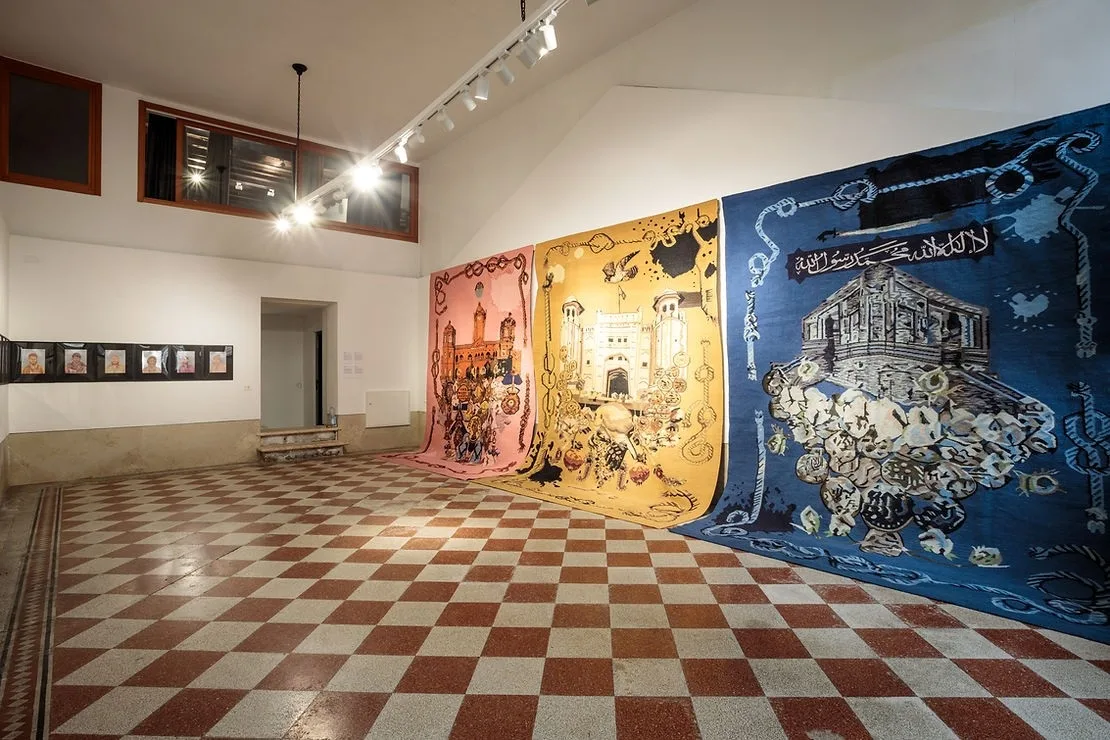
Butt trained at the National College of Arts in Lahore and later at the Slade School of Fine Art in London. Her paintings are built through a near-obsessive layering of tiny dots, a method rooted in the Indo-Persian par dokht tradition of miniature painting. At Venice, though, she has pushed well beyond that signature technique. The pavilion incorporates large wall-hanging tapestries, paintings, sculpture, and a video installation.
The works emerged through collective production with women artisans, acknowledging shared authorship and situating art-making as both communal and historically grounded. Some collaborators had never woven tapestries before producing 12-by-9-foot pieces, employing skills now nearly lost within globalised manufacturing. Craft, here, is not a metaphor. It is a material argument.
"I think, maybe just to excite the audience, I can give you a few clues. We are honing in on the notion of agriculture and, through it, we are honing in on the notion of cotton. We're picking history through the root of cotton," Butt told Dawn's EOS magazine ahead of the opening. That agricultural thread ties the exhibition to broader questions of labour, ecology and colonial partition.
Beatriz Cifuentes Feliciano, the exhibition's curator, specialises in South Asian and Himalayan art and is part of the curatorial team at Tate Modern. "My curatorial approach foregrounds plural art histories, positioning contemporary art from Pakistan in dialogue with inherited traditions of making," Cifuentes Feliciano stated in a press release. In a later conversation, she described the show as a continuous process of "editing intensity."
"It was an immense responsibility that was given to me, a huge privilege," Butt said in an interview with the Aleph Review. "I did not want to show the same things that my audience and collectors are used to. My work has always had a moral premise to it."
Butt and Cifuentes Feliciano are reportedly in talks with institutions in Pakistan to eventually bring the show home. The real challenge for Pakistan, as observers have noted, is no longer whether the country can produce a pavilion worthy of the international stage, but whether it can build the institutional continuity to ensure the next attempt does not begin from zero.
Check topics and authors from this story to see more stories like this in your personalized feed and receive updates when new work is published.


