Saadiyat Island has spent the better part of two decades building museums. Now it is getting a fair to match them.
Frieze Abu Dhabi, the first edition of the London-born franchise's newest outpost, opens November 19 at Manarat Al Saadiyat, and two Pakistani artists are part of the lineup, drawing attention well beyond the Gulf.
Hamra Abbas and Imran Qureshi will appear in different corners of the fair.
Abbas joins the gallery program through Dubai-based Lawrie Shabibi, while Qureshi's new sculpture Water Bodies takes a spot in the outdoor Frieze Sculpture Abu Dhabi exhibition at Mamsha Beach, presented by Thaddaeus Ropac. Their presence signals something specific. Pakistan's contemporary art scene, often discussed in isolation, is being folded directly into a major international platform.
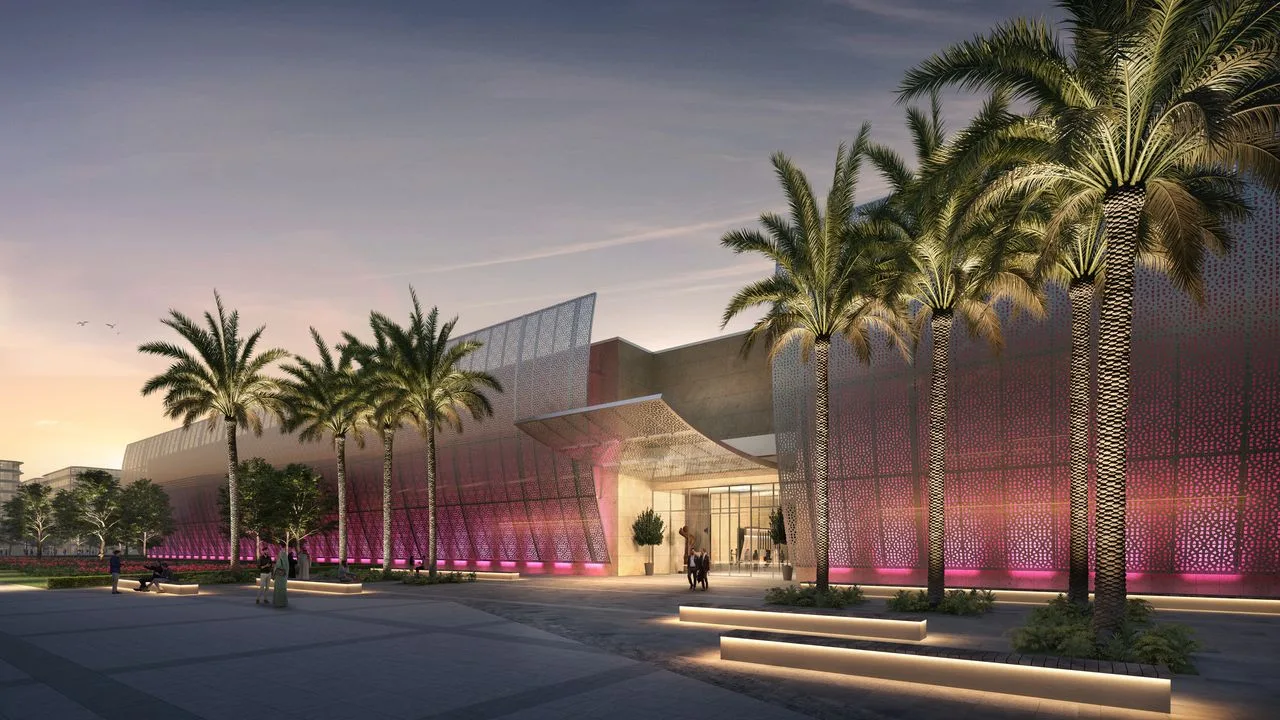
The fair itself is not starting from nothing. It replaces Abu Dhabi Art, which ran for 17 years before its rebranding under a partnership between Frieze and the Department of Culture and Tourism – Abu Dhabi. That history matters. Dyala Nusseibeh, who directed Abu Dhabi Art, now leads the new venture, giving it continuity even as the Frieze name changes what it can attract.
Numbers tell part of the story.
The inaugural edition will bring together 84 galleries from 64 cities across 37 countries and regions, spanning everything from antiquities and rare manuscripts to major 20th-century names and contemporary artists working today. That is smaller than the final Abu Dhabi Art, which drew more than 140 galleries, but the fair's own leadership frames that as deliberate. Nusseibeh has said the selection process this time was more stringent, built to accommodate a tighter set of curated sections rather than sheer volume.
Those sections are new. Global Futures will give space to early and mid-career artists connected to the UAE and West Asia, while Frieze Masters Abu Dhabi turns toward historical objects, covering antiquity through the early twentieth century.
A third strand, In Dialogue, pairs an established Emirati artist with an emerging one, starting with Mohammed Kazem and Alia Zaal.
Abbas's inclusion fits a broader pattern at this fair. The inaugural edition introduces three curated sections with an all-female curatorial line-up, and works by women artists will have a strong presence, with pieces by Etel Adnan, Hamra Abbas and Shaikha Al Mazrou among those being presented. Her practice has moved through several distinct phases over two decades.
Born in Kuwait and now based between Lahore and Islamabad, Abbas trained in sculpture and Indo-Persian miniature painting at the National College of Arts before completing a Meisterschüler at Berlin's Universität der Künste.
Her work since has ranged across installation, video, and stone. After relocating to Pakistan in 2015, Abbas began working with marble inlay sourced from local factories, a shift that tied her practice more directly to craft traditions tied to Lahore.
Abbas draws from the visual languages of ornament, architecture and material culture to produce reconstructions of forms and symbols as they move across time, geography and personal experience, engaging with collective memory while reflecting on traditions of craftsmanship, mythology and cultural history. Lapis lazuli, one of her preferred materials, carries its own complicated geography, mined largely in Afghanistan before it reaches her studio.
Qureshi arrives at Frieze Abu Dhabi with a longer international résumé.
Trained at the National College of Arts in the early 1990s, he became known for reviving Mughal miniature painting and scaling it into site-specific installations that spill across floors and walls. His breakthrough came with Blessings Upon the Land of My Love, the courtyard installation he made for the 2011 Sharjah Biennial, which won that year's biennial prize.
Two years later, Deutsche Bank named Qureshi Artist of the Year, an honor that led to a rooftop commission at the Metropolitan Museum of Art in New York.
His signature use of blood-red paint, meant to evoke violence and its aftermath while gesturing toward renewal through floral motifs, has become something of a visual shorthand for his work. Water Bodies, the 2026 piece heading to Mamsha Beach, continues that line of large-scale, site-responsive production.
It will sit alongside works by Zeinab Alhashemi, Mohamed Ahmed Ibrahim, and Kamran Samimi in an outdoor exhibition presented by Aldar, running from November 16 through December 16, extending nearly a month past the fair's own close.
Frieze Abu Dhabi's arrival also marks the brand's first fair in West Asia, North Africa, and South Asia, a region Frieze has courted through years of satellite programming but never hosted directly. Whether that translates into lasting market weight for artists like Abbas and Qureshi, or for the wider Pakistani scene they represent, will depend on how collectors respond once the booths actually open.
The fair gives two very different Lahore-trained practices a shared stage at a moment when Gulf institutions increasingly set the terms for how South Asian contemporary art is seen internationally.
Check topics and authors from this story to see more stories like this in your personalized feed and receive updates when new work is published.


