
In the wake of a landmark 2024 appellate ruling in Luxembourg that found a painter liable for copying a photographer's image without credit, the boundary between painted reproduction and creative authorship remains one of the most contested fault lines in visual culture.
A new dispute, playing out on Instagram rather than in court, has brought the question sharply back into focus.
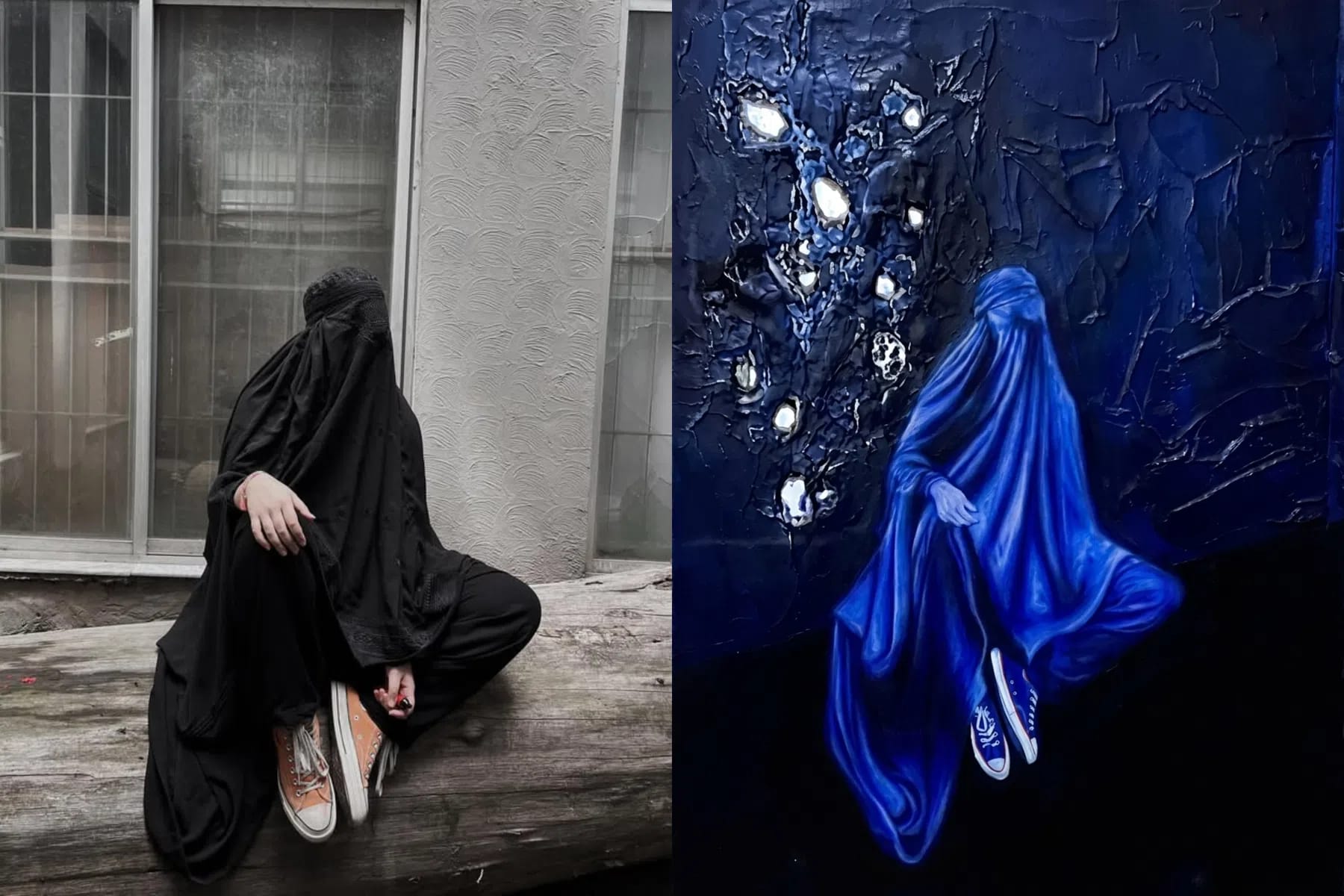
Lakhta Sulaiman, a National College of Arts student photographer who posts under the handle @lakhta_fm, used her Instagram Stories to accuse a UK-based online gallery of selling a painting derived directly from one of her photographs. No. 35 Gallery announced its Body International Online Group Exhibition 2026, a themed show that broadly explores the physical, psychological, and cultural dimensions of the human form. The work in question, a mixed-media canvas titled Under the Veil and measuring 18 by 24 inches, was listed on the gallery's website at £299.
No. 35 Gallery describes itself as a UK-based online art platform spotlighting emerging and women artists from the Middle East. Company records show it was incorporated in London on 1 August 2025 as a private limited company, registered at an address in North Finchley. Its programme consists primarily of open-call group exhibitions staged online, ranging from floral and abstract themes to solo shows.
Sulaiman stated plainly in a text post: "Artists deserve respect but so do photographers. Using someone else's photograph as the basis for an artwork without permission or credit isn't okay." A follow-up slide showed the gallery listing alongside a pink overlay that read in part: "This painting was created from a photograph I took, without permission or credit." She identified the photograph as part of her academic thesis, a detail reinforced by a side-by-side comparison posted to her Stories annotating the original image.
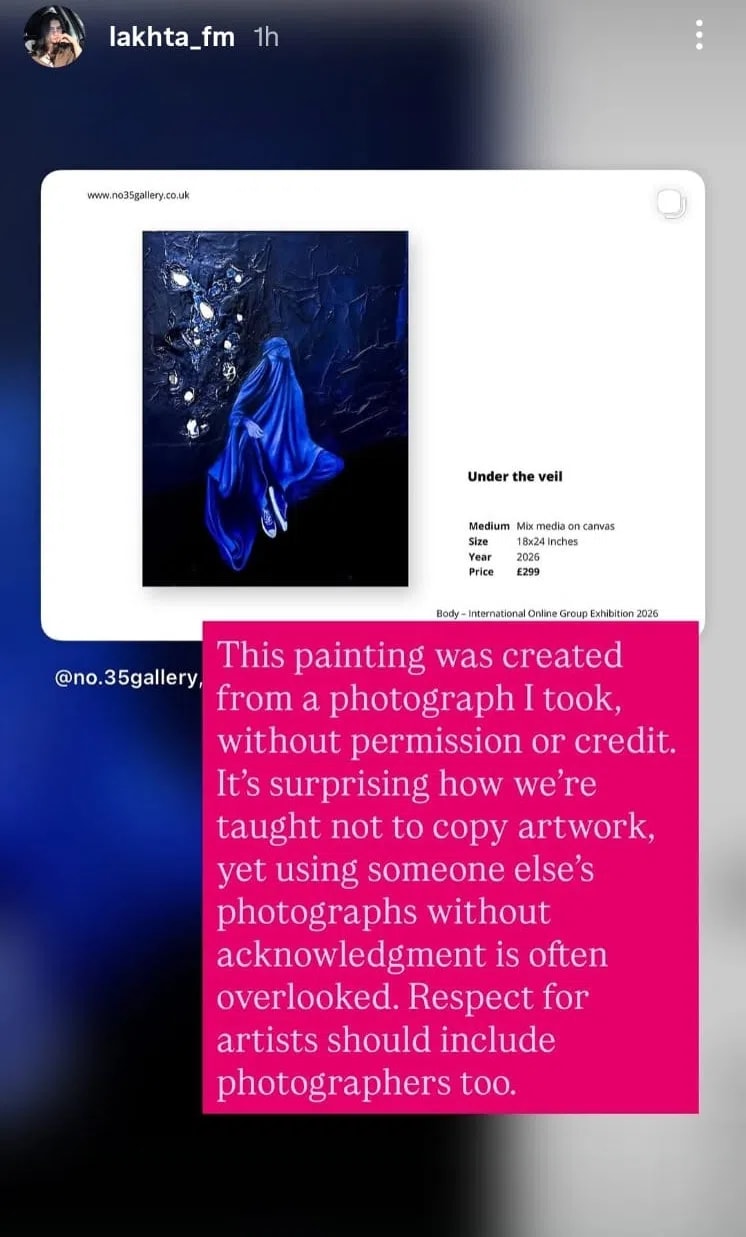
Community response arrived fast. One supporter, posting under the handle @http_abzx, wrote that "the original creator of this work is @lakhta_fm" and urged recognition of the photographer's effort. Another user, @sstar.childe, went further, calling the uncredited use "shameless" and directing criticism at both the painter and the gallery itself.
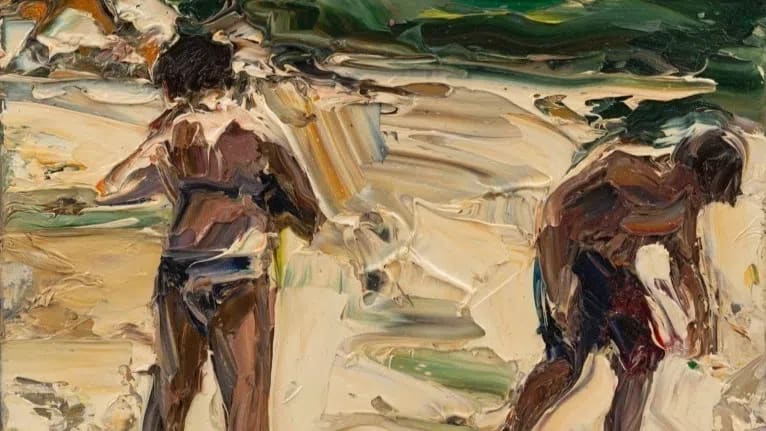
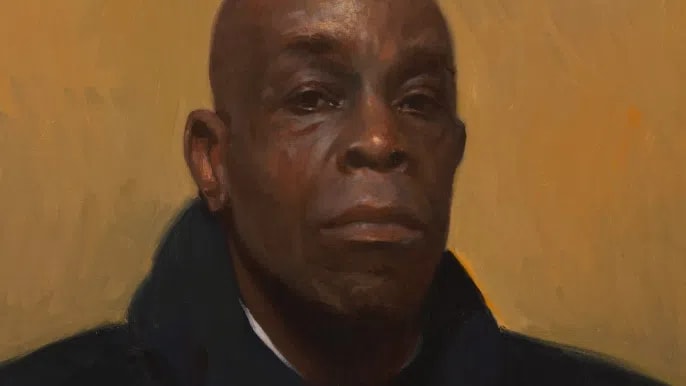
The dispute belongs to a growing category of conflicts that pit photographers against painters who use their images as source material. In a notable parallel, Singaporean photographer Zhang Jingna won a European appellate case in 2024 against Luxembourg artist Jeff Dieschburg, writing afterwards that "it's a reminder that copyright protects individuals from those that try to profit off our work without consent."
That court found Dieschburg had used Zhang's photograph as a template without citing the source, violating copyright laws.
Legal experts note that many painters remain unaware they need permission from photographers when using someone else's image as reference, since such paintings are legally classified as derivative works. If a photographer's unique style or composition is identifiably replicated, the painter may be liable for infringement. Yet enforcement often depends on the photographer's willingness to pursue a claim.
No. 35 Gallery has not publicly responded to the allegations at the time of writing. Nor has the artist behind Under the Veil issued any statement. For Sulaiman, the episode raises a concern that extends well beyond a single listing. The ease with which photographs circulate online makes them vulnerable to appropriation, especially when the resulting works enter commercial contexts.
Whether this particular case is resolved through removal, apology, or something more formal, it adds to a growing record of photographers demanding that their creative labour be afforded the same protections extended to other visual art forms.
Check topics and authors from this story to see more stories like this in your personalized feed and receive updates when new work is published.