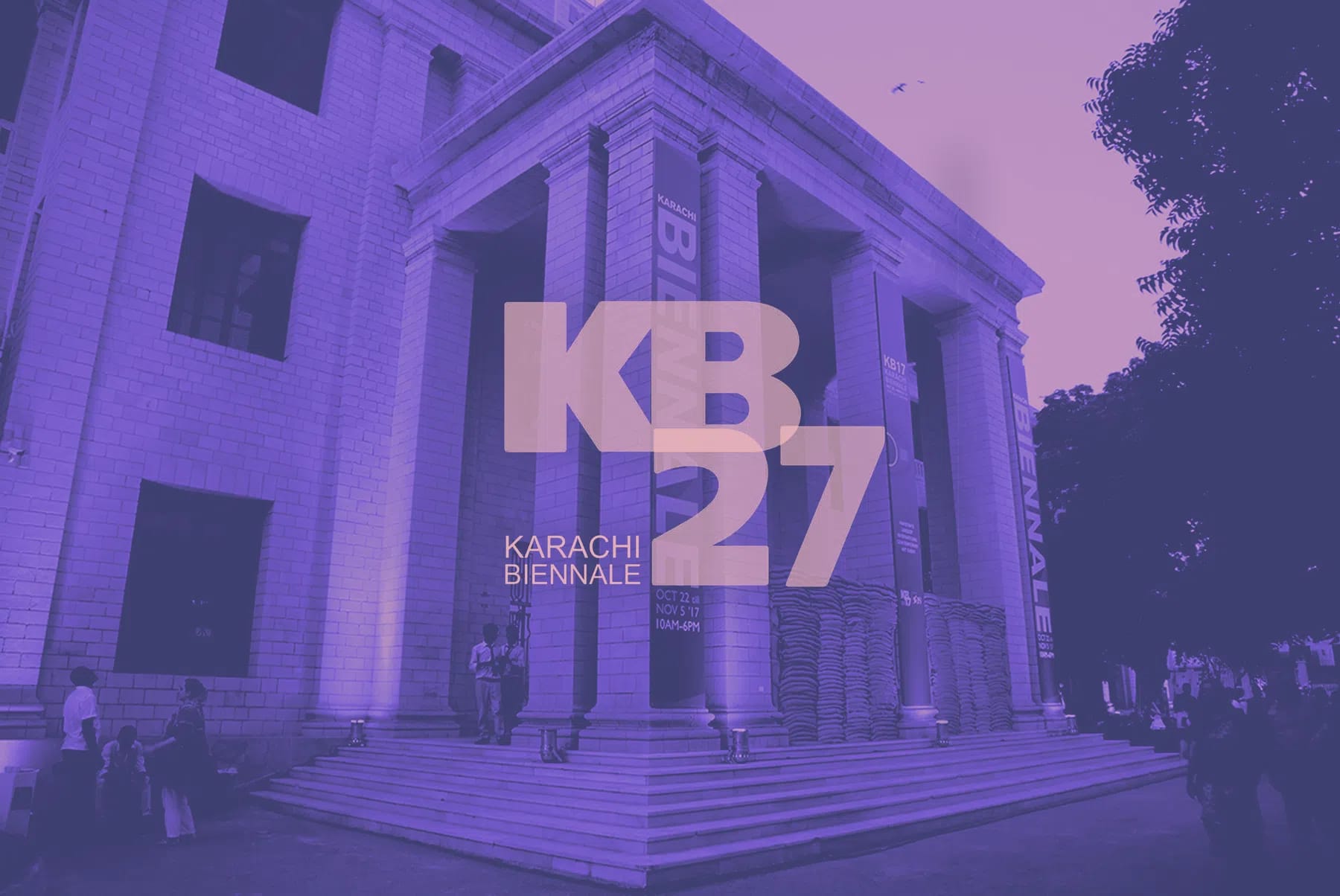
War has a way of clearing out cultural calendars fast. The Karachi Biennale Trust confirmed this week that Karachi Biennale 2027, known as KB27, will not open as scheduled next January.
The organization released a short statement explaining the decision. "On account of the war conditions prevailing in the region and the resultant logistical constraints and uncertainty, KBT is unfortunately forced to cancel KB27," the trust said. It added that it remains "deeply grateful to artists, sponsors, partners, collaborators and well-wishers for their unstinting support."
That war is not abstract. Pakistan has been locked in open conflict with Afghanistan since late February 2026, after cross-border skirmishes escalated into what Pakistan's defence minister, Khawaja Asif, called an "open war" fought under the codename Operation Ghazab lil-Haq.
The fighting followed Pakistani airstrikes on suspected militant camps and retaliatory strikes from Afghan forces, part of a broader stretch of regional instability that also included a brief but intense military confrontation with India in May 2025.

Against that backdrop, running a two-week public art event across open city sites was never going to be simple.
KB27 would have been the fifth edition of the Karachi Biennale, and its tenth anniversary year. The event was built around the theme Kal, meaning both tomorrow and yesterday in Urdu, under curator Noor Ahmed. She holds the distinction of being the second woman to hold the curatorial role in the Biennale's history, after previously working as assistant curator for Karachi Biennale 2019.
The biennale was scheduled to run from January 16 to 31, 2027, at multiple public sites across Karachi, continuing the approach established at its 2017 debut of using the city's ports, parks and public spaces rather than a single gallery venue.
The Karachi Biennale Trust was founded in 2016 by a group of visual art professionals and educators as a platform to promote creativity, innovation and criticality in the visual arts, with Niilofur Farrukh among its founders.
Since its 2017 launch under the theme Witness, the biennale has rotated curators and themes every two years, moving through ecology with Muhammad Zeeshan in 2019, technology with Faisal Anwar in 2022, and food security with Waheeda Baloch's Rizq/Risk in 2024.
The event has not always run smoothly. During KB19, an installation by artist Adeela Suleman titled Killing Fields of Karachi was forcibly shut down. Men claiming to be law enforcement sealed the site, a moment that drew sharp criticism of state interference in public art. That history matters here. A biennale built on improvising around infrastructure gaps and political pressure has now run into something it cannot route around.
Just months before the cancellation, the trust had marked a decade of programming with a curtain-raiser event. It featured a 77-minute preview featuring works by 72 artists from 18 countries, hosted by Gulgee and Ahmed. Bushra Hussain, the artistic director, had used the evening to trace the Biennale's earlier editions. Atteqa Malik, chairperson of the trust, had introduced Ahmed as the curator steering the organization into its second decade.
Submissions were also open for the EBM Emerging Artist Prize, a juried award tied to KB27 that required applicants to have at least five years of practice and the ability to produce a site specific commission. That prize, along with the rest of KB27's programming, is now effectively frozen until the trust decides what comes next.
The cancellation leaves a gap in South Asia's biennale circuit, where Karachi had positioned itself as Pakistan's answer to larger regional platforms. Unlike a gallery show that can simply be rescheduled, a citywide biennale depends on sponsor commitments, international shipping, visiting artists and public safety assurances, all of which get harder to guarantee once a neighboring war escalates.
For now, the trust has not announced a revised timeline or a KB28. Its statement closed by inviting continued collaboration from artists and partners going forward. Whether that translates into a delayed 2027 edition or a longer pause will likely depend on how quickly the regional conflict settles.
Karachi's art community, in the meantime, is left waiting on a ceasefire rather than a curatorial brief.
Check topics and authors from this story to see more stories like this in your personalized feed and receive updates when new work is published.

