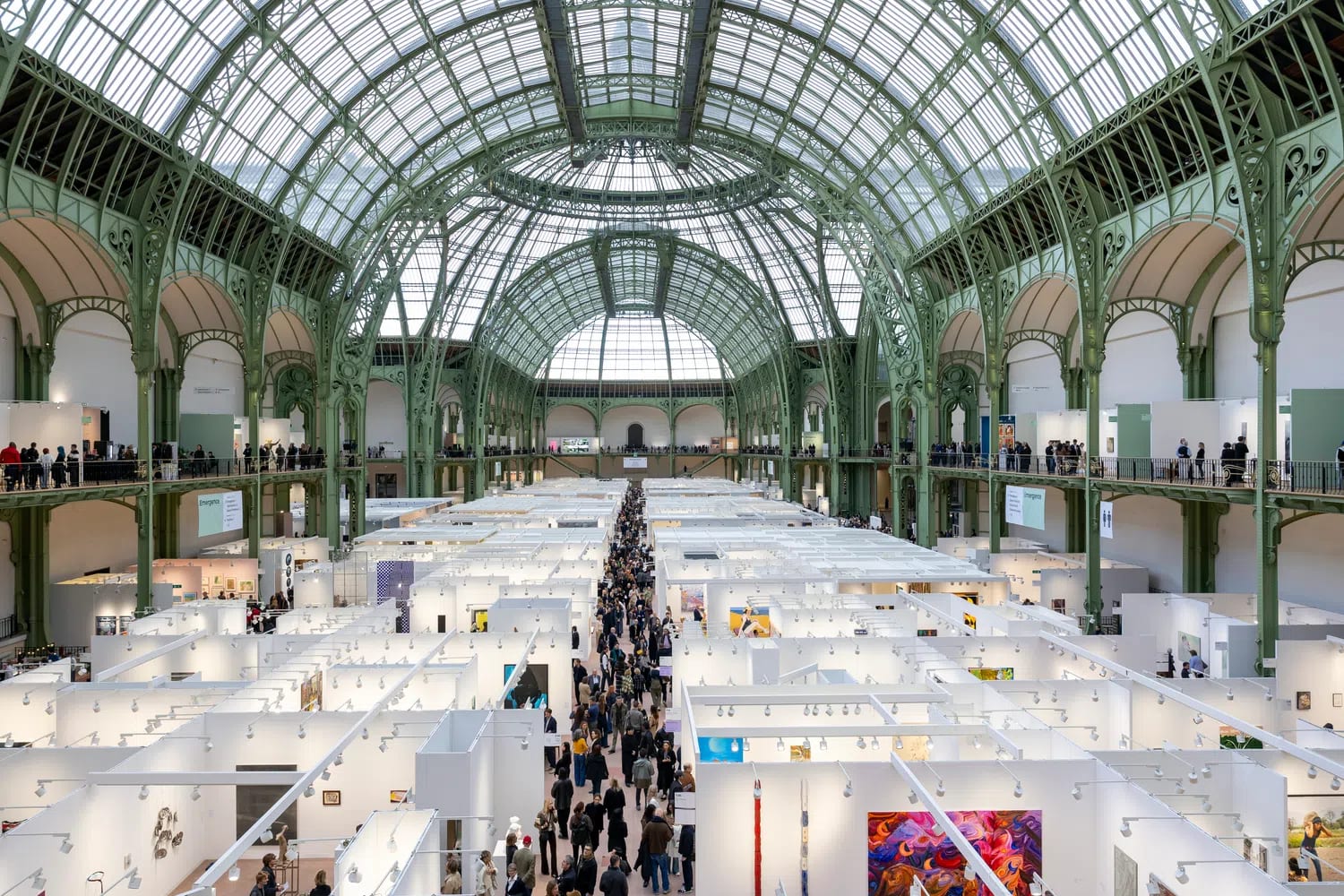

Paris art week usually runs on champagne and small talk about who sold what. This year it is running on concrete barriers and ID checks. Art Basel Paris has told exhibitors the fair will shut at 7 p.m. on Friday, October 23, scrapping its Saturday and Sunday public days entirely.
The message went out Wednesday morning to galleries and VIP guests. Organizers framed it as a safety call rather than a retreat. An email from Art Basel management, co-signed by chief artistic officer Vincenzo de Bellis and Paris director Karim Crippa, told exhibitors the closure came "in light of potential demonstrations across Paris this weekend, and in the interest of safeguarding our visitors," adding that "this decision has not been taken lightly, and the safety of everyone involved in the fair remains our utmost priority."
The timing is brutal. This is the fifth edition of the fair, held in the newly restored Grand Palais, and it brings together 211 galleries from 41 countries. Those galleries paid for five days. They are getting three, and only one of those is open to the paying public.
What Triggered the Shutdown
Last weekend's demonstrations over education and the cost of living curdled into something uglier. Major demonstrations against the high cost of living and school conditions were overshadowed last weekend by riots and looting, with at least 2,500 people arrested across France, according to the BBC. Shops along the Champs-Élysées took the brunt of it. Numerous shops on the high-end Champs-Élysées boulevard were damaged.
Art Basel had already been bracing for trouble before this week's closure announcement. The Paris Police Prefecture had ordered the Grand Palais to briefly shut down on October 17 to "ensure the safety of everyone on site and the protection of the artworks," though the building sustained no damage. One anonymous gallery staffer described the scene to Hyperallergic in blunt terms: "No one could get out, and no one could get in," with moving trucks loading and offloading works until "they were told to pack up and go."
By opening day, the fair looked more like a checkpoint than a vernissage. Reporting from Artforum noted that visitors attending the inaugural VIP preview day were forced to wend their way through concrete anti-ram barriers encircling the Grand Palais. Friday's remaining public hours will come with their own new condition. Visitors to the fair on Friday will now be required to bring government ID.
President Emmanuel Macron has drawn a hard line on this weekend specifically. Only authorised union protests will be allowed in French towns and cities on Saturday, Macron said.
The Sculpture That Came Down Early
Hours before the fair's own announcement, artist Alicja Kwade made one of her own. Kwade, the Polish-German sculptor known for work probing the subjectivity of time and space, had just unveiled a new public piece on Avenue Winston Churchill, the grand boulevard running between the Grand Palais and the Petit Palais.

The sculpture, L'Élévation des Mondes, is no small object. It stands over 14 feet high and is composed of a stack of spheres in materials like rainbow sandstone, black marble, and Carrara marble. Its subject matter now reads almost too on the nose. According to the gallery representing Kwade, the work "explores questions of world order, power, colonization and humanity's attempt to construct systems that explain and organize reality."
It debuted this week as part of the fair's free public program, officially titled Hors les murs, which spreads monumental artworks across nine exceptional cultural and heritage sites in the French capital. Kwade's piece stood alongside work by Niki de Saint Phalle, both installed along the same stretch between the two palaces.
Kwade did not wait for the fair's own announcement. Writing to her near-100,000 Instagram followers, she said her sculpture would come down a full two days ahead of schedule. "Unfortunately, only on view today and tomorrow, as it has to be dismantled, along with other sculptures, because of the announced riots and people who simply want to resort to violence," she wrote. She did not stop there.
"Protest is good, but why everything has to be smashed and destroyed is beyond… It certainly doesn't help the cause," she added.
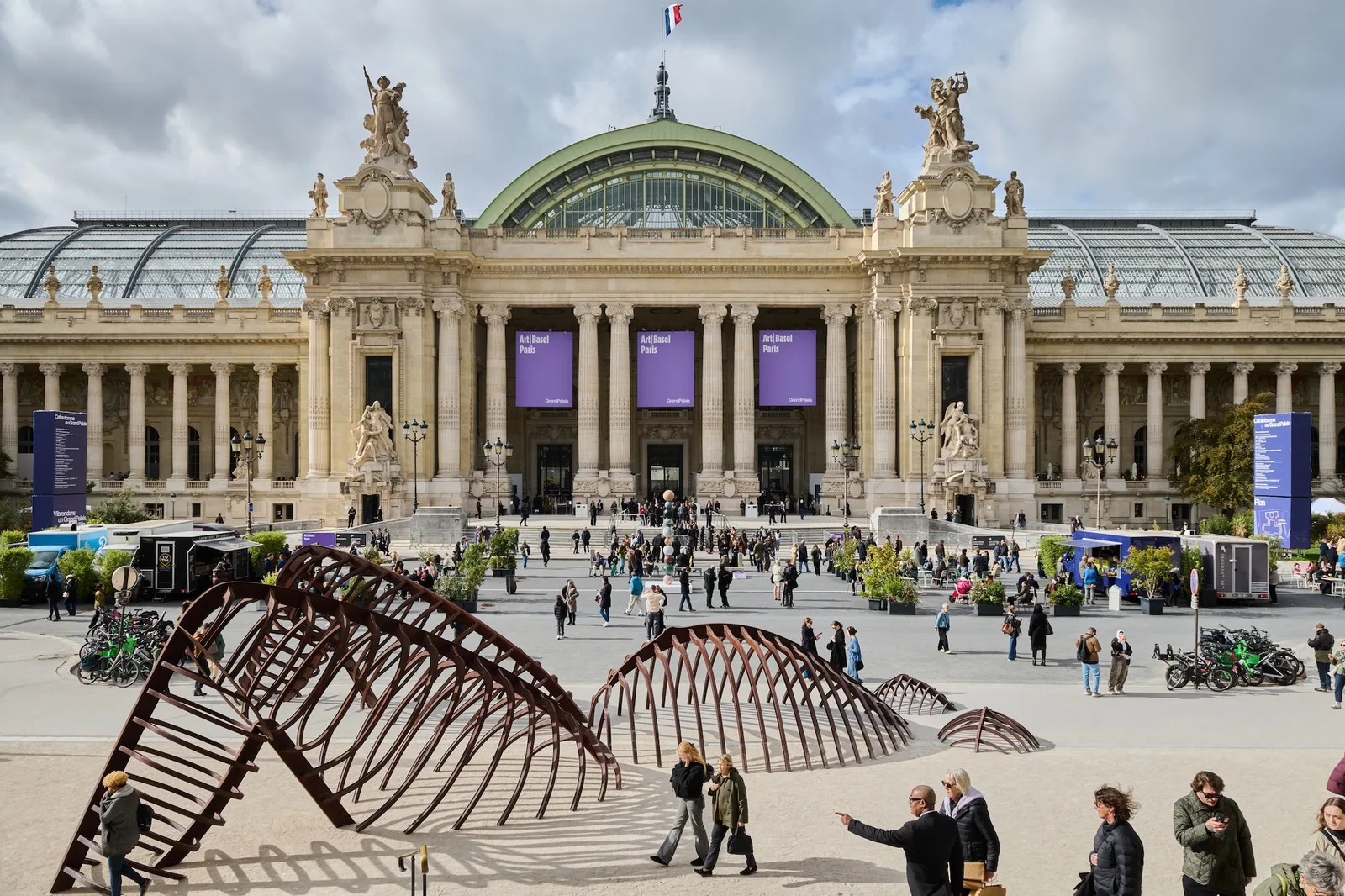
Her Paris gallery confirmed the logistics. The piece went on view Wednesday and will be removed Friday, rather than Sunday, her Paris gallery, Mennour, told ARTnews. Fair leadership had already flagged the risk publicly. Artnet reported that Art Basel had advised galleries with sculptures displayed just outside the fair, as part of its public-art program, to take measures out of an abundance of caution, according to the fair's CEO, Noah Horowitz.
Not every artist followed Kwade's lead immediately. As of Thursday, dealer Kamel Mennour had not committed to an early removal. Kamel Mennour confirmed that the piece remained on view for now and that he would make a decision on Friday. So far the gamble has paid off for everyone still waiting. Despite concerns about the security of the artworks given the unrest that followed protests on October 17, none appear to have been damaged since going on view.
The Booths Nobody Wants to Leave Unattended
Kwade's sculpture is public and outdoors, an easy target in theory. Inside the fair, dealers are facing a quieter version of the same calculation. At Paula Cooper Gallery, whose booth sits near the fair's main entrance, the instinct is to get out before anyone else decides for them.
Partner Steve Henry told Artnet the gallery was seriously considering deinstalling its booth on Friday night, regardless of the official word from the fair, citing concerns about the safety of staff and artworks. That is not a small decision for a gallery with history at this fair. Paula Cooper Gallery has shown at Art Basel's events since 1999 and was named the inaugural recipient of the organization's Gallery Legacy Award earlier this year, an honor recognizing sustained commitment to artists across decades.
The fair, for its part, has not clarified what happens to booths left standing. Move-out instructions remained unissued as of Thursday. A gallerist who spoke to Hyperallergic on condition of anonymity put it simply. Operations and dismantling instructions are still pending.
Compensation is the open question nobody at Art Basel has answered yet. Fair organisers have so far made no statement regarding refunds of public tickets or booth costs to exhibitors. That silence matters more than it might elsewhere. Galleries pay substantial fees to secure booths at a fair this size, and a two-day loss of public traffic cuts directly into the sales window that justifies the expense.
A Protest Still Planned, A City On Edge
Despite the closure, Saturday's demonstration outside the Grand Palais is still on. Organizers behind the Instagram account Documentations Art have rallied supporters under a pointed slogan. The account called for readers to "take the Grand Palais," where Art Basel is held, in a form of protest on Saturday against "Art Basel, the fair of plunder." One associated group, per further reporting, is specifically targeting the commercial art fair over its corporate tax deductions, private equity ties, and military technology investments.
City Hall has told residents to prepare for the worst. Officials recommended bringing inside any garbage cans, bikes, and café tables, starting at noon on Saturday.
Art Basel is not the only institution pulling its shutters down. The Fondation Louis Vuitton, mid-run on its exhibition about collector Gustave Fayet, is also closing Saturday as a precaution, and Gagosian confirmed its Paris galleries will do the same. Earlier in the week, the Louvre itself briefly became a protest site, with student demonstrators effectively blocking the world's largest museum, according to one leaflet handed to stranded visitors.
What happens next hinges on Saturday afternoon. If the protest stays peaceful, Art Basel Paris will have cancelled two days of business for a demonstration that never threatened its walls. If it doesn't, the fair's early call will look less like caution and more like foresight. Either way, 211 galleries are already counting what three days of a five-day fair actually cost them, and nobody at Art Basel has said who picks up that tab.
Frequently Asked Questions
Why is Art Basel Paris closing early?
Art Basel Paris cited potential demonstrations across Paris this weekend and concerns for visitor safety. Riots on October 17–18 had already prompted a brief police-ordered lockdown of the Grand Palais, and a protest is still scheduled for Saturday afternoon directly outside the building.
Which days are cancelled at Art Basel Paris 2026?
The fair's Saturday, October 24 and Sunday, October 25 public days are cancelled entirely. Art Basel Paris will now close at 7 p.m. on Friday, October 23, cutting a planned five-day run down to three days for its 211 participating galleries.
Is Art Basel Paris cancelled completely?
No. The fair is not cancelled outright — it is closing two days ahead of schedule. Friday, October 23 remains open to the public, though visitors are now required to bring government-issued ID to enter.
Why did Alicja Kwade remove her sculpture from outside the Grand Palais early?
Kwade announced on Instagram that her 14-foot sculpture L'Élévation des Mondes would be dismantled Friday instead of Sunday because of what she called the announced riots and people who simply want to resort to violence. Her Paris gallery, Mennour, confirmed the early removal.
Has any artwork at Art Basel Paris been damaged by protesters?
No. Despite security concerns following the October 17 unrest that briefly locked down the Grand Palais, the building sustained no damage, and all works displayed inside and outside the fair remained intact as of Thursday, October 22.
What is the Saturday protest at the Grand Palais actually about?
The demonstration was partly organized through the Instagram account Documentations Art, targeting Art Basel over its corporate ties, including private equity investments and tax arrangements. Organizers called on supporters to take the Grand Palais, framing the fair as a symbol of economic inequality.
Are Paris museums and galleries also closing this weekend?
Several institutions are closing Saturday as a precaution. The Fondation Louis Vuitton and Gagosian's Paris galleries have confirmed closures. Earlier in the week, student protesters effectively blocked entry to the Louvre, and Hauser & Wirth also shut its gallery the previous Saturday.
Will galleries get refunds for the cancelled days at Art Basel Paris?
No announcement has been made. As of Thursday, Art Basel had issued no statement on booth-fee compensation for exhibitors or ticket refunds for the general public, despite Saturday and Sunday ticket holders being told they would be contacted with further information.
Check topics and authors from this story to see more stories like this in your personalized feed and receive updates when new work is published.


