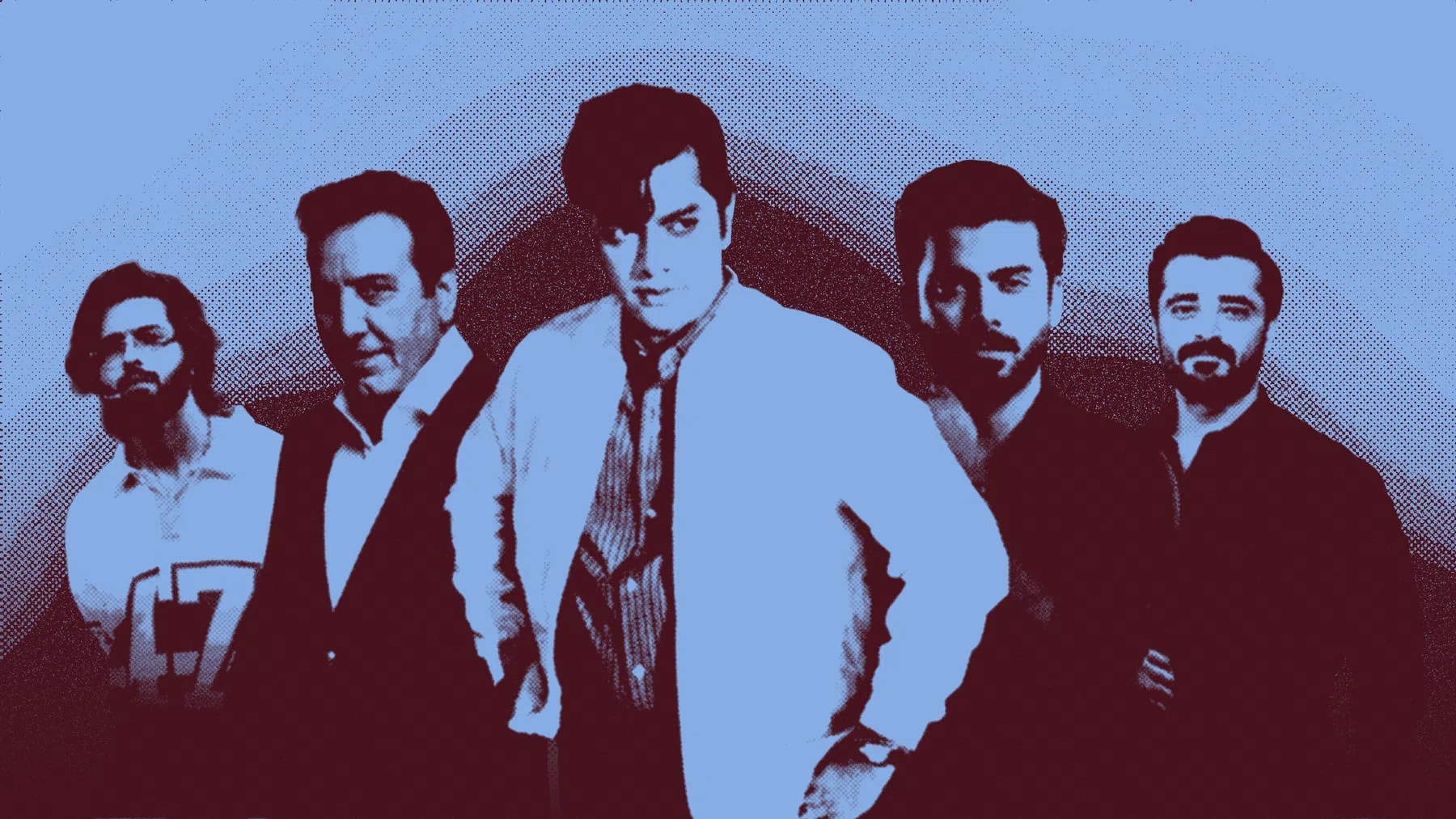
Pakistan's screen industry has produced roughly seven decades of leading men, from the black-and-white cinema idols of the 1960s to the drama serial stars who now dominate YouTube and streaming charts. This guide to the top Pakistani male actors covers both eras in one place.
This piece pulls together the male actors who actually define that history and the present moment of the Pakistani screen and drama industry. We have sorted this piece into two tiers so it works as a real reference rather than a rushed countdown.
The first fifteen names get full profiles with birth details, signature roles, and current status. The remaining fifteen, who genuinely belong on any serious list of Pakistani drama actors but have thinner or less-verified public details, sit in a condensed table further down.
Let's start with the quick-reference table first if you want the names, then dig into whichever entries interest you.
Top Pakistani Male Actors: Quick Reference Table
| Actor | Born | Era / Genre | Known For | Current Status |
|---|---|---|---|---|
| Waheed Murad | 1938 | Golden Age cinema | Armaan, Heera Aur Pathar | Deceased, 1983 |
| Muhammad Ali | 1931 | Golden Age cinema | Chiragh Jalta Raha | Deceased, 2006 |
| Nadeem Baig | 1946 | Classic film, singing hero | Armaan, Chakori | Semi-retired veteran |
| Javed Sheikh | 1954 | Film, TV, Lollywood-Bollywood crossover | Teefa in Trouble, Na Maloom Afraad | Active, occasional roles |
| Fawad Khan | 1981 | TV drama, film, crossover star | Humsafar, The Legend of Maula Jatt | Active, selective projects |
| Humayun Saeed | 1971 | TV drama, film, producer | Mere Paas Tum Ho, Dil Lagi | Active, producing and acting |
| Fahad Mustafa | 1977 | Film, TV, hosting | Actor in Law, Jeeto Pakistan | Active, on air in 2026 |
| Hamza Ali Abbasi | 1986 | TV drama, film | Pyarey Afzal, Waar | Active, selective returns |
| Imran Abbas | 1982 | TV drama, modeling crossover | Khuda Aur Mohabbat, Thora Sa Haq | Active |
| Sheheryar Munawar | 1988 | Film and TV | Ho Mann Jahaan, Sinf e Aahan | Active |
| Ahad Raza Mir | 1993 | Theatre-trained TV drama | Aangan, Ehd-e-Wafa | Active |
| Bilal Abbas Khan | 1993 | Contemporary TV drama | Ishq Murshid, Cheekh | Active, on air 2026 |
| Wahaj Ali | 1993 | Rising TV and film star | 2026's highest-paid rising name | Active, in high demand |
| Feroze Khan | 1990 | TV drama, controversy-prone star | Khaani, Ishqiya | Active |
| Danish Taimoor | 1988 | TV drama, hosting | Mann Mast Malang, Filhal | Active, on air 2026 |
Waheed Murad
Waheed Murad is the actor most Pakistanis picture when they hear the phrase golden age of Lollywood. He was a producer-turned-leading man whose romantic screen persona defined an entire decade of cinema.
Waheed Murad was born on 2 October 1938 in Sialkot, Punjab, British India, and died on 23 November 1983 at the age of 45 in Karachi. He began as a producer at his father's company before stepping in front of the camera almost by accident.
When his frequent leading lady Zeba suggested that Murad take over the hero's role after his original choice kept arriving late to the set, he agreed, but only on the condition that Zeba remain his co-star. That gamble paid off spectacularly.
His 1966 production Armaan became a blockbuster remembered as one of the greatest films in Pakistani cinema history, which earned him the title of Chocolate Hero. Over his career, he acted in 125 feature films and earned 32 film awards, and he received the Sitara-i-Imtiaz posthumously in 2010, alongside six Nigar Awards.
Key Facts
- Genre: Romantic and musical cinema of 1960s and 70s Lollywood
- Born: October 2, 1938, in Sialkot; died November 23, 1983
- Signature works: Armaan, Heera Aur Pathar
- Status: Deceased, remains Pakistan's most referenced classic film icon
Key People
- Zeba, longtime leading lady and frequent screen partner
- Pervez Malik, director of Armaan
- Adil Murad, son and public keeper of his legacy
Muhammad Ali
Muhammad Ali built a five-decade filmography on intensity, playing wronged heroes and morally complicated villains with equal conviction.
Muhammad Ali was born on 19 April 1931 in Rampur, United Provinces, British India, and died on 19 March 2006 in Lahore. He was known as Shahenshah-e-Jazbaat, meaning The Emperor of Emotions.
He joined the industry as a villain before graduating to hero roles. His debut film Chiragh Jalta Raha premiered by Fatima Jinnah, sister of Pakistan's founder Muhammad Ali Jinnah, on 9 March 1962 at Nishat Cinema in Karachi.
He ultimately served as the lead actor in 94 films across a career that spanned 250-plus credits. He won multiple Nigar Awards for Best Actor, received the Pride of Performance, and later served as Pakistan's federal minister for culture under Nawaz Sharif's government.
Key Facts
- Genre: Dramatic, romantic, and historical Urdu cinema
- Born: April 19, 1931, in Rampur, British India; died March 19, 2006, in Lahore
- Signature work: Chiragh Jalta Raha
- Status: Deceased, remembered as one of Lollywood's two defining leading men of his era
Key People
- Zeba, his wife and frequent co-star
- Fatima Jinnah, who premiered his debut film
- Nawaz Sharif, in whose government he later served as culture minister
Nadeem Baig
Nadeem Baig, who performs under the mononym Nadeem, rose alongside Waheed Murad as one of the two actors who defined romantic Lollywood cinema through the 1960s, 70s, and into the 80s, distinguished by his own habit of singing many of his signature film songs.
He is most closely associated with Armaan and Chakori, films that cemented the soft-spoken, musically inclined leading man persona. This is what earned him the gentleness he carried through a career spanning several hundred credits.
Unlike Muhammad Ali's intensity or Murad's mischief, Nadeem built his stardom on gentleness and reliability. That's what kept him bankable across changing decades of Lollywood taste and trends.
He later moved into character and supporting roles as newer stars took over lead parts, and he remains a respected, semi-retired elder statesman of the industry rather than an active working actor.
Key Facts
- Genre: Romantic and musical Urdu and Punjabi cinema
- Born: 1946, generally cited as July 19
- Signature works: Armaan, Chakori
- Status: Semi-retired, occasional public appearances honoring classic cinema
Key People
- Shabnam, his most frequent leading lady during his 1960s peak
- Waheed Murad, his chief box-office rival of the same era
Javed Sheikh
Javed Sheikh has managed something almost nobody else on this list has, staying continuously relevant across five decades by moving fluidly between Pakistani cinema, Pakistani television, and Bollywood.
Born Sheikh Jawed Iqbal on 8 October 1954 in Rawalpindi, Punjab, he is 71 years old as of early 2026, which makes him one of the few actors on this list who genuinely answers the search for a seventy-something Pakistani star still working.
His versatility and enduring charisma earned him the same chocolate hero moniker once tied to Waheed Murad, alongside a global fanbase built across both film industries. His career has spanned Lollywood, Bollywood, and Pollywood, with credits including Om Shanti Om, Namastey London, and Teefa in Trouble.
As a pioneer bridging Pakistani and Indian cinema, he has influenced generations of actors and filmmakers who followed him, including his own children. His son Shahzad Sheikh and daughter Momal Sheikh are both established actors in their own right.
Key Facts
- Genre: Film, television, comedy and drama across two industries
- Born: October 8, 1954, in Rawalpindi
- Signature works: Teefa in Trouble, Om Shanti Om
- Status: Active, taking selective film and TV roles
Key People
- Shahzad Sheikh, son and fellow television actor
- Momal Sheikh, daughter and actress
- Saleem Sheikh, younger brother, also a working actor
Fawad Khan
Fawad Khan is one of the recurring searches for Pakistan's biggest star, whose reach extends well past domestic television into Bollywood and international red carpets.
Few Pakistani actors have reached the level of fame, respect, and global visibility that Fawad Khan enjoys, both inside Pakistan and across the border.
He rose to prominence through Humsafar and Zindagi Gulzar Hai, often credited with bringing a renewed sense of elegance and subtlety to Pakistani television drama. His return to cinema with The Legend of Maula Jatt proved that few actors carry the same box-office pull.
Born in Karachi on November 29, 1981, he first found fame as the lead singer of the band Entity Paradigm before pivoting fully to acting, a background that still colors the musicality of his screen presence.
Key Facts
- Genre: Romantic drama, action cinema
- Born: November 29, 1981, in Karachi
- Signature works: Humsafar, The Legend of Maula Jatt
- Status: Active, works selectively across Pakistani and Indian projects
Key People
- Mahira Khan, co-star in Humsafar
- Sanam Saeed, co-star in Zindagi Gulzar Hai
- Bilal Lashari, director of The Legend of Maula Jatt
Humayun Saeed
Humayun Saeed is as important behind the camera as in front of it, running one of Pakistan's most consistently successful production houses while still headlining the dramas that come out of it.
His most popular dramas include Mere Paas Tum Ho and Dil Lagi, two serials that became genuine cultural events in Pakistan. These drama serials drew the kind of live-broadcast crowds to cinema houses for the last episode of Mere Paas Tum Ho that are normally reserved for cricket finals.
Saeed built his early career on romantic leads before shifting focus toward producing through his own banner, a move that let him shape the kind of prestige projects that later carried him into international work, including a role in Netflix's historical drama series The Crown.
He has also produced and starred in Pakistani films aimed squarely at overseas box office numbers, which cements a reputation as the industry's most commercially minded leading man.
Key Facts
- Genre: Romantic drama, commercial cinema, production
- Born: 1971, in Karachi
- Signature works: Mere Paas Tum Ho, Dil Lagi
- Status: Active as both actor and producer
Key People
- Ayeza Khan, co-star in Mere Paas Tum Ho
- Mehwish Hayat, frequent film co-star
Fahad Mustafa
Fahad Mustafa occupies an unusual lane in Pakistani entertainment, better known day-to-day as the country's biggest game show host than as an actor, even though his film and drama credits keep pulling him back into the conversation.
He is best known for hosting the game show Jeeto Pakistan, but once in a while he steps back into acting to treat his fans to a strong performance. Between films like Actor in Law and Quaid-e-Azam Zindabad, he has proven he belongs among the country's best dramatic talents. He is also a prolific producer, with credits including the hit drama Ishqiya.
His most recent drama credit, Kabhi Mein Kabhi Tum, paired him opposite Hania Aamir in a combination fans did not expect, and their chemistry has kept audiences returning weekly.
Key Facts
- Genre: Comedy film, television hosting, drama, production
- Born: 1977, in Karachi
- Signature works: Actor in Law, Jeeto Pakistan
- Status: Active, currently airing new drama material
Key People
- Hania Aamir, co-star in Kabhi Mein Kabhi Tum
- Mehwish Hayat, frequent film co-star in his comedy releases
Hamza Ali Abbasi
Hamza Ali Abbasi built his fame on emotionally raw television roles before famously stepping away from acting for religious reasons, only to return to some of the medium's biggest projects.
Born on 23 June 1986, he is a Pakistani actor and director best known for the drama serial Pyarey Afzal in 2013 and Mann Mayal in 2016. His known works also include the film Waar in 2013, Jawani Phir Nahi Ani in 2015, Parwaaz Hay Junoon in 2018, and The Legend of Maula Jatt in 2022.
That final credit put him back onscreen alongside Fawad Khan in one of the highest-grossing Pakistani films ever made. His public statements about faith and career have made him one of the more debated figures in the industry.
Key Facts
- Genre: Television drama, action, and period film
- Born: June 23, 1986
- Signature works: Pyarey Afzal, The Legend of Maula Jatt
- Status: Active, selective about which projects he accepts
Key People
- Naimal Khawar, wife and fellow actor
- Fawad Khan, co-star in The Legend of Maula Jatt
Imran Abbas
Imran Abbas made the jump from modeling to acting and then quietly built one of the more international resumes on this list, picking up work in Indian cinema alongside a steady Pakistani drama career.
Born Syed Imran Abbas Naqvi on 15 October 1982 in Islamabad, he studied at the National College of Arts before modeling pulled him toward the camera full-time. He got his breakout with 2011's spiritual-romantic series Khuda Aur Mohabbat, which ran across multiple seasons and remains the project most associated with his name.
He also made his Bollywood debut in the 2014 film Creature 3D, extending his reach beyond Pakistani television into Indian cinema, and later built further popularity with dramas like Thora Sa Haq and Darr Khuda Say.
Key Facts
- Genre: Romantic drama, period television
- Born: October 15, 1982, in Islamabad
- Signature works: Khuda Aur Mohabbat, Thora Sa Haq
- Status: Active
Key People
- Sadia Khan, frequent co-star across the Khuda Aur Mohabbat seasons
- Ayeza Khan, co-star in Thora Sa Haq
Sheheryar Munawar
Sheheryar Munawar has spent his career refusing to pick a lane, splitting time between youth-oriented cinema and prestige television drama in a way that keeps him relevant to two very different audiences.
Born on 9 August 1988 in Karachi, he started in modeling and television commercials before producing and starring in the coming-of-age musical drama Ho Mann Jahaan, which gave him a strong youth following, alongside Parey Hut Love.
On television, dramas such as Sinf e Aahan and Dar-e-Nijaat highlighted his range. He leans toward projects with visual style and emotional arcs, which keeps him in the conversation whenever new big-budget titles are announced.
Key Facts
- Genre: Youth-oriented cinema, prestige television drama
- Born: August 9, 1988, in Karachi
- Signature works: Ho Mann Jahaan, Sinf e Aahan
- Status: Active
Key People
- Mahira Khan, co-star in Ho Mann Jahaan
- Sinf e Aahan ensemble cast, his most recent major television project
Ahad Raza Mir
Ahad Raza Mir came into the industry with formal training most of his peers skipped entirely, and it shows in the deliberate, stage-honed choices he brings to television roles.
Born 29 September 1993 in Karachi, Sindh, he pursued a Bachelor of Fine Arts at the University of Calgary in Canada before returning to Pakistan to work in film and television. His portrayal in Aangan and Ehd-e-Wafa cemented his reputation, and audiences now recognize him as a genuinely versatile actor.
That combination of formal craft and a large youth fan following, backed by strong critical notices, has elevated him among the country's most respected working actors. He comes from a prominent showbiz family, as the son of actor-producer Asif Raza Mir.
Key Facts
- Genre: Period drama, romantic television
- Born: September 29, 1993, in Karachi, Sindh
- Signature works: Aangan, Ehd-e-Wafa
- Status: Active
Key People
- Sajal Aly, former spouse (married 2020, divorced 2022) and co-star in multiple projects
- Asif Raza Mir, father and veteran actor-producer
Bilal Abbas Khan
Bilal Abbas Khan is the closest thing Pakistani television currently has to a guaranteed hit-maker, with a run of back-to-back successes that keeps his name at the top of nearly every trending list this year.
Born 4 June 1993 in Karachi, he has quickly risen to the top tiers of Pakistani acting thanks to his ability to immerse himself in diverse characters, from the sensitive and conflicted Abdullah in O Rangreza to the dark, troubled Wajih in Cheekh.
His blockbuster project Ishq Murshid won the hearts of the entire nation, with his performance as Shahmeer Sikandar and his pairing with Durefishan Saleem creating an irresistible on-screen charm that dominated social media for months.
His current drama Meri Zindagi Hai Tu, airing on ARY Digital, is reigning over TV screens in 2026, co-starring Hania Aamir, with Bilal playing the impulsive and emotionally guarded Kamyar. He also picked up the Best Actor Male Popular award at the 10th Hum Awards.
Key Facts
- Genre: Contemporary romantic and psychological drama
- Born: June 4, 1993, in Karachi
- Signature works: Ishq Murshid, Cheekh
- Status: Active, currently on air
Key People
- Durefishan Saleem, co-star in Ishq Murshid
- Hania Aamir, co-star in Meri Zindagi Hai Tu
Wahaj Ali
Wahaj Ali has gone from a name industry insiders were watching to one of the actors reportedly commanding the biggest paychecks in Pakistani television in the span of just a couple of years.
Industry estimates place him among 2026's high-demand actors and near the top of the highest-paid rankings, though these figures come from unverified industry estimates rather than any disclosed contract, a distinction worth flagging given how often exact fee numbers circulate as fact online.
He has been described as the new man in town who brought a touch of diversity to the drama industry alongside more established names like Fawad Khan, with recent lead roles in dramas such as Fitrat and Mohabbat Gumshuda Meri driving his 2026 ratings dominance.
Key Facts
- Genre: Contemporary romantic and family drama
- Born: 1993, in Lahore
- Signature works: Fitrat, Mohabbat Gumshuda Meri
- Status: Active, in high commercial demand
Key People
- Yumna Zaidi, frequent recent co-star
- Feroze Khan, comparable name in current highest-paid industry estimates
Feroze Khan
Feroze Khan is proof that controversy and popularity aren't mutually exclusive in Pakistani entertainment, since his personal life headlines seem to only add to how often his name gets searched.
Despite controversies, Feroze Khan remains one of the most talked-about actors, with a powerful screen presence that ensures he stays in trending conversations. His breakout drama Khaani and the 2020 revenge drama Ishqiya, opposite Hania Aamir and Ramsha Khan, cemented his lane of brooding, intense male leads.
That reputation for staying relevant regardless of off-screen noise separates him from actors whose fame rests purely on clean public images, and it has aged well as audience taste has shifted toward more conflicted characters.
Key Facts
- Genre: Intense romantic and family drama
- Born: 1990, in Lahore
- Signature works: Khaani, Ishqiya
- Status: Active, frequently in the news cycle alongside his work
Key People
- Sana Javed, former spouse whose separation drew significant media coverage
- Hania Aamir, co-star in Ishqiya
Danish Taimoor
Danish Taimoor rarely gets credited for flashy range, but few actors in Pakistan convert simple scripts into ratings gold as consistently as he does.
He is firmly among the top stars of Pakistani drama, and through steady work and smart project choices, he has reached a point where many of his series pull massive online numbers and strong TV ratings, regardless of how simple the scripts may be.
His current on-air drama Mann Mast Malang is already a hit, while his upcoming project Shair opposite Sarah Khan is one of the most talked-about titles for 2026. This year he also stepped into hosting with Filhal, a move that sparked plenty of online debate.
Key Facts
- Genre: Family and romantic drama, television hosting
- Born: 1988, in Karachi
- Signature works: Mann Mast Malang, Shair
- Status: Active, currently on air and hosting
Key People
- Ayeza Khan, wife and frequent on-screen partner
- Sarah Khan, co-star in the upcoming Shair
More Top Pakistani Actors Worth Knowing
These fifteen actors round out the complete set of thirty. Each has a genuine, lasting place in Pakistani entertainment, but the public record on exact dates, current projects, or verified career details is thinner than what the profiles above required.
| Actor | Known For | Notes |
|---|---|---|
| Mikaal Zulfiqar | Aakhri Station, modeling-to-acting crossover | Born September 5, 1981, per public profile data |
| Usman Mukhtar | Anaa, Chupke Chupke | Also works as a photographer and filmmaker |
| Osman Khalid Butt | Diyar-e-Dil, Aitraaz | Also a screenwriter and choreographer |
| Zahid Ahmed | Rasm-e-Duniya, Bandhay Ek Dor Se | Known for intense character-driven roles |
| Shahzad Sheikh | Ibn-e-Hawwa, Tere Bina Main Nahi | Son of Javed Sheikh, born 1986 |
| Saleem Sheikh | GC Safeer roles on PTV | Younger brother of Javed Sheikh, born 1967 |
| Behroze Sabzwari | Decades of PTV and private-channel drama | Veteran character actor, related to the Sheikh family by marriage |
| Shehroz Sabzwari | Modern romantic drama roles | Son of Behroze Sabzwari |
| Imran Ashraf | Ranjha Ranjha Kardi | Praised for playing physically and emotionally demanding roles |
| Junaid Khan | Various romantic leads | Also a recording artist and former Call frontman |
| Azfar Rehman | Bin Roye, Mujhe Jeene Do | Long-running supporting and lead drama actor |
| Noman Ijaz | Diyar-e-Dil | Acclaimed for antagonist and morally complex roles |
| Faysal Quraishi | Kaisa Hai Naseeban, host of Tarap | Balances acting with television hosting |
| Talat Hussain | Foundational PTV-era stage and TV work | Passed away in 2021; exact birth year disputed across sources |
| Firdous Jamal | Long-running film and TV character work | Active veteran, precise recent project list unconfirmed |
Who's Really Trending Right Now in Pakistani Industry
If you searched for who is trending in Pakistan today, the honest answer shifts by the week, but three names currently dominate that conversation for distinct reasons.
Bilal Abbas Khan sits at the top through sheer consistency, backed by an active hit drama and a fresh major award. Danish Taimoor is trending less for acting and more because his new hosting gig has split opinion online.
Feroze Khan continues to prove that off-screen headlines can keep an actor searched just as effectively as a hit drama can.
The Age Question: Gen Z Pakistani Actors and the 15-Year-Old Search
Searches asking about a specific fifteen-year-old Pakistani actor or a wave of Gen Z leading men are common, but they don't currently point to any single, verifiable name with the kind of public record this list requires.
Most child performers working in Pakistani dramas play supporting roles rather than headline projects, and any specific claim about a fifteen-year-old lead should be treated cautiously until a named production confirms it.
As for a true Gen Z generation, born from the late 1990s onward, the industry's current top tier still skews Millennial. Bilal Abbas Khan and Wahaj Ali are among the youngest names carrying real box-office or ratings weight, and neither was born after the mid-1990s, which means Pakistan's genuine Gen Z leading-man wave hasn't fully arrived yet.
Between the black-and-white cinema of Waheed Murad's era and the streaming-driven fame of Bilal Abbas Khan's generation, Pakistani male acting has shifted its center of gravity three times.
What hasn't changed is the audience's appetite for a genuinely compelling leading man in Pakistani drama and film, whichever decade he happens to be working in.
Frequently Asked Questions
Who is the most famous Pakistani actor of all time?
Fawad Khan is widely regarded as Pakistan's biggest crossover name, having broken out through Humsafar and Zindagi Gulzar Hai before building box-office pull in Bollywood and returning to Pakistani cinema with The Legend of Maula Jatt.
Who is Pakistan's number one actor right now?
Bilal Abbas Khan currently holds that position through sheer consistency, backed by his hit drama Meri Zindagi Hai Tu and a recent Best Actor Male Popular win at the 10th Hum Awards.
Which Pakistani actor is 70 years old?
Javed Sheikh, born October 8, 1954, is 71 years old as of early 2026 and remains active across Lollywood, Bollywood, and Pakistani television after five decades in the industry.
Is there a famous 15 year old Pakistani actor?
There isn't currently a verifiable fifteen-year-old Pakistani actor with a major public record, since most child performers in Pakistani dramas play supporting roles rather than headline parts.
Which Pakistani actor is trending the most these days?
Bilal Abbas Khan leads current trends thanks to his active hit drama and recent award, while Danish Taimoor and Feroze Khan are also trending for their new hosting gig and ongoing media coverage respectively.
Who are the top Gen Z Pakistani actors?
Pakistan's leading men still skew Millennial, with Bilal Abbas Khan and Wahaj Ali among the youngest actors carrying real ratings weight, meaning a true Gen Z wave of leading men has not fully arrived yet.
Who is considered the best drama actor in Pakistan?
Bilal Abbas Khan is often named the top television performer currently, known for immersing himself in diverse characters from O Rangreza's Abdullah to Cheekh's troubled Wajih and his breakout lead in Ishq Murshid.
Who is the best Pakistani actor in films rather than dramas?
Fawad Khan carries the strongest film box-office pull among Pakistani actors, proven by The Legend of Maula Jatt, while Humayun Saeed has built a parallel reputation as both a commercial film lead and a successful producer.
Check topics and authors from this story to see more stories like this in your personalized feed and receive updates when new work is published.


