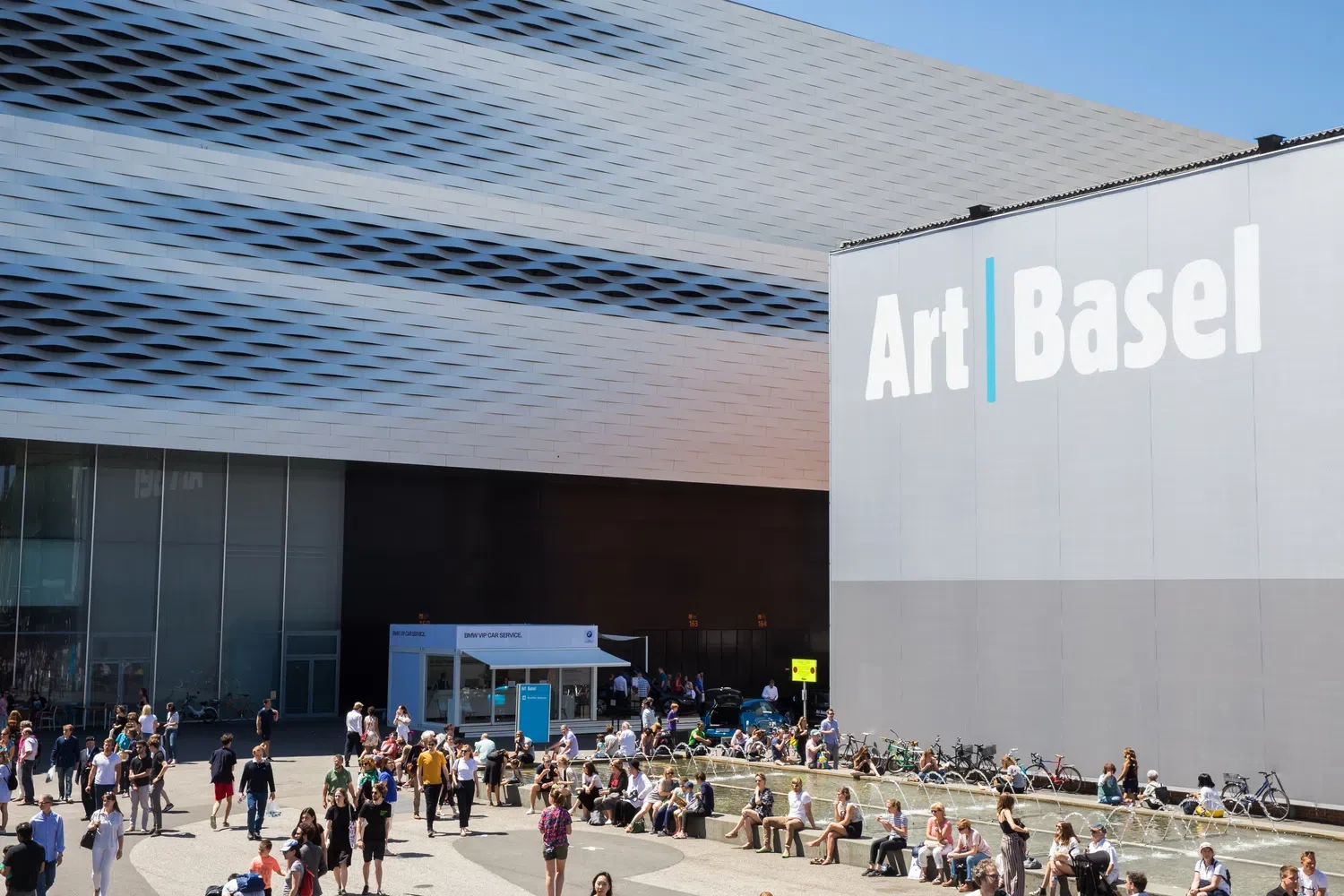
For the better part of two years, the global art market has been carefully finding its footing. Then came the opening day of Art Basel 2026, and something shifted noticeably.
By the end of Tuesday's VIP preview, it was clear that sales at Art Basel's flagship Swiss fair were noticeably stronger than in 2025, with plenty of transactions completing shortly after the doors to the Messeplatz opened. The art trade, it seems, is finding a new equilibrium. Sales felt measured and steady, though ebullience remained elusive.
Dealers repeatedly cautioned that this was not a return to the post-Covid days of frenzied speculative buying, but rather something more measured, particularly where it concerned the big-ticket works. With speculators largely out of the picture, institutions have been much more active. There are more opportunities for museums, more selection, and crucially, more time to decide on acquisitions. That kind of breathing room is, in its own way, a sign of health.
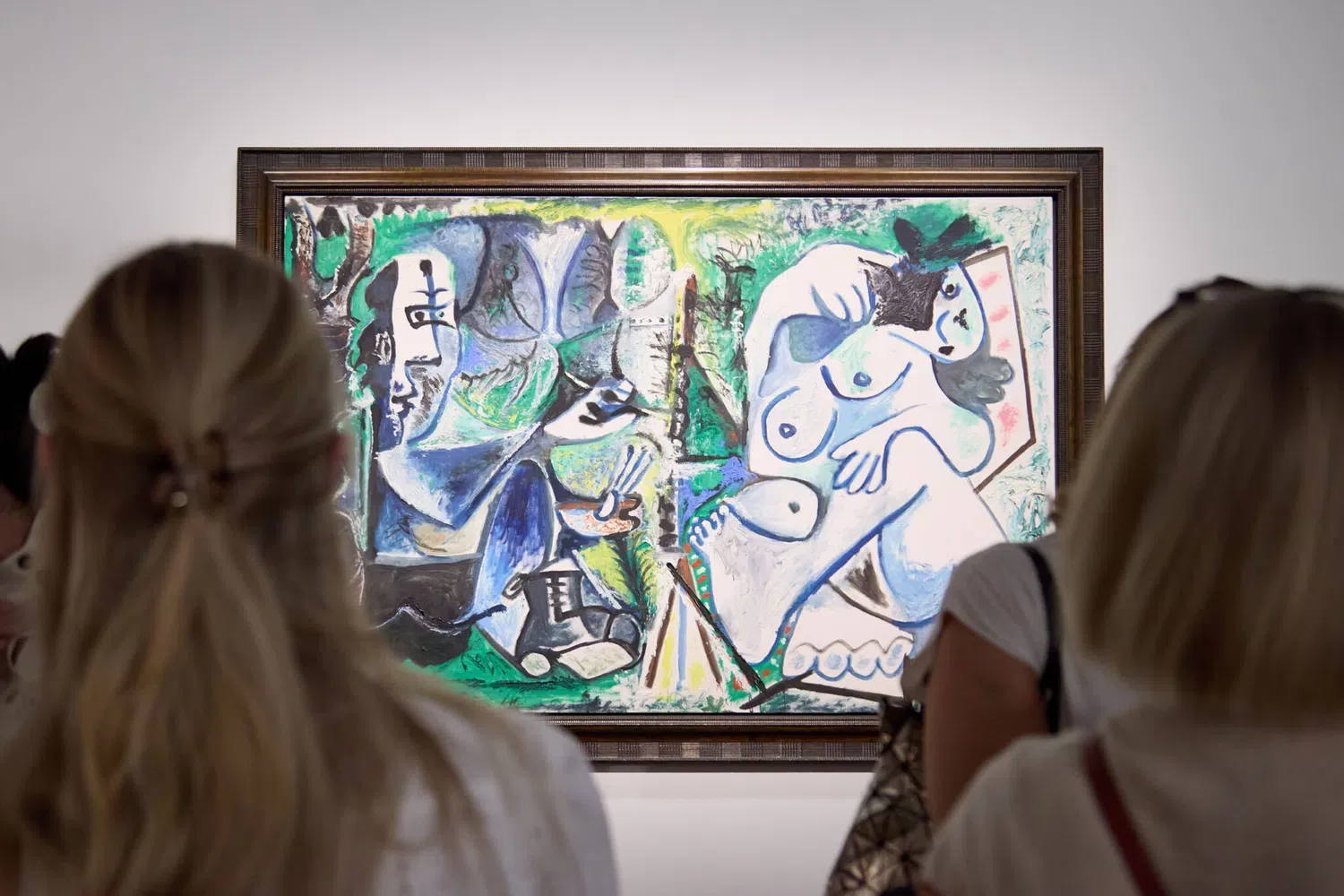
The headline transaction of the day came from Hauser & Wirth. The gallery's leading sale was Pablo Picasso's "Le peintre et son modèle dans un paysage" (1963), at an asking price of $35 million. The gallery had sold 35 works by 4 p.m. local time. "The first day of Art Basel 2026 has been stellar for Hauser & Wirth, as strong a first day as we've ever had," said gallery president Iwan Wirth. The total opening-day figure for the gallery reached $65 million, anchored by that single Picasso canvas.
Beyond the headline numbers, other sales across the fair reinforced the mid-to-high market's quiet resilience. Hauser & Wirth also placed Cy Twombly's "On Returning from Tonnicoda" (1973) for $5 million and Louise Bourgeois's "Les Fleurs" (2009) for $2.5 million. Thaddaeus Ropac reported sales including Pierre Soulages's "Peinture 146 x 97 cm, 31 janvier" (1954) for more than $3 million and Helen Frankenthaler's "Sudden Wave" (1982) for around $3 million.
Much of Tuesday's conversation centered on a structural change rather than individual deals. This year's edition introduced "Basel Exclusive," a new initiative encouraging galleries to reserve significant works for their first public presentation at the fair. As of the fair's opening, some 83 percent of exhibitors in the main sector had agreed to participate, a figure that had grown from 170 when the initiative was first announced in April. Heavy hitters like Acquavella, Gagosian, Hauser & Wirth, Perrotin, Almine Rech, and David Zwirner are all on board.
Early successes from the initiative included Almine Rech's sale of a Picasso painting in the $6 million to $6.5 million range and Sprüth Magers's placement of a John Baldessari work for $500,000. The Baldessari sale carries particular resonance. The Los Angeles conceptual artist, who died in 2020, spent decades dismantling assumptions about image and text. Placing a work of his under a program designed to restore anticipation to the fair feels quietly apt.
The "Basel Exclusive" lineup also includes blue-chip figures such as Jean-Michel Basquiat, Bridget Riley, Lucio Fontana, and Joan Mitchell, as well as emerging voices like Frieda Toranzo Jaeger and Maia Ruth Lee. The breadth of that roster suggests the initiative has genuine traction, not just institutional buy-in from the top.
Meanwhile, the fair's monumental "Unlimited" sector opened under a new hand. This year's edition marks a new chapter for "Unlimited," the fair's signature platform for large-scale works that transcend the traditional booth format, now organized by Ruba Katrib, chief curator and director of curatorial affairs at MoMA PS1, who succeeds Giovanni Carmine after five editions at the helm. Katrib's presentation brings together works spanning the postwar period through the present, placing historic figures alongside contemporary voices. Rather than treating scale as spectacle alone, the presentation explores how artists use monumentality to sharpen perception.
"The space is monumental, the installations are monumental, and it offers possibilities that are really hard to replicate elsewhere, but the ambition of each work is definitely key," Katrib told ARTnews ahead of the fair.
The momentum from a strong auction season last November carried into the May sales, led by Christie's $181 million sale of a Jackson Pollock painting. According to the Art Basel and UBS Global Art Market Report released in March, global art sales returned to growth by 4 percent after two years of decline. Tuesday's opening day at Messeplatz reflected that trajectory, but without the recklessness that marked the post-pandemic high. What the fair signaled most clearly is that collector confidence is returning on different terms: slower, more selective, and arguably more durable for it.


