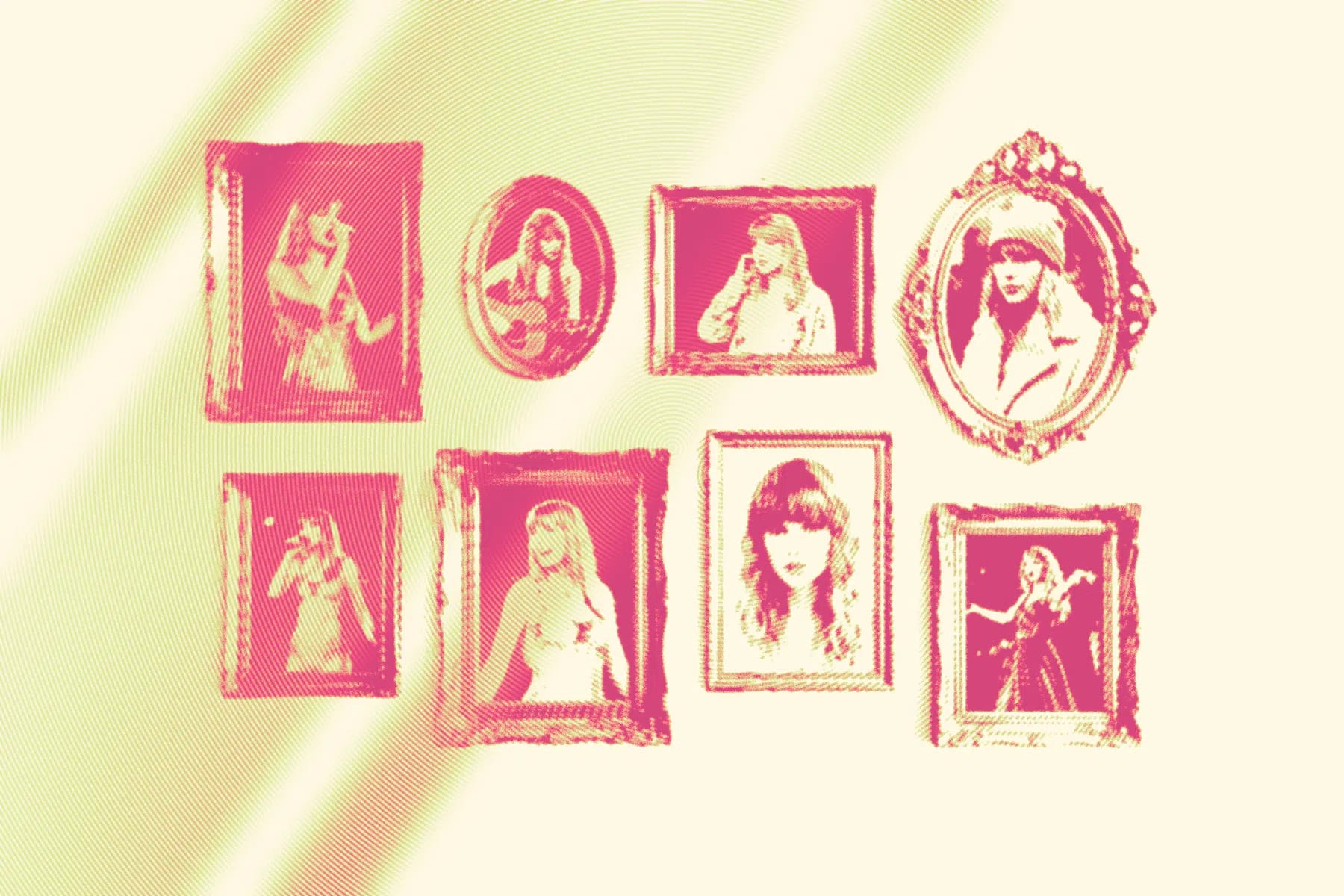

Taylor Swift is about to do something no musician has done at the Museum of Fine Arts, Boston: fill its galleries with the actual tools of her career, from a banjo to a bedazzled bodysuit, and dare the institution to call it art.
I think she's earned the dare, and I think the discomfort some critics feel about that says more about the stubbornness of old hierarchies than it does about the merit of the show.
The exhibition, opening April 10, 2027, and running through August 15, is organized by the Museum of Fine Arts, Boston, as its only venue, presenting more than 50 iconic costumes, instruments, and objects drawn from Swift's archive to celebrate two decades of her ever-evolving artistry. It is, as the museum itself has acknowledged, the first exhibition in the MFA's history devoted to a musician.
That is a genuinely significant line to cross for an institution with a century and a half of history, and it is worth asking, honestly, whether Swift is the right artist to cross it with. My answer is yes. Not because she is popular, though she is staggeringly so, but because the specific shape of her career, the way she treats costume, instrument, and narrative as a single unified language, happens to land exactly on the two collections this museum has spent generations building its reputation around.
The Craft Argument
Start with the objects themselves, because the objects are where the "just a pop star" argument collapses fastest. The show includes the custom red Alberta Ferretti gown Swift wore during the folklore and evermore sets, a bejeweled Midnights bodysuit designed by Zuhair Murad and the tinsel-fringe jacket worn during the Karma finale.
These are not tour merchandise pulled off a rack. They are bespoke garments built by fashion houses to externalize a specific musical and emotional register, which is precisely the kind of object the MFA has collected and interpreted for decades under its fashion arts program.
The instruments make the case even more directly. Visitors will see a banjo from the Speak Now World Tour, a green Gibson acoustic guitar from the Reputation Stadium Tour, and a mandolin featured in the willow music video, alongside the shell of the gilded piano from her 2019 Lover performance.
These are not props in a nostalgia display. They are working instruments tied to a city with its own claim on the story. Jared Katz, the museum's curator of musical instruments, pointed out that the show lets the MFA lean into "Boston's legacy as the banjo making capital of the world in the late 19th century," calling it "a bit of Boston history in the show".
That is not marketing language dressed up as scholarship. That is an actual curatorial thread, connecting a 21st-century pop career to a 19th-century American manufacturing history that happens to belong to this exact museum.
The Legitimacy Question
The harder question isn't whether the objects are well made. It's whether a museum should be organizing a major show around any single living celebrity's archive at all, no matter how well crafted the garments are. That skepticism has real precedent and deserves to be taken seriously rather than waved off.
Writing about the wave of celebrity-driven programming at Los Angeles museums years ago, one Hammer Museum board member put the anxiety bluntly, asking whether institutions should "care about art? Or do we treat a museum like just another bar or nightclub?" A more recent review of a celebrity-curated show at a major American museum raised a related concern, noting that once private taste "enters a museum, private taste gains public authority, shaping which artists get seen and, potentially, how their work is valued." These are not fringe complaints. They point to something real: museums are gatekeepers, and gatekeeping decisions shape what future generations consider worth studying.
But that argument proves too much when applied here, because it assumes the Swift show was built the way a donor-driven vanity exhibition is built, around access and money rather than curatorial judgment. The MFA's own staff frame it differently. Kristen Hoskins, the museum's director of public programs, has described wanting to give visitors "an up-close look at the fashion and instruments of one of the most influential cultural figures of our time."
That is a curatorial claim about cultural significance, not a sponsorship arrangement. Unlike the trustee-collection controversies that have dogged other institutions, this show was not assembled because Swift sits on a board or because a patron wanted their private holdings validated. It was built in-house, organized around craft history the museum already specializes in, which is a meaningfully different proposition than the celebrity-as-cash-cow model its critics rightly distrust elsewhere.
The Fashion-in-Museums Precedent
There is also a quieter, more settled version of this argument that the loudest objections tend to ignore: the question of whether fashion belongs in art museums at all was largely resolved a generation ago. As one curator overseeing a recent fashion retrospective in Paris put it, the real debate "has shifted from whether fashion belongs in museums to how it should be presented and interpreted."
That shift did not happen because museums got lazy.
It happened because institutions like the MFA built genuine scholarly infrastructure around costume and textile history, treating garments as primary evidence of craft, labor, and cultural meaning rather than as disposable spectacle. Swift's exhibition inherits that infrastructure. The Victorian-inspired dress recreated for the Fortnight set, suspended beneath its tornado of paper, is doing the same interpretive work a period costume display does anywhere else in the building: showing how clothing encodes narrative.
None of this means every pop culture exhibition automatically clears the bar. A recent review of a K-pop star's guest-curated show at a major American museum conceded the obvious risk directly: "Star-driven exhibitions shouldn't become a museum habit. Yet the usual objection, that fame eclipses the art, misses what works here."
That same tension applies to Boston. If the MFA followed this with a rotating parade of whichever musician currently tops the charts, the credibility concern would be legitimate. One exhibition built around genuine craft collections the museum already curates is not that pattern. It is closer to the fashion retrospective it structurally resembles.
What the Resistance Actually Reveals
Here is where I think the objection reveals something about the objectors rather than the show. The instinct to treat a pop star's archive as inherently less serious than a couturier's retrospective or a rock guitarist's instrument collection is not a neutral aesthetic judgment.
It is a holdover from a hierarchy that long treated music made primarily for and by women, and consumed primarily by young female fans, as inherently less weighty than guitar-driven rock canon or high fashion runway work, even when the technical craft involved is comparable or greater. Swift's catalogue spans country, pop, synth production, and folk-inflected acoustic songwriting across twenty years, a genre range most career retrospectives never attempt. A museum that would not blink at devoting a wing to a legacy rock act's stage costumes should not need special justification to do the same for an artist whose audience happens to skew younger and more female. The double standard, not the exhibition, is the thing actually worth interrogating.
There is a separate, more defensible worry buried in the backlash, and it deserves its own answer rather than dismissal. The show runs in only one city, requires a timed ticket on top of general admission, and opens during a window when Swift's commercial momentum is near its peak. That timing is not an accident, and the museum has every incentive to benefit from it.
But commercial benefit and curatorial integrity are not mutually exclusive, and blockbuster attendance has subsidized smaller, less marketable scholarly shows at major museums for decades. A museum using a high-demand exhibition to fund its broader mission is not corruption. It is how large cultural institutions have always functioned.
What Swift's exhibition ultimately tests is not her talent, which the volume and durability of her catalogue has already settled, but the museum world's willingness to apply its own stated standards consistently. The MFA has spent a century building authority in exactly the two fields this show occupies, fashion and musical instruments.
If that authority means anything, it should be able to evaluate Swift's archive on its own terms rather than disqualifying it in advance because of who the audience happens to be. The costumes are custom-built. The instruments are historically grounded. The narrative arc, stretching from a 2006 single to a 2025 album, is coherent rather than opportunistic. That is not a tribute concert dressed up as scholarship. That is a legitimate exhibition, and Boston should stop apologizing for hosting it.
Frequently Asked Questions
When does Taylor Swift: The Eras Collection open at the MFA Boston?
The exhibition opens April 10, 2027, and runs through August 15 at the Museum of Fine Arts, Boston, which is its only venue.
What is included in the Taylor Swift exhibition at the MFA?
The show presents more than 50 costumes, instruments, and objects from Swift's archive, including a custom Alberta Ferretti gown, a Zuhair Murad bodysuit, a banjo, an acoustic guitar, a mandolin, and the shell of her gilded Lover piano.
Is this the first time the MFA Boston has done an exhibition on a musician?
Yes, the museum has acknowledged this is the first exhibition in its history devoted to a musician, making it a genuinely significant departure from its usual programming.
Why is Taylor Swift getting a museum exhibition instead of a concert tribute or fan event?
The MFA built the show around its own existing strengths in fashion and musical instrument history, treating Swift's bespoke garments and stage instruments as craft objects worthy of the same interpretive treatment the museum gives historical costume and instrument collections.
Do you need a separate ticket for the Taylor Swift exhibition?
Yes, the show requires a timed ticket on top of general admission, a detail critics have flagged as evidence of commercial timing around Swift's current popularity.
Is it fair for a museum to build a whole exhibition around one celebrity?
Critics have raised real concerns about private taste gaining public authority in museums, but this show was built in-house around craft history the MFA already specializes in, not through donor or trustee influence, which sets it apart from past celebrity-show controversies.
Does fashion really belong in an art museum like the MFA?
Curators have largely moved past that debate, with one noting the real question now is how fashion should be presented and interpreted rather than whether it belongs in museums at all, a shift this exhibition inherits directly.
What is the strongest argument against the Taylor Swift MFA show?
The most credible objection is that star-driven exhibitions risk becoming a habit that lets fame eclipse genuine curatorial standards, though this show's grounding in the MFA's existing fashion and instrument collections distinguishes it from that pattern.
Check topics and authors from this story to see more stories like this in your personalized feed and receive updates when new work is published.


