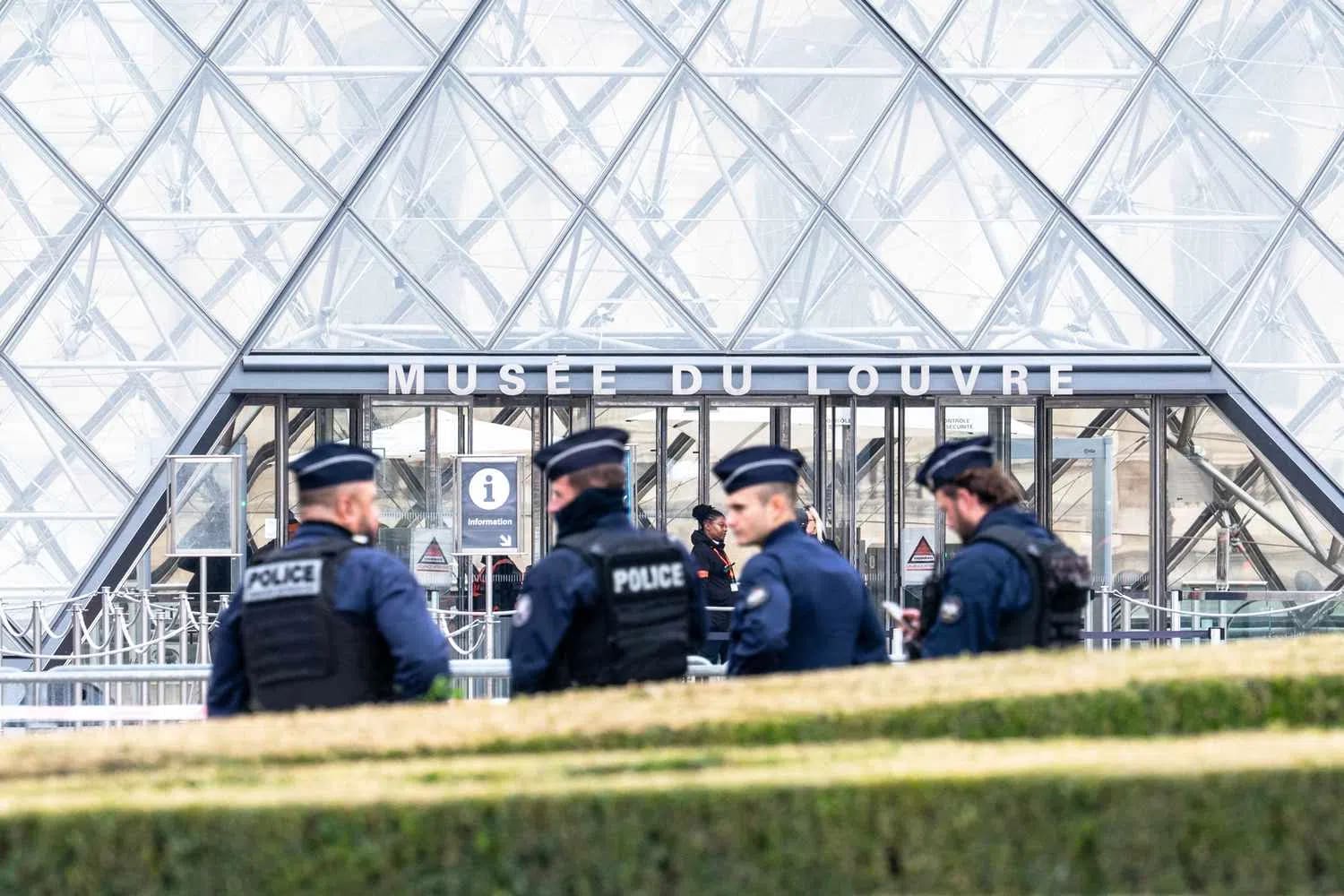

Nine months after the most brazen museum robbery in a generation, the Louvre heist is still producing revelations.
Le Monde, citing transcripts of police interviews with two of the alleged thieves, reported this week that neither man was willing to identify who organized the October 2025 break-in. Both said they would not reveal the identity of the mysterious figure amid fear of reprisals against their families.
The transcripts come from two interview sessions conducted in June amid the ongoing judicial inquiry. Le Monde identified the suspects as Abdoulaye N., a 40-year-old unlicensed taxi driver and former social media personality, and Ghelamallah A., a 36-year-old Algerian national. They claimed a mysterious mastermind had orchestrated the break-in, with both saying they were recruited two or three days before the events.
"The person who ordered the theft wasn't happy," Abdoulaye told investigators. "He thought we could have taken more. We had wasted time coming back in through the window." He stated he was promised between €15,000 and €20,000 for his role. Ghelamallah, for his part, claimed he did not even know the target was the Louvre: "I was told we were going to a jewelry store in Paris."

Investigators are not fully convinced the mastermind described by the suspects actually exists, though they haven't ruled out the possibility. Charges have been filed against five suspects; the location of the jewels remains unknown.
On October 19, 2025, thieves disguised as construction workers stole eight pieces of the French Crown Jewels, valued at roughly €88 million, from the Galerie d'Apollon in under eight minutes. Among the stolen objects were a sapphire diadem, a necklace, and a single earring linked to 19th-century queens. A crown once belonging to Empress Eugénie was recovered on the pavement, apparently dropped during the escape. By February 2026, President Macron had accepted the resignation of director Laurence des Cars. She had earlier described the heist as a "terrible failure," admitting the museum's external video surveillance was "very inadequate."
The leaked transcripts landed during a grim week for French cultural institutions. On July 6, three thieves targeted the Musée Lalique in Wingen-sur-Moder at around 5:30 a.m., smashing six display cases with sledgehammers to seize 27 pieces of jewelry in minutes. Prosecutors valued the haul at €4.5 million. Among the stolen works was René Lalique's celebrated Femme-libellule ailes ouvertes pendant, created in gold, diamonds, and enamel around 1898. The mayor of Wingen-sur-Moder blamed the museum's private security company: "All the alarms went off, just as they should. And then with the security company, apparently, there was a major failure."
Days earlier, thieves had nabbed a clay vessel containing about 40 Gallo-Roman gold coins, worth an estimated €120,000, from the Centre archéologique de Montans in southwest France. The site had no video surveillance system, despite plans to install one. Mayor Jonathan Vidal admitted: "Should we have done this sooner? In hindsight, it's easy to say yes."
The spate of robberies has led to pointed questions about whether criminal gangs now see French museums as soft targets. Mere hours after the Louvre heist last October, nearly 2,000 coins were reportedly stolen from a museum in Langres; a month before that, six rare gold nuggets vanished from the National Museum of Natural History. Smaller regional sites, often operating with thin budgets and outdated infrastructure, appear especially vulnerable. The question facing France's cultural establishment is no longer just who organized the Louvre robbery. It is whether the country's heritage can be kept safe at all.
Check topics and authors from this story to see more stories like this in your personalized feed and receive updates when new work is published.