Pakistani television has a new obsession, and it has nothing to do with who ends up together by the finale.
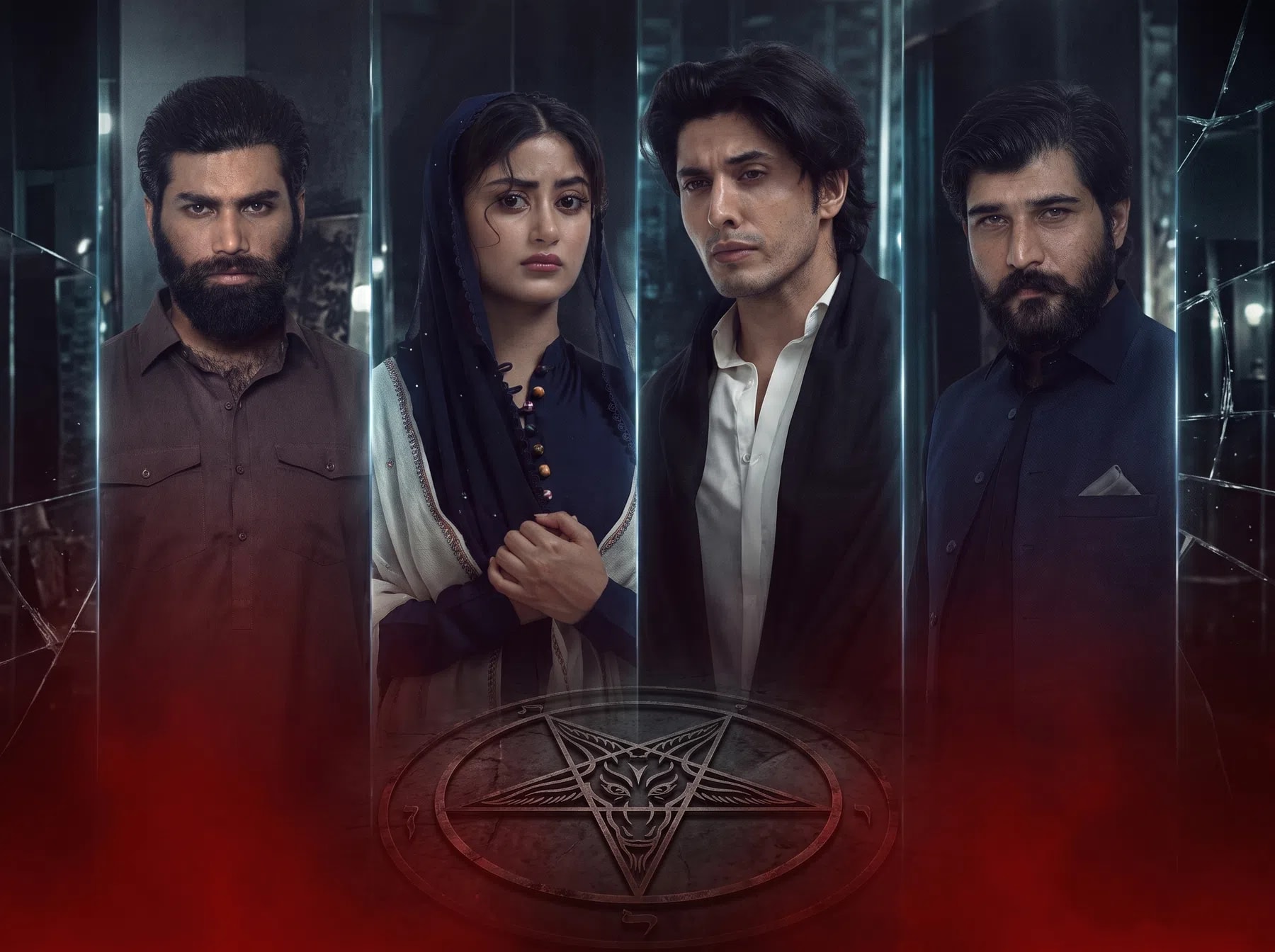
Zanjeerain, the Hum TV serial that premiered on April 29, 2026, has spent months building a reputation for burying clues in its frames. Now that reputation has curdled into something stranger. Viewers scrolling through TikTok and Facebook have started flagging recurring visual motifs in the show, most notably one-eye imagery, and connecting them to Illuminati lore, Satanism, and the Dajjal, the one-eyed false messiah figure central to Islamic end-times tradition.
The theories have spread fast across comment sections and fan pages. None of it has been picked up yet by major entertainment desks in Pakistan or abroad. That gap between viral chatter and formal coverage is exactly where this story sits right now.
Zanjeerain was never a quiet production. It comes from writer Farhat Ishtiaq, whose earlier work on Yaqeen Ka Safar made her one of the country's most closely watched dramatists, paired again with director Shahzad Kashmiri.
Momina Duraid produces under her MD Productions banner, and the cast includes Sajal Aly, Ahsan Khan, Danyal Zafar, Sahar Hashmi, Samiya Mumtaz, and Adnan Siddiqui. The series was pitched from its opening frame as something more atmospheric than the standard primetime serial, and reviewers agreed.
The plot twists are genuinely unexpected, and the cinematography, particularly the use of the mountainous landscape, gives the show a cinematic quality that feels more like a prestige production than a weekly television drama.
That cinematic ambition is part of the problem now, or part of the appeal, depending on who you ask.
Zanjeerain built its fan base partly around the idea that nothing on screen is accidental. Entertainment outlets covering the show early on were already framing individual episodes as puzzles to solve.
One recap noted how Zanjeerain keeps audiences engaged as the drama weaves hidden clues into the storytelling, peeling back the layers ever so slowly to make one wonder whether the writer is one step ahead of the guessing game. That culture of close reading didn't stay confined to plot mechanics. It eventually turned toward the show's visual language itself.
Fan pages had already been picking apart the show's teasers and soundtrack for hidden meaning well before the current wave of theories. A Lahore-based digital outlet ran a piece explicitly built around overanalyzing the Zanjeerain teaser and its opening track, treating every frame as a coded message. That habit of hunting for subtext is precisely the soil this newer, darker reading grew out of.
The Dajjal angle carries particular weight in a Pakistani context.
In Islamic eschatology, the Dajjal is described as a deceiving figure marked by a single functioning eye, a detail that gives any recurring one-eyed image in local media an instant charge. Add the show's tribal-feud plotting, its buried secrets, and its taste for ominous close-ups, and it's easy to see how casual viewers started reading intent into imagery that may simply be mood-setting.
Industry observers, for their part, aren't buying the occult framing. The prevailing view among critics is straightforward: dramatic television leans on unsettling visual shorthand because it works, not because it's smuggling in a message.
One-eye framing, shadowed lighting, and lingering shots of unreadable expressions are staples of suspense filmmaking well beyond Pakistan. Zanjeerain's team hasn't issued any public statement addressing the theories directly, and no one from Ishtiaq, Kashmiri, or Duraid's camp has weighed in on record.
This wouldn't be the first time the show generated noise unrelated to its actual storyline. Just weeks earlier, a single expression from Danyal Zafar during an emotionally charged scene set off its own round of debate.
Social media erupted after viewers noticed Danyal Zafar smiling during an emotionally intense moment in Zanjeerain, with critics calling it an acting slip while others defended him as out of context. The pattern is becoming familiar. Something small happens on screen, and the internet turns it into a referendum.
There's a broader context here too. Pakistani drama has increasingly become a testing ground for how quickly online communities can turn ambiguous imagery into a full narrative of hidden intent, a dynamic long observed around Western pop stars and their supposed one-eye salutes in music videos and magazine spreads.
What's different with Zanjeerain is the specifically local register the theories have taken, folding in Dajjal imagery rather than generic Western occult branding.
None of this appears to be slowing the show down. If anything, the controversy is functioning as free marketing, pulling in viewers curious enough to check the symbolism claims for themselves. Whether Hum TV or the creative team eventually addresses the chatter on record remains an open question.
Zanjeerain keeps airing, the theories keep multiplying, and the actual plot, tribal grudges, buried secrets, and all, continues largely unbothered by what the internet thinks it's found hidden inside it.
Check topics and authors from this story to see more stories like this in your personalized feed and receive updates when new work is published.


