
Anime television doesn't usually make a 20-year-old franchise trend like breaking news. Then again, it doesn't usually air an episode with no next-episode preview and leave an entire fandom wondering whether one of its central characters just ceased to exist.
Bleach: Thousand-Year Blood War episode 45, titled "DEFEND YOU," aired August 22, 2026, as the fifth installment of The Calamity. It is the clearest evidence yet that Studio Pierrot is not adapting Tite Kubo's finale in publication order.
It is, by any honest reading, restructuring the ending entirely, and the result is the most divisive single episode in the franchise's history.
What Actually Happened
Ichigo Kurosaki and Orihime Inoue's battle against Yhwach pushes both of them to the limits of their power, while Uryū Ishida devises a counter-strategy against Sternritter Grandmaster Jugram Haschwalth. That much tracks with the manga. What doesn't is everything that follows.

Bleach: Thousand-Year Blood War/Pierrot
Ichigo taps into his inner Hollow power for an anime-original "Blood Chains" transformation, designed personally by creator Tite Kubo. Episode preview material had confirmed a Gran Rey Cero fused with Getsuga Tensho, a combination technique drawing on both his Arrancar-level Hollow energy and his Shinigami blade instincts simultaneously.
It's the kind of move that only makes sense from someone who stopped trying to keep those two sides of himself separate. The result: Ichigo in his Blood Chains Bankai state, dark red energy coursing through his sword arm.
Ichigo pushes into a partial Hollow release, a single horn, not the full transformation, and it is not enough. Yhwach turns the fight into an argument: that the power to protect is precisely the wrong instrument to have brought. Ichigo ends the episode beaten and still refusing to stop.
Then Orihime Inoue steps in.
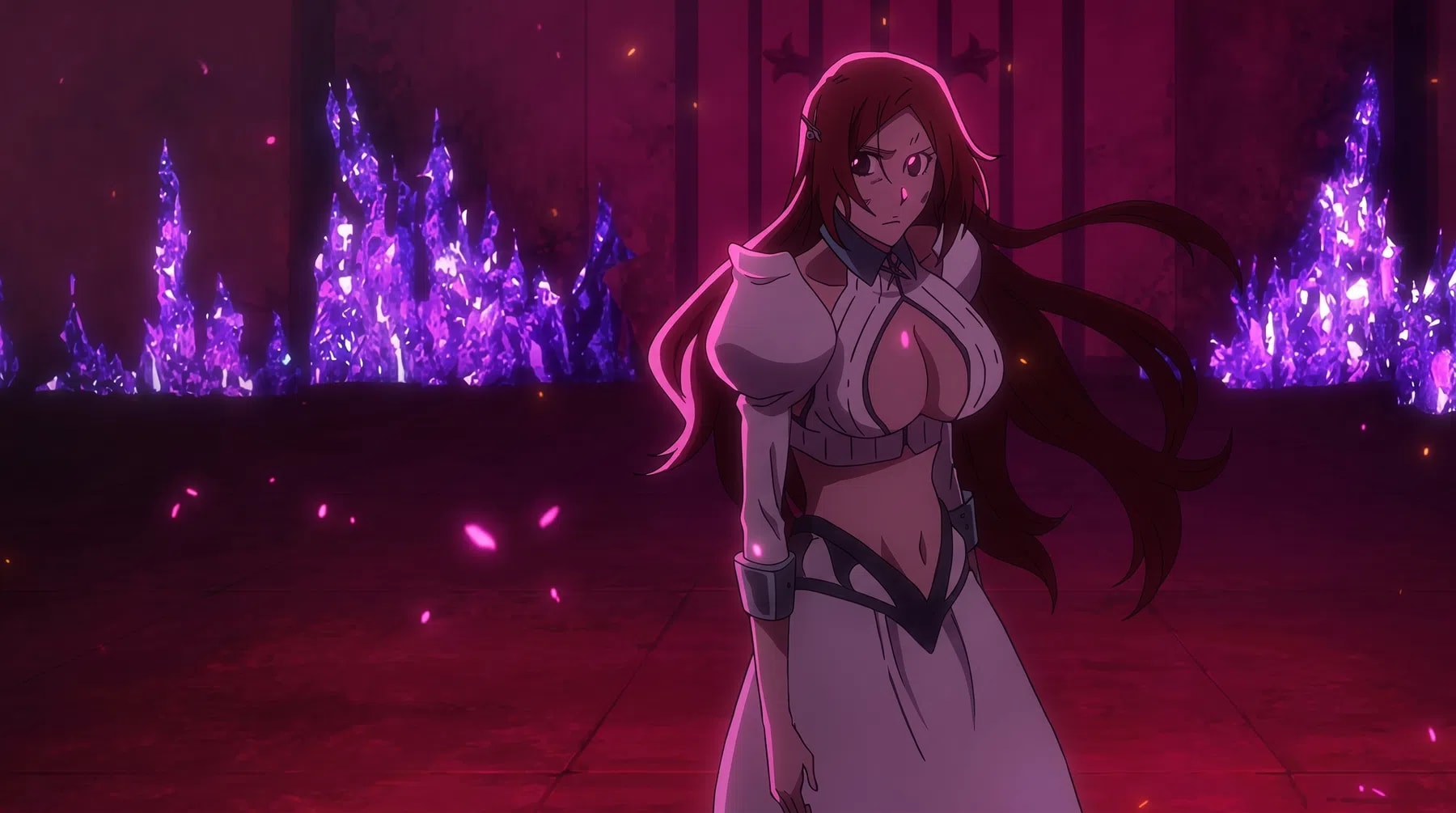
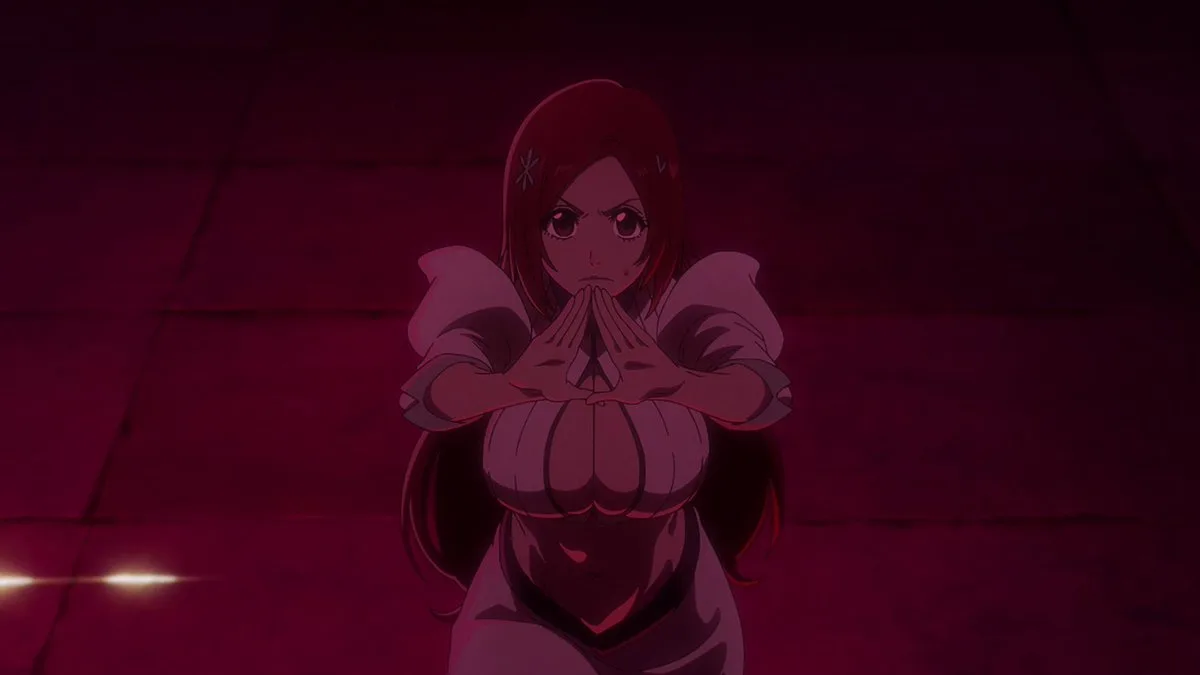
The episode shines with Orihime's emotional stand, as she declares, "Bye-bye, Kurosaki-kun. I'll bear everything for you!" Her Shun Shun Rikka ability, the six-petal spirit barrier that has defined her power set since her earliest appearances, turns outward.

She uses it not to shield Ichigo, but to reject Yhwach's existence entirely. The episode's title shifts in the final moments to "Life to Defend You," and the petals of one of the flowers fall away. Orihime vanishes alongside Yhwach in a burst of flower petals. The screen cuts to black. No next-episode preview. Nothing.
Is Orihime Dead?
Almost certainly not. Probably.
Fans broadly agree that Orihime is not dead, but the episode was constructed specifically to make that feel uncertain. Her power, Soten Kisshun, works by "rejecting" a given phenomenon out of existence. Applying it to Yhwach is an entirely anime-original choice, and the mechanics of what that means for Orihime herself are deliberately left open.

Manga readers pointing toward Yhwach's Almighty, his ability to see and alter all possible futures, have a clear theory: whatever has just happened gets undone next episode. Yhwach's Almighty gives him the power to see and alter all possible futures.
In the source material, that ability functions almost like a narrative safety net for the villain, and it would logically extend to reversing Orihime's sacrifice.
The absence of an episode 46 preview does nothing to contradict that reading, but it also does nothing to confirm it.
Why No Preview?
Studio Pierrot has withheld next-episode previews before, always for the same reason: the ending of the preceding episode is something they don't want the following episode's title or visuals to dilute. The decision here is deliberate.

The production team is not adapting Tite Kubo's finale in publication order; it is rebuilding the ending's structure, and that choice is doing more work than any single fight in the episode.
Showing a preview would answer questions the episode was designed to leave open.
The Debate the Fandom Is Having
Some viewers are calling this the greatest Bleach episode to ever exist.
Others are still recovering from the shockwaves, with one prominent forum post noting that Yhwach has surpassed Aizen as the series' defining villain after this single episode.
The opposing camp is louder on social platforms.

The critique isn't about animation quality; fans broadly praise the animation, Ichigo's fresh look blending Soul Reaper and Hollow traits, and Orihime's resolve as series highlights. The argument is about creative authority. When a studio introduces a major plot development that never existed in the manga, specifically, a supporting character's apparent self-sacrifice as the mechanism for defeating the final villain, the line between "enhancement" and "rewrite" becomes genuinely hard to locate.
Several corners of the fandom have landed on "fan fiction." Politely worded, but the implication is clear.
The Larger Question About the Adaptation
This episode didn't emerge from a vacuum.
Anime-original scenes have been a recurring feature of Bleach: Thousand-Year Blood War from early in its run, with both manga readers and anime-only fans often praising their inclusion. What's different in The Calamity is scale. Earlier additions were embellishments, extended fights, filled-in backstory, expanded reactions. Episode 45 appears to have moved a plot point.

Bleach's manga conclusion is the most criticized stretch of Kubo's run, and the usual complaint is not that it is badly drawn; it is that it is badly sequenced, cutting between simultaneous fights across Wahrwelt in blocks, dropping threads for chapters at a time.
Studio Pierrot has been threading those storylines together more deliberately across The Calamity, and that restructuring has earned consistent goodwill.
The Orihime moment is the first addition that feels structurally load-bearing rather than supplementary. If her sacrifice is reversed next week by Yhwach's Almighty reset, the debate quiets. If it sticks in any meaningful form, it changes the franchise's ending.
Tite Kubo designed the Blood Chains transformation himself, which matters for the canon conversation. Kubo's active involvement in the adaptation has been a consistent feature of Thousand-Year Blood War since its 2022 return.
Studio Pierrot has been working heavily on the production alongside the author, and that collaboration gives the anime-original additions a different weight than a studio working alone.
Whether Kubo signed off on Orihime's sacrifice specifically has not been confirmed publicly.
What Comes Next
Episode 46 of Bleach: Thousand-Year Blood War, the sixth episode of The Calamity, will air on August 29, 2026.
The pressing question for the entire fanbase is what happens after the arc concludes, since Thousand-Year Blood War is the final arc of Kubo's manga, and the author has not explicitly confirmed whether he would continue the series with the elusive Hell Arc.

A comment from Ichigo Kurosaki's voice actor Masakazu Morita, urging fans to look forward not only to the fourth installment but to the future of Bleach broadly, has sparked debate, with some reading it as a signal that Kubo, Pierrot, and Shueisha may want to extend the franchise in some form.
For now, though, the only question that matters to roughly half of social media is whether a girl with flower-petal shields and an unbroken willingness to stand in front of Ichigo Kurosaki just wrote herself out of the ending she was always supposed to survive. Episode 46 either puts that to rest or makes it permanent.
Either way, the anime made sure you'd be watching.
Check topics and authors from this story to see more stories like this in your personalized feed and receive updates when new work is published.


