
Few monuments in Washington have ever attracted this much opposition before a single foundation stone was poured.
On August 3, the National Park Service formally concluded that President Donald Trump's proposed triumphal arch would irrevocably detract from the capital's carefully planned views and adversely affect 37 significant historic sites. Among them: the Lincoln Memorial, Washington Monument, Arlington National Cemetery, the Pentagon, and the U.S. Capitol.
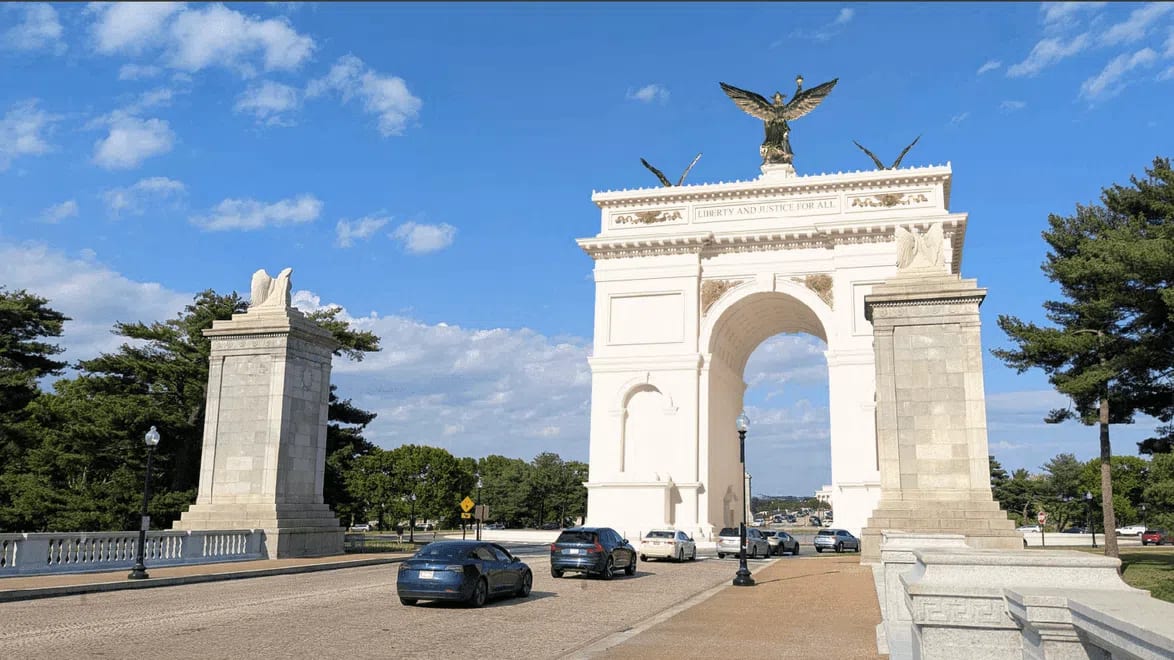
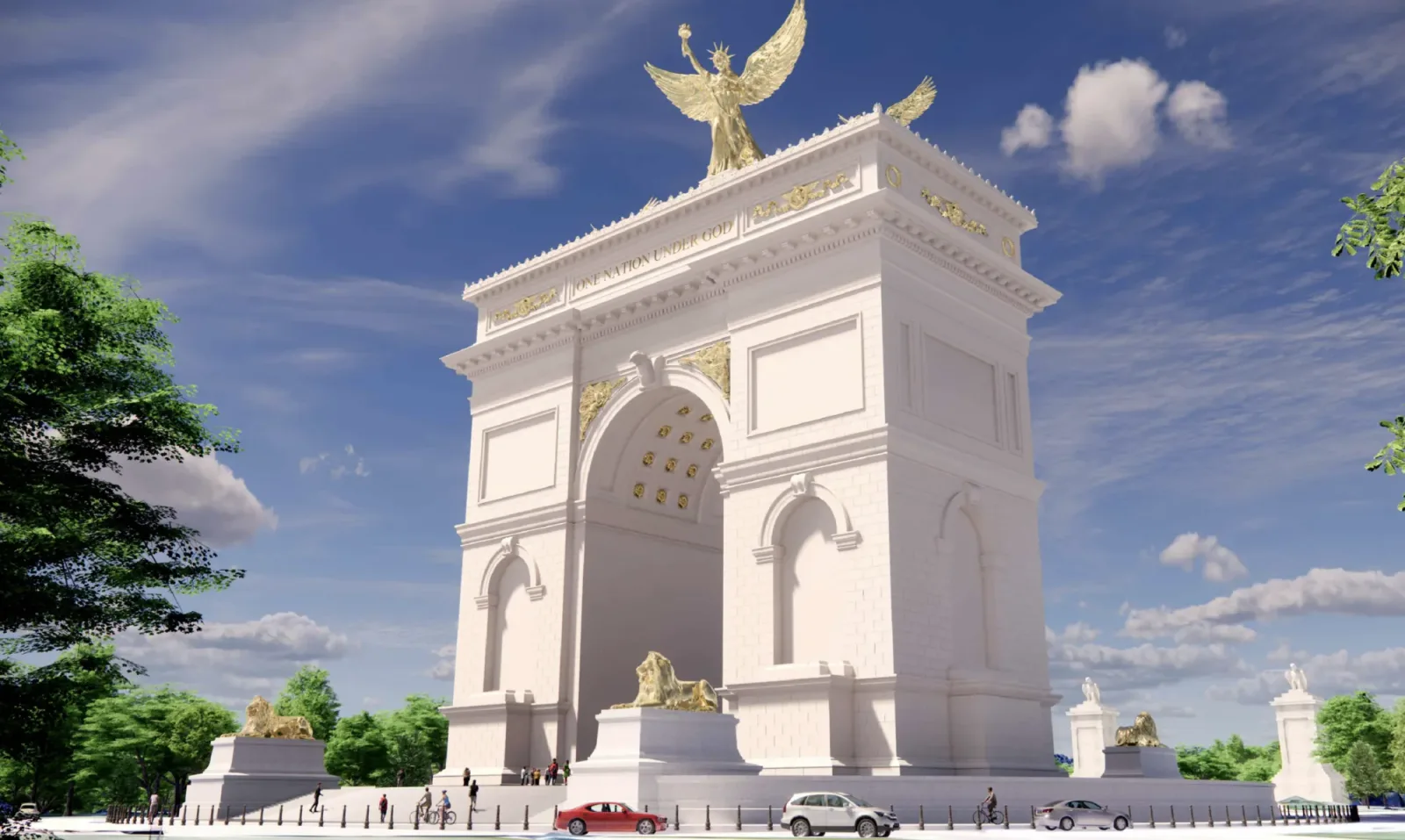
The structure would rise within Memorial Circle, the roundabout situated between the entrance to Arlington National Cemetery and the Memorial Bridge. At 250 feet, it would dwarf the 99-foot Lincoln Memorial across the Potomac River. Its design features a golden, winged Lady Liberty figure flanked by two gold eagles. Inscriptions in gold on either side read "One Nation Under God" and "Liberty and Justice for All."
The White House calls the project the Independence Arch, while official NPS review documents use Triumphal Arch; the press, however, latched onto "Arc de Trump" after a CBS correspondent floated the nickname. Whatever you call it, the August 3 finding is the most consequential procedural blow yet against a project that has drawn near-universal public resistance.
The assessment was completed under Section 106 of the National Historic Preservation Act, a mandatory federal review before the project can receive final approval from the National Capital Planning Commission. That final vote could occur as soon as the commission's next meeting in early September. Still, Section 106 is a procedural requirement, and an adverse-effect finding does not automatically stop the project. It does, however, create a federal record that strengthens legal challenges.
Those challenges are already underway. Three Vietnam War veterans and an architectural historian, represented by Public Citizen, have filed a federal lawsuit to block construction at Memorial Circle, steps from where more than 400,000 service members and their families are buried. The suit argues the arch violates the Commemorative Works Act by proceeding without congressional authorization. Lead plaintiff Michael Lemmon, a U.S. Army veteran, said in a statement: "The President's planned arch will be a continuous visual affront to this principle and a personal affront to people, like me, who have fought for this Nation and devoted their careers to serving it."
A federal judge has denied a motion to temporarily halt construction, and the Justice Department has moved to dismiss the case on standing grounds. The administration has agreed to give plaintiffs 14 days' notice before breaking ground so they can seek an emergency injunction.
Opposition is not limited to the courtroom. The Commission of Fine Arts approved the design in May despite nearly 1,000 public comments, every single one against the project. Commission secretary Thomas Luebke acknowledged the tally bluntly before the vote: "It's saying that 100% of the comments were against the project." The NCPC then voted nine to one to advance conceptual plans, despite vocal testimony from preservationists and military veterans.

Even the critic who planted the idea has turned. Architecture critic Catesby Leigh published a 2025 essay arguing Washington was "the only major Western capital without a monumental arch," originally envisioning something around 60 feet. After Trump chose the 250-foot option, Leigh told the New York Times: "It's way too big for that site."
The Memorial Avenue Corridor, the stretch connecting the Lincoln Memorial to Arlington National Cemetery and including Arlington House and the Kennedy Gravesite, faces the most severe impact. Virginia's state historic preservation officer Roger W. Kirchen wrote that "these adverse effects are intentional and inherent in the design of the arch; it is intended to dominate the surrounding landscape."
The White House is standing by the project. Spokesman Davis Ingle told the New York Times that it "will enhance the visitor experience at Arlington National Cemetery." Meanwhile, Trump officials voted on July 25 to rewrite federal rules intended to protect historic sites, sending the plan to the White House for further review. If those changes are finalized, the Section 106 process itself could be weakened for future projects across the country.
What happens next hinges on September. The NCPC's final vote will determine whether the arch clears its last regulatory gate. The federal lawsuit awaits. And for now, 37 landmarks sit in the path of a 250-foot shadow that hasn't been cast yet.
Check topics and authors from this story to see more stories like this in your personalized feed and receive updates when new work is published.