
If you've never seen a Pakistani truck in person, let me just say: nothing I write here will fully prepare you for it.
Imagine a freight vehicle so thoroughly covered in painted flowers, calligraphy, mirror mosaics, dangling chains, and hand-carved wood that the actual truck underneath feels almost incidental. Then imagine that truck has bells strung along its undercarriage, so it literally jingles as it rolls down the highway.
Now multiply that by about 277,000, because that's roughly how many trucks are rumbling across Pakistan's roads at any given time, and the vast majority of them look like this.
This is truck art, or as it's known locally, phool patti. And if you care about folk art, visual culture, or the question of how working-class communities build their own aesthetic traditions without anyone's permission, you should be paying attention.
What Exactly Is Truck Art?
At its simplest, truck art is the practice of decorating commercial trucks with hand-painted imagery, elaborate woodwork, reflective sticker mosaics (called chamak patti), Urdu calligraphy, poetry, and spiritual or protective symbols. It's a decorative painting tradition that turns ordinary trucks into rolling, hand-painted works of art covered in bright colors, poetry, calligraphy, and protective symbols.

But calling it "decoration" misses the point. Truck art is often misunderstood as merely decorative. In reality, it's a symbolic visual language, offering deep insight into the psyche of rural and working-class Pakistan. It's also not limited to trucks. Passenger buses, water tankers, transport vans, rickshaws, and even vendors' pushcarts are adorned with painted scenes and colorful metal plates.
Pakistani truck art is called "art on the wheel" or "moving art." Truck drivers and craftsmen call their trucks "newlywed brides," while scholars use various terms such as "moving darbars (palaces)" and "moving billboards" owing to their elaborate decorations and sounds.
The English nickname "jingle trucks" stuck during the War in Afghanistan, when Pakistani decorated trucks that ran services between Pakistan and Afghanistan came to be known as jingle trucks by American troops and contractors.
A History That's Surprisingly Hard to Pin Down
One of the things I find most fascinating about truck art is how contested its origin story remains.
No one can clearly pinpoint exactly who started the art of embellishing vehicles. Depending on who you ask, you'll get answers ranging from ancient Indus Valley craftsmanship to Mughal carriage painting to post-Partition improvisation.

Here's what we can trace with reasonable confidence.
Truck art has origins dating back to the 1920s, when Bedford trucks imported from England invaded the country's streets. To stand out among competitors, truck owners began decorating their vehicles with simple embellishments, such as wooden carvings and painted motifs.
By the 1940s, as trucks began hauling goods over long distances, owners started painting distinct logos, colors, and patterns onto their vehicles so that people who couldn't read could still identify whose truck belonged to whom. Over time, this practical labeling grew into full decoration; drivers who spent weeks away from home wanted something that reminded them of home.
But the roots go deeper than Bedford trucks. Some of the earliest truck artists were fresco painters in royal Mughal and Rajasthani palaces. When the British occupied the region, they found themselves jobless. Most of these artists were Muslim and migrated to the new Islamic nation of Pakistan. "When they had no work, they applied their art on horse carts and trucks," says Ali Salman Anchan.

It first appeared on trucks and lorries driven by Sikh transporters who would paint a portrait of their spiritual Gurus. These early truck decorations included pictures of Hindu gods and Sikh gurus to bring good fortune. They were swapped by Sufi saints in Muslim-majority areas.
The practice of artwork on vehicles in Pakistan has a long and illustrious history, dating back to the Mughal rulers, who used to embellish their horse carriages with elaborate flower designs. Some argue that the origins of this folk art may be traced back to the ancient Indus civilisation.
Then, in the early 1970s, things got really wild. From the early 1970s, images and calligraphy began to completely engulf the whole body of the vehicle. This was prompted by the manner in which billboards and hoardings of Pakistani films became louder and more kaleidoscopic in appearance.
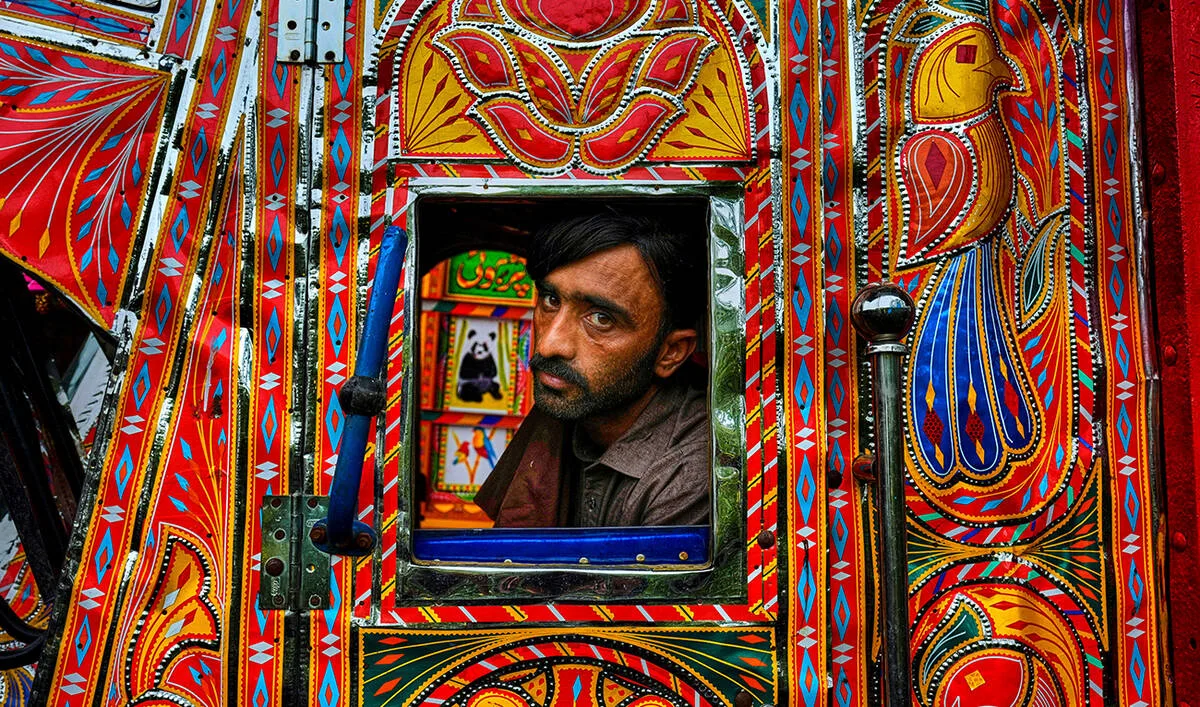
In turn, those painting such billboards were inspired by the "psychedelic art" and Pop Art which had begun to mushroom in the West from the late 1960s onward.
That cross-pollination is worth sitting with. Mughal fresco traditions, Sufi shrine painting, Lollywood billboards, and 1960s Western psychedelia all colliding on the body of a freight truck. It's one of the most genuinely syncretic art forms I can think of.
The Regional Styles You Should Know
Truck art isn't monolithic. Artisans often specialise in a specific technique, associated with different regions in Pakistan.
Karachi is known for its elaborate mirror work, bright color palettes, and intricate floral patterns. The city is the undisputed capital of the craft. In Karachi alone, more than 50,000 people are working in small family-run workshops comprised of apprentices and highly skilled artisans, each with unique styles and specialties.
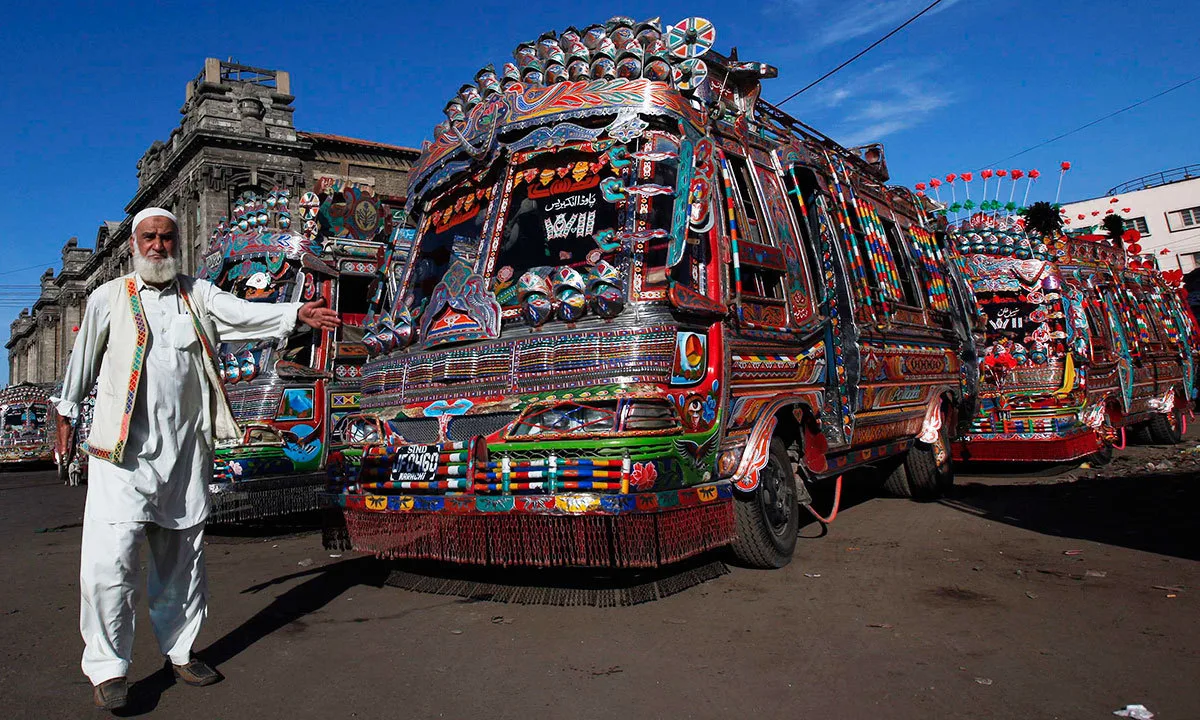
Rawalpindi and Islamabad are famous for their three-dimensional artwork. The chamak patti reflective sticker technique is especially associated with this region. Imran Riaz, a truck artist from Rawalpindi, creates chamak patti or sticker art, painstakingly carving out floral designs for a truck's side mirrors.
Woodwork such as wood-carved panels tends to originate from Peshawar in North West Pakistan and is more commonly seen on older trucks.
Punjab brings its own energy. The Punjabi truck art tradition leans heavily into portraiture, romantic poetry, and bold figural imagery. Sindh, meanwhile, produced what might be the art form's first superstar.
Kafeel Bhai: The First Truck Art Celebrity
With the kind of impetus it had enjoyed in the 1970s, truck art became a lot more complex, elaborate, and ubiquitous in the 1980s. In fact, it also produced its first-ever superstar. His name was Kafeel Bhai Ghotki.
The exact origin of this form of art is untraceable, but some archives lead us to Kafeel Bhai, an artist from a small town in Sindh, known as Ghotki. His bright-colored and lively illustrations on rickshaws, trucks, and buses awe-inspired everyone. He earned the nickname "right arm left arm spin bowler," a cricket metaphor for his ability to paint with both hands.
Haider Ali and the Modern Generation
If Kafeel Bhai was the tradition's first legend, Haider Ali is arguably its most internationally recognized living practitioner. Born in Karachi, Haider Ali is a Pakistani painter best known for his work as a truck artist. Around the world, he has painted murals, structures, benches, and trucks in the distinctive truck art style of Pakistan.

He first gained international attention in 2002 when he worked on the first authentic Pakistani truck in North America for the Smithsonian. Ali also painted a two-seater Cessna aircraft in truck art style for a flying academy.
Trained by his father, Ali has been decorating trucks since his childhood and is now one of the most prominent such painters in Pakistan.
Ali has also used the form for social commentary. He created a tribute to George Floyd that read the phrase, "Hum Kalay Hain Toh Kya Hua Dil Walay Hain" (So what if we are black, we are loving) and also added the hashtag #blacklivesmatter.

Other notable figures in the space include Mumtaz Ahmed and Md. Iqbal, both professional truck artists from Karachi who have taken the craft abroad. Ali Salman Anchan founded Phool Patti, a social enterprise that promotes Pakistani truck art internationally.
In 2019, Roshni, a missing persons helpline in Pakistan, teamed up with paint brand Berger Paints and artist Samar Minallah Khan, who painted the faces of missing children on trucks. 3,000 children go missing in Pakistan each year, and it was hoped the art form could help them be found. The campaign proved successful, and in the first month, 20 trucks were painted, which led to three children being found. Since then, over 100 children have been reunited with their families.
That story alone should settle any debate about whether truck art is "real" art. When a visual tradition is literally saving children's lives, the gatekeeping feels absurd.
Why Do They Spend So Much Money on This?
This is the question outsiders always ask, and the answer reveals something important about the culture.
Many drivers and owners share a sense of competition, spending as much as $30,000 to paint their trucks. That figure is, for context, more than twice the average annual income in Pakistan.
Each truck can cost anywhere between PKR 200,000 and 600,000 to decorate, an enormous investment for a driver, often representing a lifetime of savings and identity.
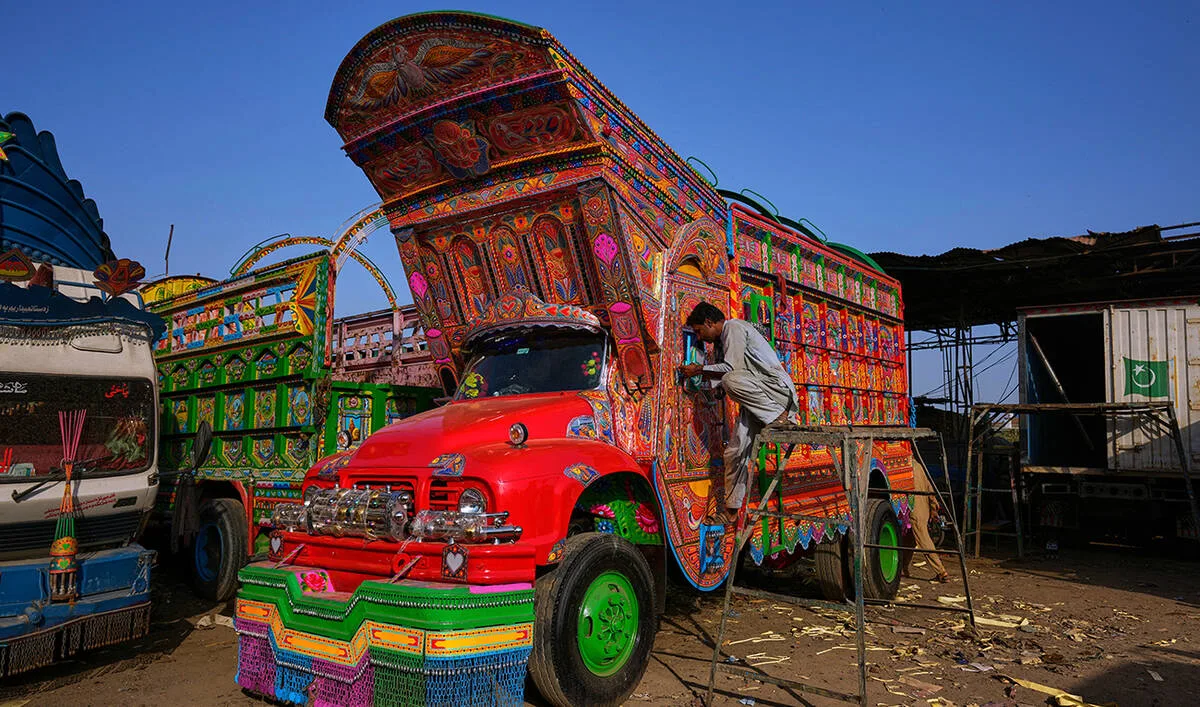
Why? Because a decorated truck is a rolling business card, a spiritual offering, a personal statement, and a competitive flex all at once. "It's worth the expense," says truck owner Doda Khan. "More people will hire me if I have a beautifully painted truck."
Durriya Kazi, head of the department of visual studies at the University of Karachi, sees truck art as more than a business expense; it's also a ritual that harkens back to the Sufi tradition of painting shrines. She recalls one driver who told her: "I put my life and livelihood into the truck. If I didn't honour it with the proper paint job, I would feel I was being ungrateful."
A hefty price when you consider the average income; many of the trucks are not owner-operated but belong to a fleet, where the owners authorize the decoration of the trucks by the individual drivers at their expense.
The labour-intensive process of outfitting a truck can take six to ten weeks.
Truck Art vs. the Broader South Asian Tradition
Here's where I think the conversation gets really interesting.
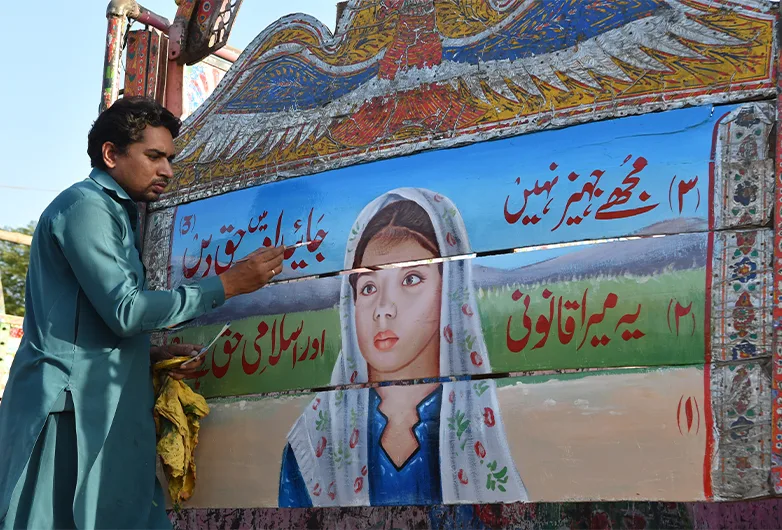
Truck art in South Asia is a popular form of regional decoration, with trucks featuring elaborate floral patterns and calligraphy. It is especially common in Pakistan and India. While trucks are also decorated in India and Bangladesh, and in several other Asian and South American countries, truck art has developed to an unparalleled apogee in Pakistan and southern Afghanistan.
The art of decoration is distinct and differs across the South Asian regions. Pakistan, Afghanistan, and Bangladesh all depict the work in their regional style, colours, and shapes.
Indian truck art, for its part, operates with a different visual grammar. The phrase "Horn OK Please" is often seen on trucks using the South Asian truck art form in India, and motifs depicting eagles, kites, and cow nuzzling calf are common. The palette tends toward specific regional tastes, with less of the total-coverage approach that Pakistani truck art is famous for.
What sets Pakistan's version apart is the sheer totality of it. A Pakistani truck doesn't have a painted panel or two. It has every square inch covered, from bumper to crown. The wooden canopy over the cab, the reflective mosaics on the mirrors, the poetry on the mud flaps, the bells jangling underneath. It's maximalism with zero apology.

Pakistani truck art is notable for its distinct style and ubiquitous presence, with practically all private and commercial trucks decorated in various ways. That's the key difference.
In India, decorated trucks exist.
In Pakistan, an undecorated truck is the anomaly.
The Imagery: What You'll Actually See
Scholar Jamal J. Elias has categorized the motifs on Pakistani trucks into five groups, which I think is one of the cleanest frameworks for understanding what's actually happening on these vehicles:
- Idealized elements of life, such as the romanticized village, landscapes, or beautiful women
- Elements from modern life, such as pictures of political figures or patriotic symbols
- Talismanic and fetish objects, such as horns, yak tails, and items of clothing
- Religiously loaded symbols, such as eyes and fish
- Spiritual calligraphy, from Quranic verses to Sufi poetry
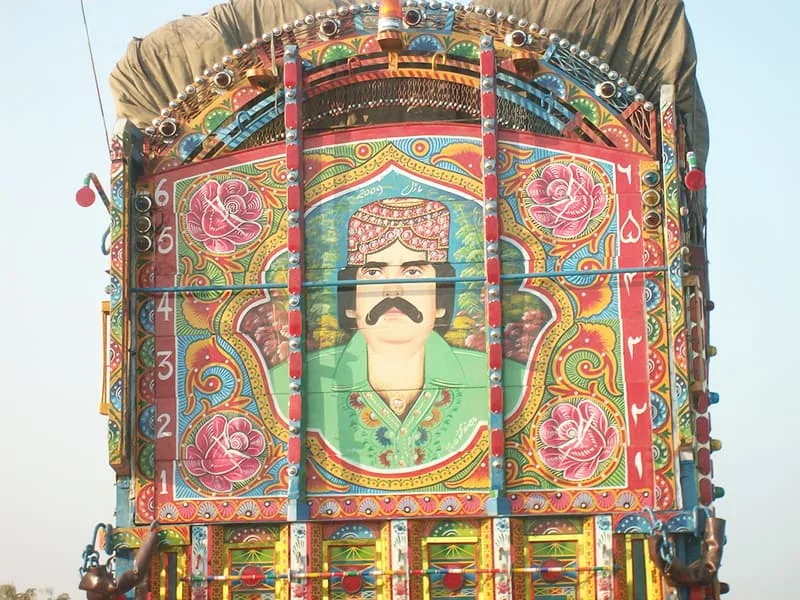
Colors carry meaning too: red for energy and protection, green for religion and peace, blue for loyalty.
The rear panel is particularly telling. Often decorated with a large portrait, the rear panel is a particularly interesting place to observe cultural trends. Where the space once featured martyrs from the anti-Soviet jihad, or nationalist heroes, today you might find a voluptuous Pashto actress or, increasingly, a portrait of the owner's child or even the owner himself.
As Ali Salman Anchan puts it: "Truck art was also our social media. When Imran Khan won the cricket World Cup in 1992, we painted cricket stars on our trucks. When a film became a hit, we painted the actor. It captures our current trends. It reflects the mood of a nation."
I love that framing. Before algorithmic feeds and viral posts, the rear panel of a truck was doing the same cultural work: surfacing what people actually cared about, in real time, to a captive highway audience.
From Highways to High Fashion (and Back Again)
This is where things get a little complicated.
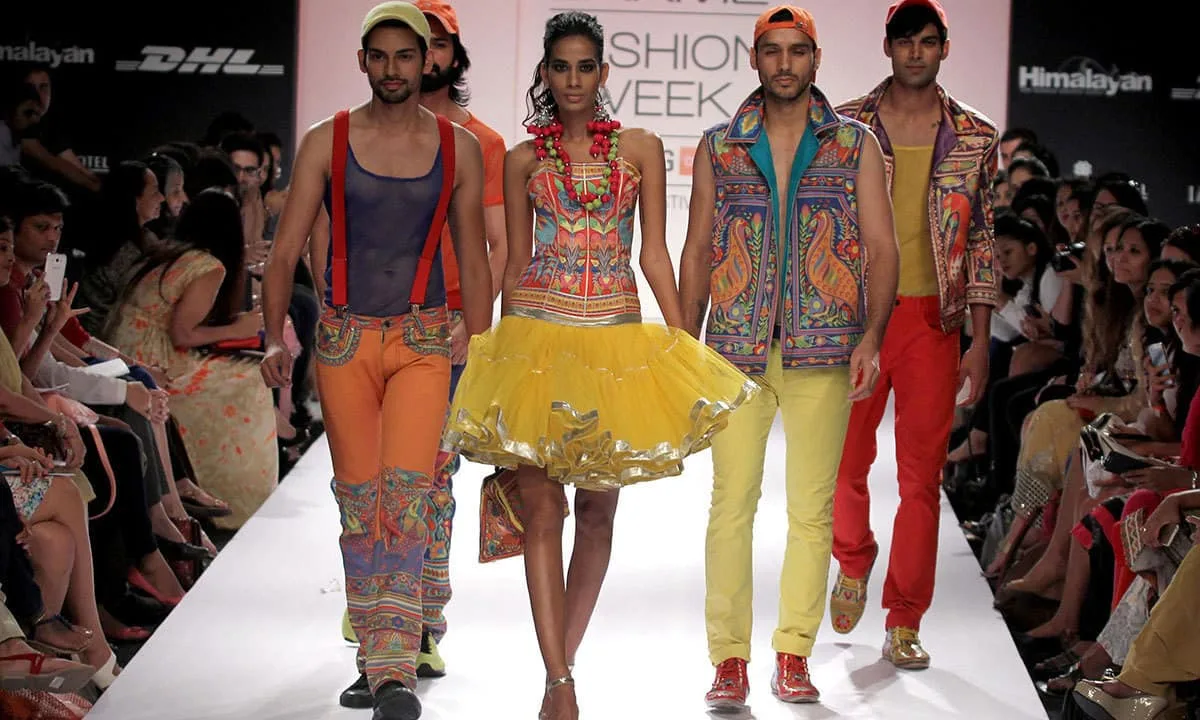
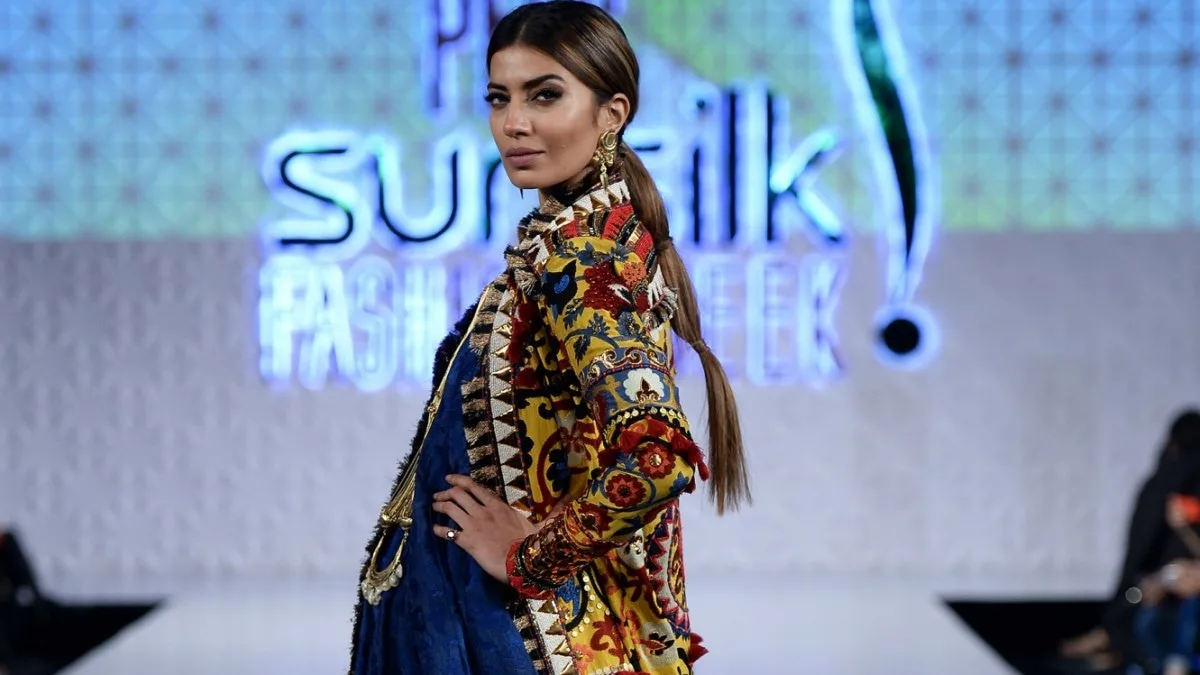
Major clothing brands now incorporate truck art motifs into their textiles and sneakers, and visitors can take home a piece of truck art from the souvenir shops at Islamabad airport. Fashion designer Dolce & Gabbana featured motifs inspired by truck art in its campaign back in 2015.
Search interest around Dolce and Gabbana's Pakistani truck art shows how global brands draw inspiration, raising questions about ownership and respect. The issue isn't influence. It's extraction without acknowledgment.
That tension feels unresolved, and honestly, it should. When a luxury house in Milan lifts the visual vocabulary of artisans earning a few hundred rupees a day, the power dynamics aren't subtle. At the same time, the tradition itself keeps evolving on its own terms.
In 2026, what keeps it relevant is its adaptability. The same motifs that once lived on metal panels now show up in fashion prints, café murals, and digital wallpapers. The style survives because it invites remixing.
Such art has become one of Pakistan's best-known cultural exports in recent years. UNESCO, for example, has been using truck art, blended with indigenous themes, to promote girls' education in the northwestern Khyber Pakhtunkhwa province.
Brands like Gul Khan and Urban Truck Art now sell chamak patti wall hangings, coasters, lamps, and home décor inspired by the tradition, bringing artisan-made pieces to a global market.
Despite maintaining its uniqueness, truck art can face the challenges of authenticity and originality in the future due to commercialisation.
The Apprentice System That Keeps It Alive
One thing that often gets lost in the international hype is how the craft is actually transmitted.
Artisans in this field typically inherit the skills from previous generations, resulting in a family tradition. Haider Ali, one of Pakistan's most well-known truck artists, was taught the technique by his father.

There are no formal schools for this. No MFA programs, no accredited workshops. The work happens in small family-run workshops comprised of apprentices and highly skilled artisans. The knowledge lives in hands, in muscle memory, in the relationship between a teacher and an apprentice sitting side by side for years.
That's beautiful, but it's also fragile. As Pakistan's freight industry gradually modernizes and containerized shipping grows, the old Bedford and Mazda trucks that served as the primary canvases for this work are slowly being replaced.
The tradition hasn't disappeared, but the ecosystem supporting it is shifting.
So Is It "Art"?
I realize this question might sound strange, given that I've been using the word "art" throughout this entire piece. But closer to home, some people sneer and refuse to call it "art."
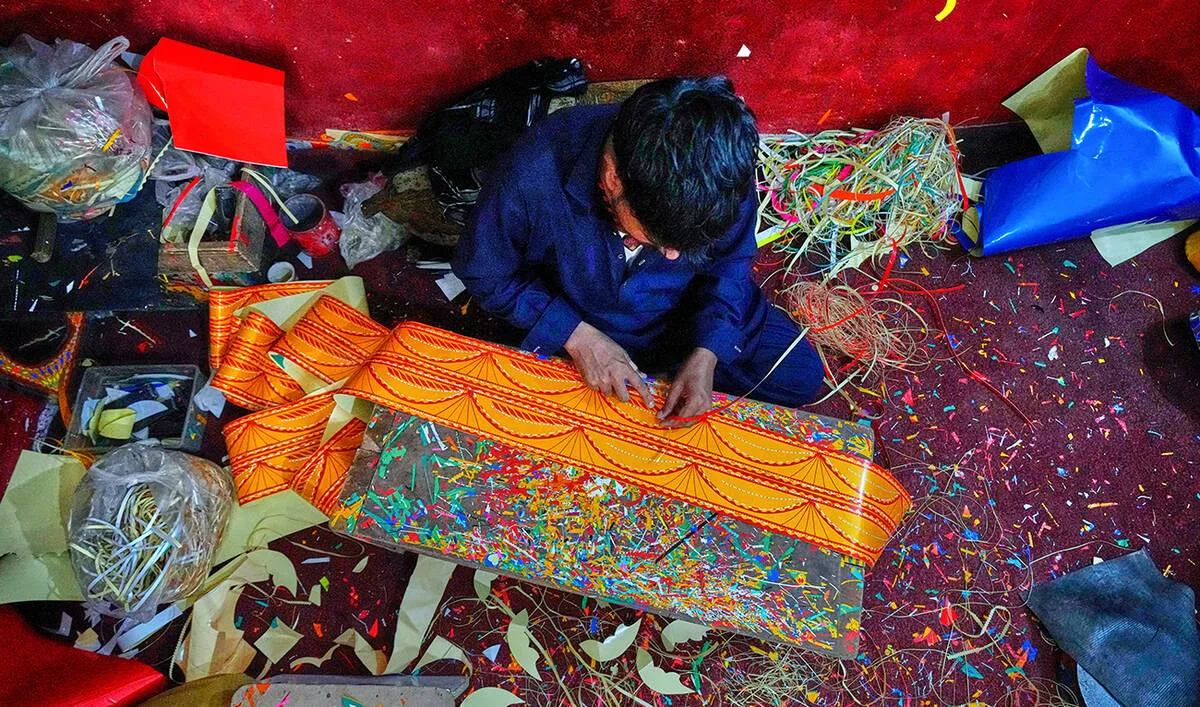
That gatekeeping has always struck me as more revealing about the gatekeeper than about the art form. When you have a visual tradition that draws on centuries of Mughal, Sufi, folk, and pop culture influences, that employs tens of thousands of skilled artisans, that's been exhibited at the Smithsonian, and that actively serves as a living record of a nation's political and emotional life, what exactly is missing from the definition?
Nothing, in my view. The fact that it lives on a truck bed instead of a gallery wall makes it more interesting, not less.
Where It's Headed
By incorporating local imagery, regional styles, traditional motifs, cultural symbols, and narratives, truck art contributes to heritage preservation and reinforces a sense of shared identity.

Blending historical artistry with modern influences creates a visual language that celebrates Pakistan's cultural heritage while engaging with contemporary issues.
If you want to experience it yourself, Karachi is the place to start. The workshops concentrated in Karachi's trucking districts are the epicenter. Rawalpindi and Peshawar each offer their own regional flavor. And increasingly, the tradition is finding you: on Instagram, on the walls of Pakistani cafés worldwide, on fashion runways, and in museum exhibitions from London to Washington.
What I keep coming back to, every time I think about this art form, is how stubbornly it resists the usual hierarchies. It's folk art made by working-class artisans, yet it's exhibited at global institutions. It's deeply local, yet immediately legible across cultures. It's centuries old in its influences, yet constantly absorbing the present moment.
Not many traditions pull that off. Pakistani truck art does, while jingling down a highway at 30 kilometers per hour.
Frequently Asked Questions
What is Pakistani truck art?
Pakistani truck art is a folk tradition of decorating commercial vehicles with hand-painted imagery, elaborate woodwork, reflective mirror mosaics, Urdu calligraphy, poetry, and spiritual symbols. Practically all private and commercial trucks in Pakistan are adorned in some form, making it one of the country's most recognizable cultural exports.
What is Pakistani truck art called?
Locally, it's known as phool patti (flower work). The reflective sticker technique is called chamak patti. Internationally, scholars and artists also refer to it as "art on the wheel" or "moving art."
What is a jingle truck?
A jingle truck is a decorated Pakistani truck with bells and chains strung along its undercarriage, producing a jingling sound while moving. The nickname was coined by American troops and contractors during the War in Afghanistan.
Which city is famous for truck art in Pakistan?
Karachi is the undisputed capital of Pakistani truck art, home to over 50,000 artisans working in small family-run workshops. Rawalpindi is known for chamak patti sticker art, while Peshawar specializes in wood-carved panels.
Why do they decorate their trucks in Pakistan?
Decoration serves as a rolling business card, a spiritual offering rooted in Sufi shrine-painting traditions, a personal identity statement, and a competitive display among truck owners. Drivers and owners often call their trucks "newlywed brides" and believe a beautifully painted vehicle attracts more business.
Is truck art expensive?
Yes. Decorating a single truck can cost anywhere from PKR 200,000 to 600,000, with some owners spending as much as $30,000. The labour-intensive process typically takes six to ten weeks to complete.
Which Pakistani artist is known for truck art?
Haider Ali is the most internationally recognized truck artist from Pakistan. Trained by his father, he gained global attention after painting the first authentic Pakistani truck in North America for the Smithsonian in 2002 and has since created murals, aircraft, and social-commentary pieces in the truck art style.
How is Pakistani truck art different from truck art in other countries?
While India, Bangladesh, and Afghanistan all have truck decoration traditions, Pakistani truck art covers every square inch of the vehicle, from bumper to crown, combining painted panels, woodwork, mirror mosaics, poetry, and jingling bells. In Pakistan, an undecorated truck is the anomaly, not the norm.


