When a city's art institution collapses, the loss of programming is immediate and visible. The loss of its records, though, can be permanent.
Campaigners, politicians, and arts figures have called on the Scottish government to intervene after the archive of Glasgow's Centre for Contemporary Arts was listed among the assets of the insolvent organization. The archive of the CCA and its predecessor, the Third Eye Centre, contains exhibition records, photographs, posters, film, flyers, and other ephemera documenting five decades of artistic activity in Glasgow. It contains some unique cultural artefacts, such as the only known recording of Julius Eastman, an acclaimed composer, performing live.
A "Stop the Sale" demonstration took place outside the building on Friday. The Save Our CCA movement launched a Stop the Sale campaign, protesting against both the sale of the building and the archives. The campaign group called it "devastating" to see pieces of former equipment on sale for as little as £1, with items listed on a commercial auction website that normally deals in food processing equipment and vehicles.

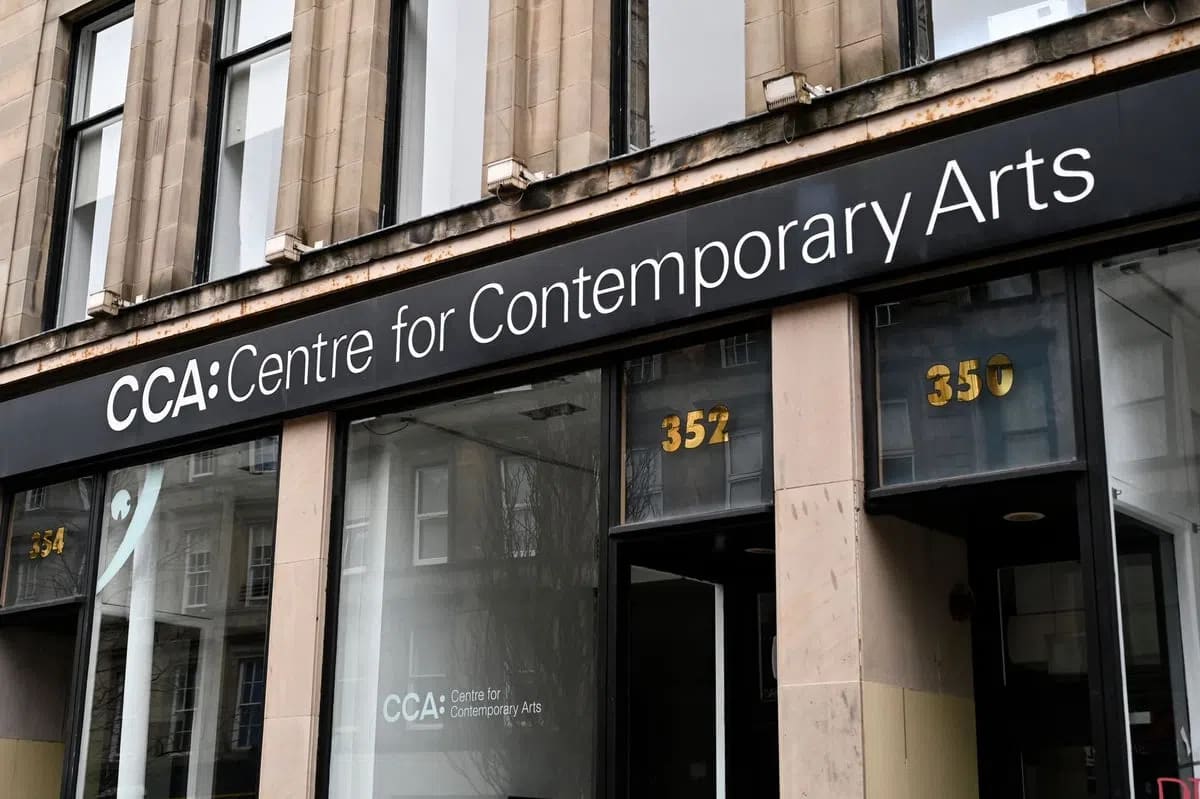
Before becoming home to the CCA in 1992, 350 Sauchiehall Street housed Glasgow's legendary Third Eye Centre, the arts and music venue credited with transforming the city's culture scene from the 1970s onwards. Save Our CCA also expressed concern about the removal of the CCA's digital archive, which dates back to 1975 and features recordings of performances by cultural icons such as Allen Ginsberg.
The collapse itself came fast. On 30 January, the CCA said it had ceased operations and entered liquidation, citing "significant financial pressures." All 39 staff at the venue were made redundant. The Unite Hospitality union told the BBC that employees were informed of job losses via an online video call with one day's notice.
The CCA had secured more than $4.5 million in three-year funding from Creative Scotland only a year before its closure. It also received a £300,000 emergency loan from Glasgow City Council in 2024. Years of strain preceded the end. The institution was forced to close for six months after the 2018 Glasgow School of Art fire, temporarily shut again in late 2024 over financial concerns, and became embroiled in disputes with pro-Palestinian artists over calls for the center to boycott Israel. Toward the end of 2023, long-running director Francis McKee left his post after 18 years, and his role was never filled.
A former worker told the Museums Association that while the political controversy "undoubtedly added pressure to the organisation," it risks distracting from the existing structural and governance failures at the CCA. The Office of the Scottish Charity Regulator launched an inquiry into the charity's financial governance after it folded, and last week concluded that investigation without taking further action.
Now the building and everything inside it sit in the hands of liquidators. Creative Scotland announced in July that it was looking to sell the centre. Expressions of interest for the building are due to agents Graham + Sibbald by 5 pm on 12 August 2026. Save Our CCA warned that "arts organisations will not be able to bid competitively for the building."
On the archive specifically, there is at least a sliver of reassurance. MB Valuations, instructed to dispose of the CCA's assets, is seeking advice about the archive and inviting expressions of interest rather than including it in the broader auction of furniture and equipment. The firm reportedly hopes the collection can remain together under institutional ownership. Scotland's culture secretary Mairi McAllan said she is "crystal clear" that the archive should be retained in whole and kept available to the public.

Creative Scotland confirmed it is working with Glasgow Life and the Ballast Trust, an archives charity, to find ways to preserve the collection and keep it publicly accessible in Glasgow. But campaigners remain skeptical. Valuers noted that interest from individual buyers dries up when they suggest keeping the archive together, implying it will take an institutional effort to keep this half-century of Glasgow's art history intact.
Amanda Catto, former head of visual arts at Creative Scotland, framed the stakes in broader terms. In an Instagram post, she warned that "the archive at risk today encompasses more than 50 years of Scotland's contemporary cultural history." She wrote: "If an archive of this importance can be treated simply as an asset to be realised during administration, what protection exists for the documentary history of other nationally significant cultural organisations should they face similar circumstances?"
That question may outlast the CCA saga itself. The Blythswood and Broomielaw Community Council warned that "Glasgow is undergoing an epidemic of closures of community buildings," arguing the CCA is "just one of a growing number of spaces under threat," and that the pattern is "undoing decades of work to build the cultural and community infrastructure that underpins civic life in Glasgow." With the August 12 deadline for building bids approaching, the archive's fate remains uncertain.
Whatever resolution comes, Glasgow's broader arts sector is watching closely to see whether cultural memory can survive the balance sheet.
Check topics and authors from this story to see more stories like this in your personalized feed and receive updates when new work is published.
![Art Fight 2026 marks the historic 10th anniversary of the digital art-gifting website, breaking tradition by introducing three competitive teams instead of the usual two ["0.5.7", "0.5.14"]. The massive online event officially runs from July 1, 2026, to August 1, 2026.🎭 The 2026 Anniversary ThemesIn celebration of a decade of the website's launch, the community voted overwhelmingly for a brand-new concept. The three theater-inspired teams for this year are:Team Comedy ["0.5.13"]Team Mystery ["0.5.22"]Team Tragedy ["0.5.22"]🗓️ Important Schedule & TimelineStart Date: July 1, 2026, at 12:00 PM Mountain Time / 6:00 PM UTC.End Date: August 1, 2026, at 12:00 PM Mountain Time / 6:00 PM UTC.Preparation Window: Players are encouraged to update character references and build "hitlists" before the event starts ["0.5.22"].⚔️ Game Mechanics & RulesThe Core Loop: Artists upload their Original Characters (OCs) and "attack" players on opposing teams by drawing those characters.Point System: Points are assigned automatically based on the complexity, shading, and scale (e.g., full-body vs. bust) of the art submission.Revenge & Friendly Fire: Returning a drawing to someone who attacked you is a "revenge". Attacking a member of your own team is "friendly fire" and awards 75% of the standard point value.Strict Rule on Pre-drawing: Creating any final attack artwork before July 1 is strictly forbidden and can result in an account ban. Only general storyboarding or thumbnailing is permitted beforehand.🎬 Special Anniversary MAPTo commemorate the 10th anniversary, the staff is hosting the 5th annual Multi-Animator Project (MAP). This year's collaborative project features 34 selected community animators working to the song "Radiant Revival" by Jamie Paige featuring Hatsune Miku.](https://pakistaniart.pk/media/art-fight-2026-marks-the-historic-10th-anniversary-of-the-di-1783557450222.webp)