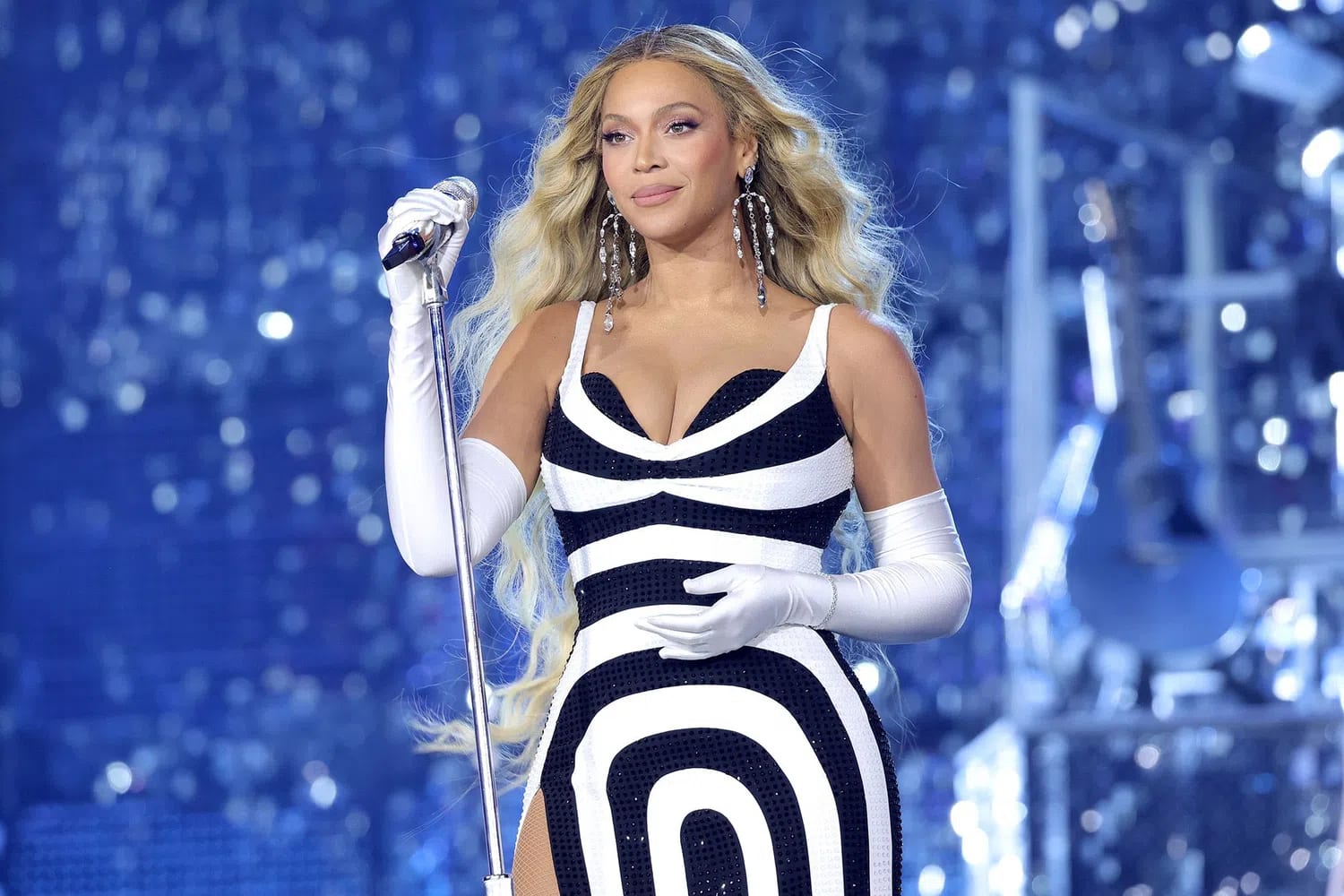
Beyoncé became the fifth musician to reach billionaire status in December 2025, joining a club that includes her husband Jay-Z, Taylor Swift, Bruce Springsteen, and Rihanna.
Apparently, she's spending some of that wealth the way she sees fit. To mark her birthday on September 4, Beyoncé made a $2 million gift to the Studio Museum in Harlem.
Not to herself. To a museum.
Founded in 1968, the New York City cultural institution serves as the nexus for artists of African descent locally, nationally, and internationally, and for work inspired and influenced by Black culture.
Beyoncé has long been an art collector and a self-described fan of the museum's mission of promoting multiple generations of artists of the African diaspora. That connection clearly runs deeper than a photo-op; this is not the kind of donation a publicist invents overnight.

"Art tells all our stories; the past and the present, but is not always accessible to everyone," Beyoncé said in the announcement. "I have always been impressed with the Studio Museum in Harlem because of its intention to make the museum an integral part of the community. I have been introduced to several of my favorite young and upcoming Black artists through exhibits at the Museum. It is a place of inspiration where all audiences can discover new stories through the canvases of diverse storytellers that reflect our humanity."
Thelma Golden, the Ford Foundation Director and Chief Curator of the Studio Museum in Harlem, responded directly. "I am deeply grateful to Beyoncé, both for the generosity of this gift, especially on her birthday, and for recognizing the vital role that the Studio Museum plays in people's lives," Golden said.
"Our institution was founded to shift the arts landscape and reimagine who that landscape serves. This gift will allow us to continue strengthening our work for Harlemites, New Yorkers, and audiences across the globe."
The timing matters. The Studio Museum's new home, situated at its longtime location on West 125th Street, opened to the public on November 15, 2025. The seven-story building is the institution's first purpose-built home since its founding, famously above a liquor store, in 1968.
Completed for $160 million, the structure occupies the same site as the museum's earlier five-story premises.

The building itself is worth understanding. At 82,000 square feet, the structure, inspired by Harlem's churches, apartments, and street corners, nearly doubles the museum's gallery space.
The design includes a stepped area, or "reverse stoop" at the front that leads down to the museum, creating a generous public space born out of a desire for the museum to be as open and accessible from the street as possible. Adjaye Associates' material of choice for the building is black concrete, rendered in many forms, from large precast facade components to gray-black terrazzo floors and dark polished-concrete floors in the galleries.
Viewers inside can find works by trailblazers such as sculptor Elizabeth Catlett and photographer Gordon Parks, sharing space with former artists-in-residence turned household names like Kehinde Wiley, Mickalene Thomas, and Kerry James Marshall. The fourth floor houses a workspace for the museum's Artist-in-Residence fellowship, a key part of its mission; alumni of the program include David Hammons, Valerie Maynard, Julie Mehretu, and Wangechi Mutu.
The residency program, in particular, is where the Studio Museum has done its most consequential work, quietly incubating careers that now define contemporary art's mainstream. Beyoncé's gift lands squarely in support of that infrastructure.

The museum is currently presenting Dreams of This Future: The Collection of Peggy Cooper Cafritz, running through February 28, 2027, alongside Kapwani Kiwanga: BLEED, on view through April 1, 2027. The institution offers a range of public programming, including Adult Programs, Studio Sundays, Uptown Fridays, and Kids and Families sessions, among other events.
The donation doesn't arrive in isolation. Just days before her birthday, Beyoncé donated $200,000 to Indiana flood relief via her BeyGood Foundation, directing funds to City Life Center and Angel by Nature, two organizations aiding communities left unhoused following record flooding caused by a derecho storm. Just before that, she donated $1 million to earthquake relief efforts in Colombia. The Studio Museum gift, then, is less a single moment of generosity and more a pattern that has accelerated sharply in 2026.
None of this existed in a vacuum on September 4. The same day Beyoncé wrote a check for $2 million to one of Harlem's most important cultural institutions, she was also facing real online friction.
She launched the $948.01 Bey Keeper Collector's Box to mark the 20th anniversary of her 2006 album B'Day, a limited-edition vinyl storage crate that includes no records, built from solid pine with a beeswax-oil finish, green velvet lining, faux gator-skin strap, and gold hardware. Shipping and taxes can push the total above $1,100.
The price, $948.01, was set to mirror her birth date of September 4, 1981, yet critics argued the figure still felt excessive for a pine crate. Some suggested $94.81 would have been more in keeping with the date homage without the four-figure sting. Others mocked the craftsmanship economics, with one X user claiming the box could be made for around $30 and another comparing it to "a coffin for a hamster."
The Bey Keeper Collector's Box is limited to 500 numbered units. A billionaire selling a nearly-thousand-dollar empty pine box to 500 collectors while simultaneously donating $2 million to a Black arts institution, the internet, predictably, had thoughts. Some found the contrast jarring. Others pointed out that the math doesn't really require defending.

Also on her birthday, Beyoncé released a deluxe edition of B'Day to mark the album's 20th anniversary, featuring archive tracks, remastered vocals, and visuals.
The broader philanthropic picture is harder to dismiss than the merch noise. Beyoncé joined the billionaire club in December 2025 after commercial success with her eighth studio album, Cowboy Carter, with her accompanying tour selling 1.6 million tickets and becoming the highest-grossing country tour of all time. Her BeyGood Foundation, launched in 2013, is dedicated to supporting different humanitarian projects.
The Studio Museum donation now sits as the most culturally specific gift in that recent run, not disaster relief, but an investment in the kind of institution that shapes who gets seen, preserved, and remembered.
The Black Lives Matter movement prompted museums across the United States to scramble to acquire work by Black artists and diversify their collections. Promoting the work of African American and other artists of African heritage is what the Studio Museum in Harlem has been doing since its founding in 1968. The gallery hosted the first public showings of many Black artists whose work is now held by the country's most august institutions. Beyoncé's gift lands at a moment when that legacy is housed, finally, in a building worthy of it.

What the museum does with $2 million from here remains to be seen in specifics. Golden's statement points toward programming and global reach, strengthening the work for Harlemites and beyond.
Golden has said the museum's inaugural season in the new building "builds upon what has already been an incredible slate of exhibitions and installations," with a commitment to "showcasing works by artists of African descent from across the globe." A gift of this scale gives those ambitions room to breathe.
For the Studio Museum, now entering its first full year in a purpose-built home that took seven years to complete, it is a significant moment of external validation. For Beyoncé, it reads as something she has been building toward, a record of cultural investment that will outlast any merch controversy.
The art world is watching. So is Harlem.
Check topics and authors from this story to see more stories like this in your personalized feed and receive updates when new work is published.


