Skip to content
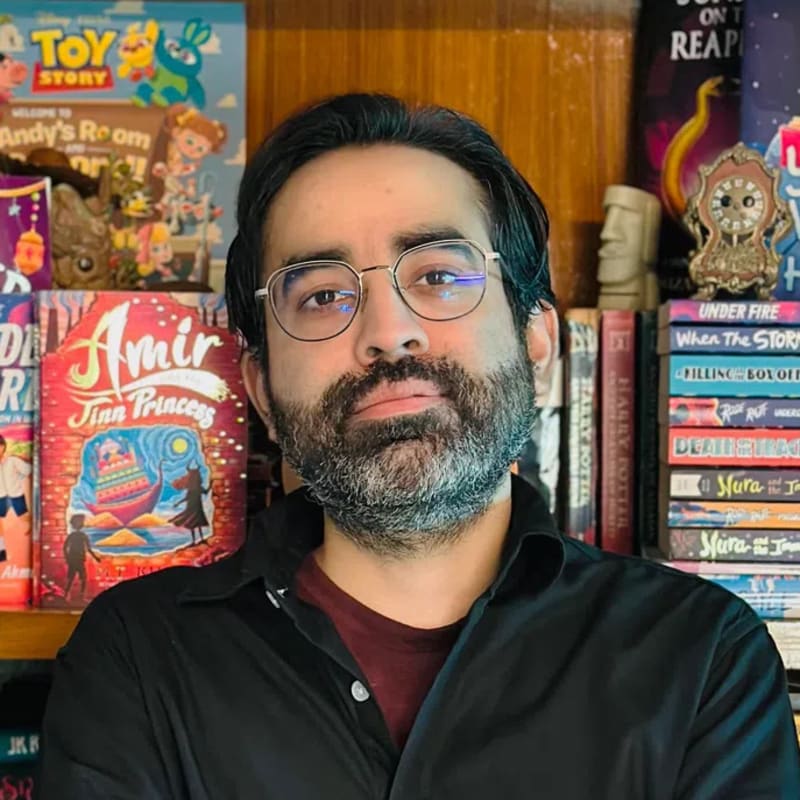
Who is Hazem Asif? Hazem Asif is an illustrator and visual artist based in Lahore, Pakistan. His artistic practice is rooted in visual storytelling for social change, existing at the intersection of science communication, children's publishing, and speculative world-building. Functioning as a form of design activism grounded in speculative design and design futures, Hazem constructs illustrated future scenarios to critically examine the ecological, social, and political realities of South Asia.  He holds a BFA in Graphic Design (2016) and an MFA in Design Studies (2018) from Virginia Commonwealth University School of the Arts. Currently, Hazem serves as a Science Illustrator at the Lahore University of Management Sciences (LUMS), where he acts as the Art Director for The Particle, a bilingual magazine that translates STEM research into accessible narratives.  His creative portfolio includes the illustration of approximately 24 children's books for prominent publishers including The Lancet HIV, HarperCollins, Penguin Books, DK Books, Bloomsbury and desinging the 2021 Google Doodle honoring Moin Akhtar. His recent projects include illustrating a retelling of The Odyssey for DK Books. Hazem's dynamic work in speculative design has garnered international media attention, earning features in major publications including Forbes, The Guardian, HuffPost, and Dezeen. Additionally, his artwork has been exhibited globally at prominent venues such as Maison et Objet in Paris (2019) and the Ajyal Film Festival in Qatar (2021).

Hazem Asif

Digital Artist, Children's Book & Science Illustrator

Pakistani multidisciplinary graphic designer, digital illustrator, and poster artist based in Lahore, known for children's book illustrations, speculative design, and socially engaged visual storytelling.

No events listed yet.

PakistaniArt uses cookies to remember your preferences, keep the site running smoothly, and understand which stories our readers care about most. We never sell your data. See our Cookie Policy for exactly what we collect and why.