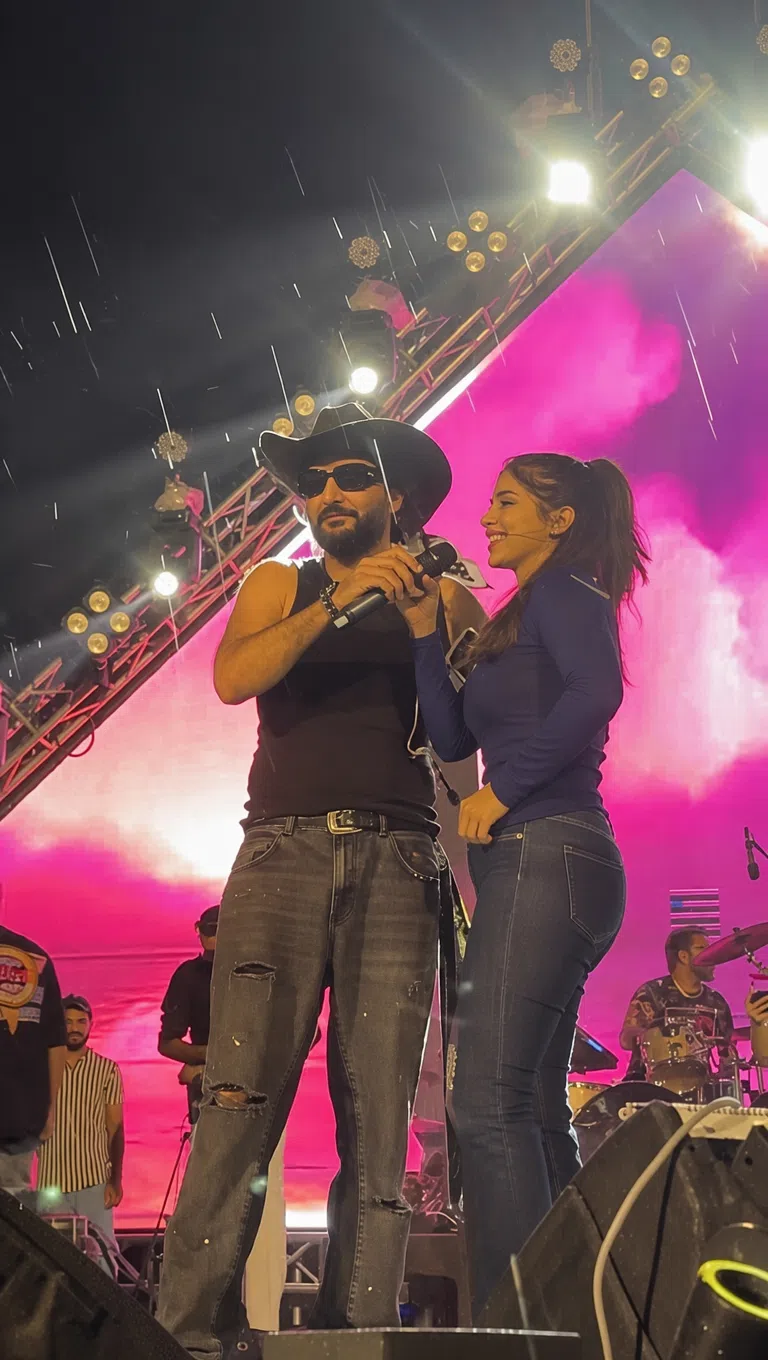
A live concert in Lahore featuring singer and rapper Bilal Saeed and actress Sonya Hussyn has gone viral on social media, sparking intense debate and mixed reactions online. The footage, now circulating widely across platforms, caught people off guard not for what was performed, but for how two celebrities occupied the same space in front of a packed crowd.
During the performance, Sonya Hussyn, known for her role in "Masoom," joined Bilal Saeed on stage as a special guest. Videos show the singer engaging with the crowd in a playful mood while placing his arm around the actress as he addressed the audience with mic in hand. Dressed in a black cowboy hat and black tank top, Bilal kept his arm around Sonya while speaking to the crowd. At one point, he asked the audience about Sonya's arrival from Karachi and requested her to share her experience of Lahore in a lighthearted exchange.

Bilal also recreated a well-known Karachi meme during the exchange, addressing Sonya with playful banter about her journey and her impressions of the city's energy. What followed on stage seemed casual enough. Online, it landed differently.
Sonya Hussyn was seen smiling and laughing throughout the interaction. Her gestures, at times covering her face and mouth, quickly became the focus of online discussion, with viewers interpreting her reactions differently. The controversy centered on the moment Bilal Saeed was seen placing his hands on Sonya Hussyn's shoulders while asking about her experience in Lahore. Many social media users quickly deemed the physical interaction inappropriate and potentially uncomfortable for the actress.
The gesture, intended as part of a lighthearted exchange, became the subject of intense scrutiny, with numerous comments questioning the boundaries of public interaction between celebrities. The incident has since spurred a broader conversation about consent and conduct in the entertainment industry.
Public responses ranged sharply. Comments ranged from outright condemnation of Bilal Saeed's actions to cynical remarks about the selective application of harassment claims. Some users felt the backlash was proportionate. Others argued the reading of the moment was overblown. While some social media users viewed the moment as a fun and spontaneous stage interaction between two celebrities, others criticized Bilal Saeed's physical contact, arguing that holding her by the shoulders appeared inappropriate and possibly uncomfortable.
Despite the online controversy, Sonya Hussyn later responded positively during the event itself, praising the energy, warmth, and hospitality of Lahore's audience. Her own visible ease during the moment did little to settle the debate once the clips spread.
Bilal Saeed has carved out a significant niche in Pakistani music as a prolific singer and composer. His discography includes popular tracks like "12 Saal," "Do Number," "Baari," and "Adhi Adhi Raat," with his influence extending into Bollywood. This is not the first time his public behavior has drawn attention. In 2020, he and actor Saba Qamar faced significant backlash after filming scenes inside the historic Wazir Khan Mosque in Lahore for a music video. The pair apologized and scenes from "Qubool" were cut, though they still faced potential legal consequences.
The clips sparked debate on consent, stage conduct, and celebrity behavior in live performances. That conversation, surfacing again here, suggests audiences are becoming more attentive to the unspoken dynamics between public figures, even in informal, festive settings. The viral clips continue to circulate widely, dividing opinion between those calling it a harmless stage moment and others labeling it as an uncomfortable interaction that crossed boundaries during a public performance. Whether this becomes a turning point in how Pakistani entertainment culture handles such moments, or fades quickly in the news cycle, remains to be seen.
Check topics and authors from this story to see more stories like this in your personalized feed and receive updates when new work is published.


