
Contemporary Art Gallery
Contemporary Art GalleryLahore, PakistanEst. 2025
ZQ Gallery is a prominent contemporary art gallery and institute located at 19-A Jail Road, Jinnah Town, Lahore. Founded by filmmaker and curator Ammar Aziz, the space serves as both a public exhibition platform and an educational hub known as the ZQ Institute of Arts.
ZQ Gallery is a contemporary art gallery in Lahore, Pakistan, founded in 2025 by filmmaker and poet Ammar Aziz.
Housed in a nostalgic brick building on Jail Road, the gallery is named in memory of the late educationist Zeenat Qureshi and positions itself as a space dedicated to democratizing art and challenging cultural gatekeeping in Pakistan’s art ecosystem.
ZQ Gallery was launched in 2025 as a faculty-led initiative by Ammar Aziz, a visiting faculty member at Beaconhouse National University’s MDSVAD (Minhaj Department of Visual Arts and Design). The gallery’s inaugural exhibition, The Shape of Seeing, curated by Aziz, opened in September 2025 and was inaugurated by internationally renowned artist Prof Rashid Rana.
The gallery’s name honors Zeenat Qureshi, described in press coverage as a late educationist, though detailed public biographical information about her remains limited in available sources. The choice to name the gallery after an educationist reflects its underlying commitment to learning, accessibility, and the pedagogical potential of art spaces.
Aziz has described the gallery’s intention as “to democratize art,” noting that many emerging artists face barriers shaped by “cultural gatekeeping and rigid hierarchies” that determine who gets visibility and who is taken seriously. ZQ Gallery explicitly positions itself against these exclusions, aiming to create a more open and accessible environment for a wide range of artistic practices.
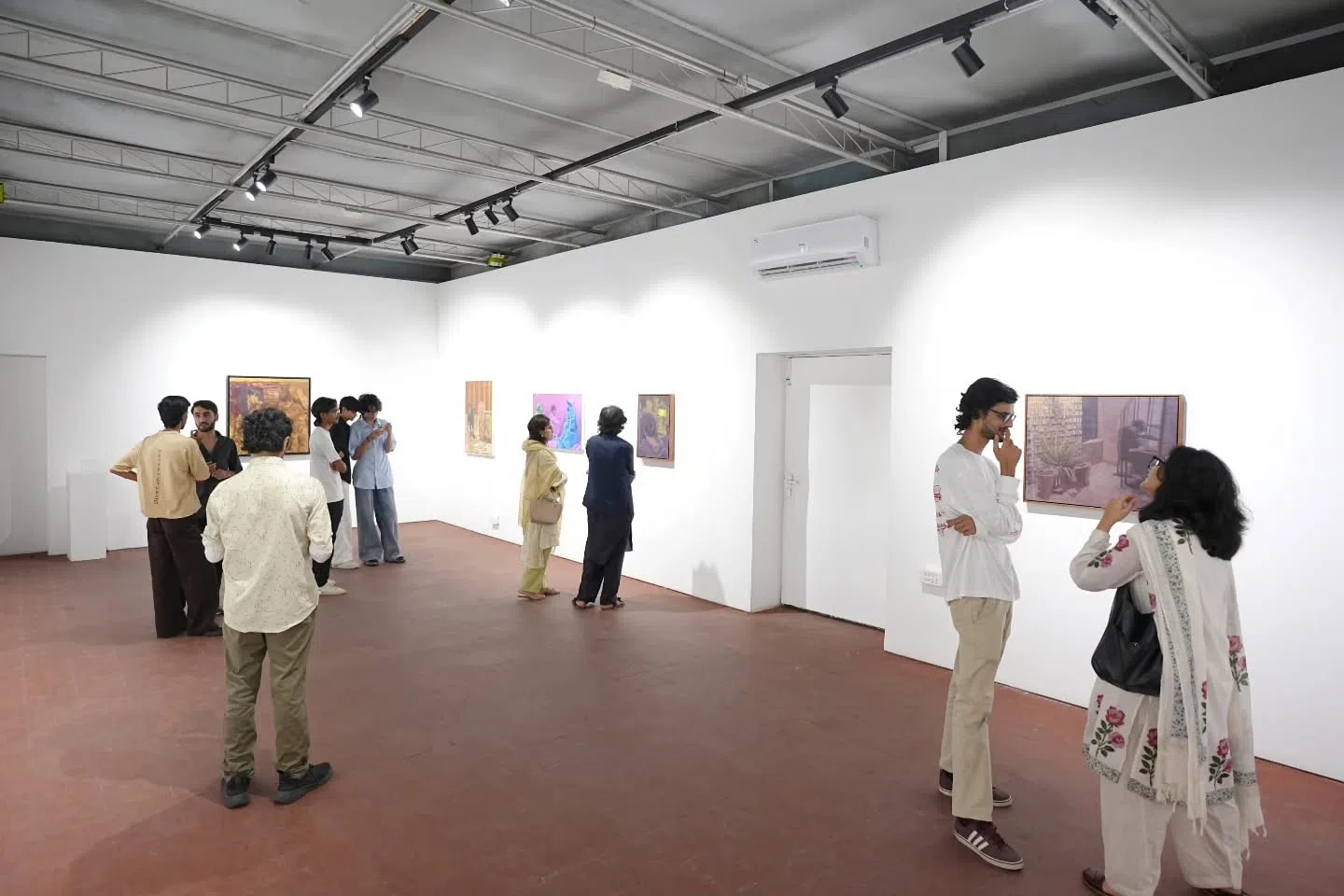
ZQ Gallery is located on Jail Road in Lahore, a thoroughfare already known for its concentration of cultural institutions, including the Nairang Art Gallery and Café, and proximity to landmarks like Alhamra Arts Council and the Lahore Museum.
The gallery occupies a brick building that “carries the nostalgia of old Lahore,” a detail the gallery emphasizes as central to its identity. Rather than a sterile white-cube space, ZQ Gallery embraces the historical texture of its architecture, allowing contemporary practices to exist “in dialogue with the tradition, rather than in isolation from it.”
This contextual sensitivity aligns with broader conversations in Pakistan’s art world about how new spaces can engage with Lahore’s layered cultural history.