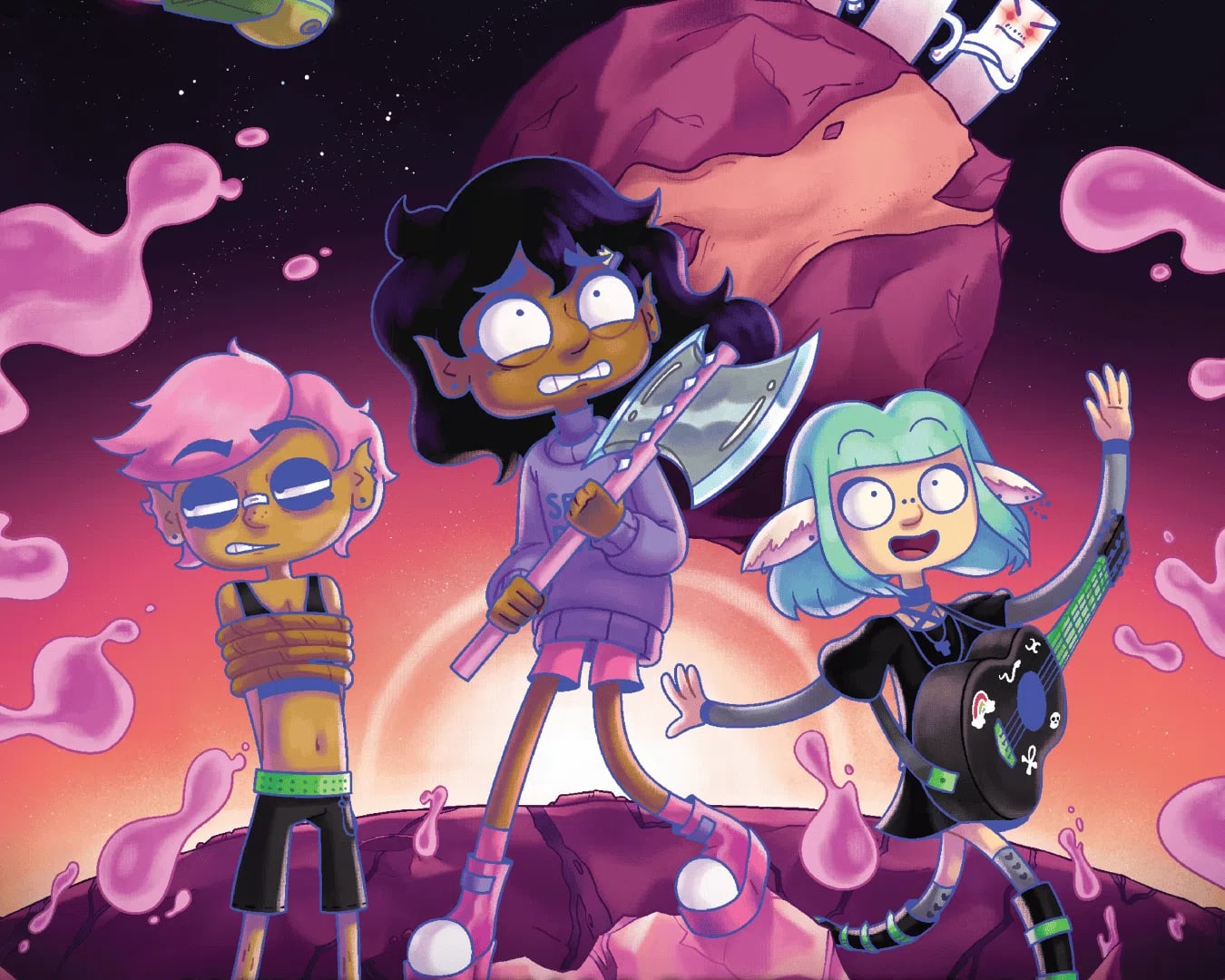

Internet memes have always needed a common enemy, but they rarely get one that brings genuinely hostile fandoms to the same table. That changed this weekend when Lesbian Space Princess became the unlikely target of one of the most absurdly coordinated pile-ons in recent fandom memory.
It started on Sunday after a Reddit post declared: "Literally every fandom ever joining together to make fun of Lesbian Space Princess." From there, the meme spread fast. The film was hit with a massive wave of hate online, with fandoms apparently joining forces against it, including fans of Hazbin Hotel, Five Nights at Freddy's, Invincible, Steven Universe, and more.
By Monday, "Lesbian Space Princess" had trended on X in the US for at least six consecutive hours. On TikTok, posts tagged with the film's name racked up millions of impressions, with captions calling it "the closest we've been to world peace."
The format is straightforward: fans of several unrelated movies, shows, games, and animated franchises are jokingly putting aside their usual rivalries to unite against the film, with the phrase "just this once" at the center. It's a silly bit. The problem is that most of the people posting it appear to have no idea what they're actually roasting.

Here's what the film actually is. Lesbian Space Princess is a South Australian animated comedy from first-time feature filmmakers and writer-directors Emma Hough Hobbs and Leela Varghese, produced by Tom Phillips of We Made a Thing Studios. The 87-minute film follows an anxious, introverted protagonist named Saira, who lives on the planet Clitopolis, only to find her ex-girlfriend kidnapped by "Straight White Maliens."
The voice cast includes Shabana Azeez, Bernie Van Tiel, Gemma Chua-Tran, Richard Roxburgh, Kween Kong, and comedy troupe Aunty Donna. It is, in other words, a self-aware, low-budget queer indie comedy. Not a prestige HBO drama. Not a corporate streaming tentpole.
And it is emphatically not a Netflix original. Lesbian Space Princess is an independent film, and Netflix acquired streaming rights for specific regions, including Australia and New Zealand. In the US, the film is available free on Pluto TV through Cineverse. The misinformation layer is a significant part of why this trend keeps accelerating rather than burning out.
The controversy partly ignited when several Netflix users claimed they were recommended the film, with rumors circulating that other titles were removed from Netflix and replaced by Lesbian Space Princess, an unverified claim.

None of this is what the film's award history suggests it deserves. Hough Hobbs and Varghese premiered the film at the prestigious 2025 Berlinale, where it won the Teddy Award, the world's oldest and most prestigious queer film award, for Best Feature Film. The jury lauded it for "a deliciously subversive vision of a future that is so unabashedly queer in both form and content."
It subsequently screened at the 72nd Sydney Film Festival, where it won the Audience Award for Best Australian Feature. The film also received seven nominations at the 2025 AACTA Awards, including Best Film.
The Rotten Tomatoes split tells the story more cleanly than any trending hashtag. The film holds a 98% Tomatometer score from 52 professional critics. The Popcornmeter, the audience score, sits at 26%. That's not just a gap. It's a canyon. And it's almost certainly being widened right now by people who haven't watched the film but have voted anyway.
The criticism isn't entirely coming from bad-faith outsiders, though. Viral rumors spread that the film mocked trans women, with many viewers labeling it anti-LGBTQIA and pointing to labrys imagery in the film as evidence it promotes a TERF ideology.

The labrys is a double-headed axe that has historically been used as a lesbian feminist symbol; its presence in the film has become a flashpoint within queer communities, not just outside them. Some viewers describe the comedy as overly cringe, while others criticize the writing, characters, and the film's broader approach to political and LGBTQ+ themes.
Whether those complaints hold up against the actual film is a different question entirely, one most participants in the trend cannot answer because they haven't seen it.
That's the real story here. Lesbian Space Princess impressed both critics and audiences at the 2024 Adelaide Film Festival in October, where it enjoyed four sold-out preview screenings and won the Audience Award for Feature Fiction. It went on to win at Berlinale.
It toured international festivals. And now, roughly a year after its Australian theatrical release, it has become the internet's designated punching bag, largely because it has a provocative title, a divisive Rotten Tomatoes audience score, and a Netflix rumor nobody bothered to fact-check.
The absurdity is genuinely funny. A scrappy queer debut feature from Adelaide, backed by the South Australian Film Corporation and Screen Australia's Film Lab: New Voices program, has somehow provoked a fake truce between fandoms that normally spend their time arguing with each other.
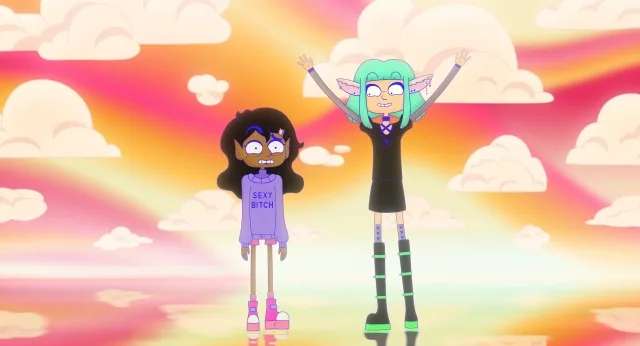
Lesbian Space Princess is only the second feature to emerge from the Film Lab: New Voices initiative, designed to elevate the next generation of diverse South Australian filmmakers. The idea that this is the film the internet chose for its main character moment is, depending on your tolerance for chaos, either hilarious or genuinely exhausting.
What happens next is anyone's guess. Pile-ons like this can burn out in 48 hours or metastasize into something harder to shake. The more interesting question is whether the backlash drives curious viewers to actually watch the thing. In the US, it's free. All it costs is the willingness to find out if the movie you've been dunking on is actually what you think it is.
Probably easier to keep posting the meme.
Check topics and authors from this story to see more stories like this in your personalized feed and receive updates when new work is published.


