

Horror has been on a tear in 2026, winning Oscars, breaking box office records, and redefining what a genre film can be.
Eli Roth did not get the memo. His latest, Ice Cream Man, opened in theaters on August 7 to some of the most savage reviews of the year. The film debuted to an abysmal 26% "Rotten" score on Rotten Tomatoes, cementing it as one of the year's biggest genre disappointments. Its average critic rating sits at a grim 4.3 out of 10. On Metacritic, it hasn't fared much better, sitting at 41 out of 100.
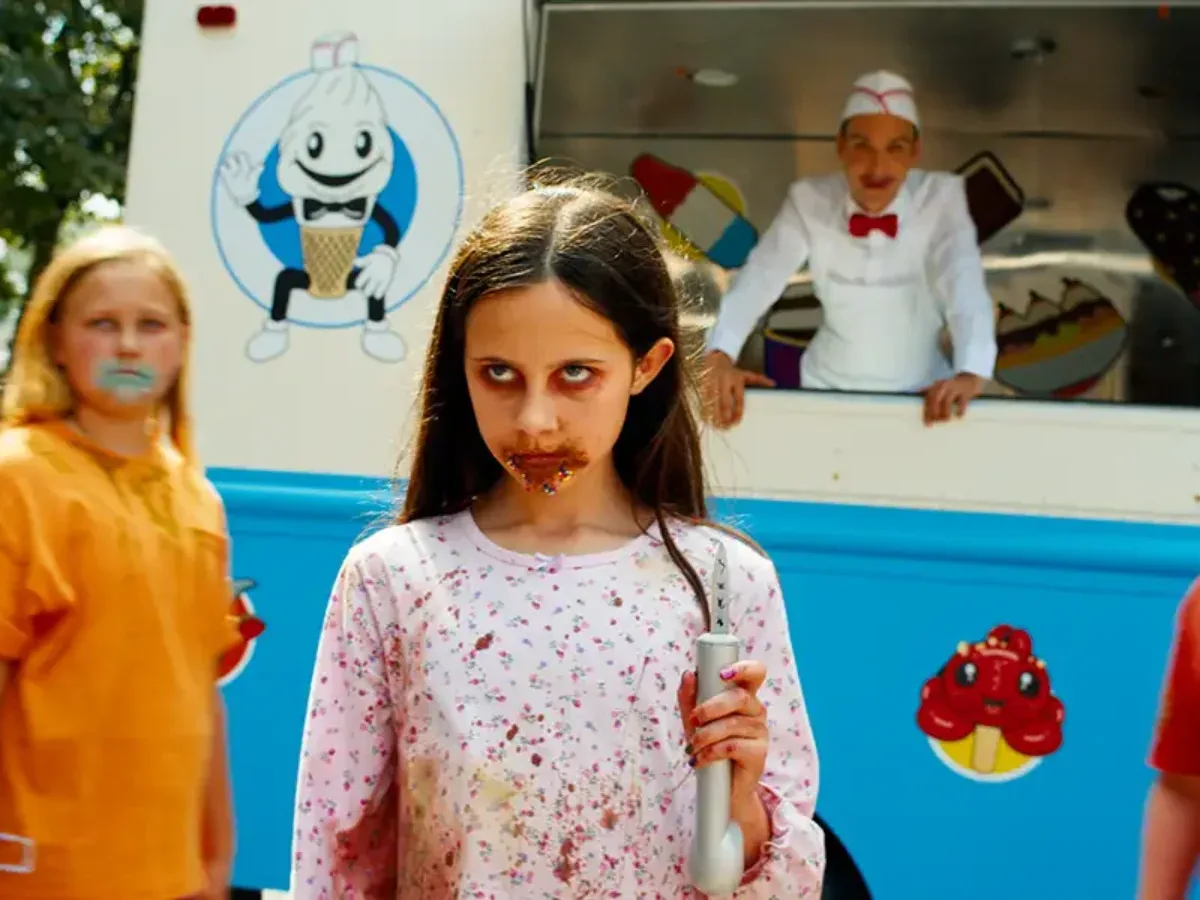
But the Tomatometer is barely half the story. Ice Cream Man has become a lightning rod for something much bigger: the AI-in-film debate, a year-old Instagram scandal involving Greta Thunberg, and a growing online boycott movement that turned a $5.5 million slasher into one of the most contested releases of the summer.
What Critics Are Saying
The reviews are not gentle. Owen Gleiberman of Variety criticized Roth's "it's-all-a-big-joke attitude" as a cop-out. In his full write-up, he described the film as a "one-joke piece of shock theater," where the titular psycho "serves children demonic ice cream that turns them into zombie slashers."

William Bibbiani at The Wrap was even blunter. He wrote that "it would be more exciting to watch a documentary about the professionals, weirdos and professional weirdos making the fake guts."
Empire Magazine went with one star. The publication called it "ugly, unpleasant and utterly insubstantial." The review noted Roth was once "the enfant terrible of horror" but argued that the landscape has moved on, with horror films now winning Academy Awards and outgrossing major franchises.
Frank Scheck of The Hollywood Reporter offered one of the few warmer notices. He praised Roth's "sick and twisted" ambition to outdo other murderous-children films. A handful of critics have similarly called it "depraved fun," suggesting genre diehards with iron stomachs might find something to enjoy.
The A.V. Club gave it a C, drawing a direct comparison to Roth's 2023 hit. The outlet noted that "Thanksgiving used inventive variations on its gimmick to build toward its sicko smorgasbord finale, an escalation of gnarly ingenuity that Ice Cream Man lacks."
If the score holds, Ice Cream Man will have earned one of the worst Rotten Tomatoes ratings for a major 2026 horror movie, landing below critically belittled titles like Scream 7 at 30% and Lee Cronin's The Mummy at 45%. Only Psycho Killer (9%) and The Strangers: Chapter 3 (18%) sit lower.
The AI Controversy
This is where the conversation gets genuinely uncomfortable for Roth.
The controversy began just before the film's release, when Roth told Polygon on August 3 about an animated sequence inspired by 1920s Fleischer Studios and Walt Disney cartoons. "I have an animation background and I drew it," he claimed. He described drawing out frames himself and trying to match the style of "the 1920s haunted Mickey Mouse cartoons."

Then the credits rolled. A version sent to film critics credited Dark Half, an AI visual effects company. That detail didn't square with Roth's earlier framing. When Polygon followed up, Roth admitted to the movie using AI in some sequences.
During the film's 89-minute runtime, two sequences appear clearly made with AI. The first is an animated sequence directly inspired by 1920s Fleischer-style animation, and the second provides backstory for the titular villain.
The AI usage was doubly controversial: the practice itself is widely criticized on ethical and copyright grounds, and the initial omission meant viewers may have paid for tickets without knowing AI was involved. That distinction matters in 2026, when audiences are actively pushing back against generative AI in creative products.
To be clear, practical effects were used alongside AI, and no credible claims suggest the entire film was AI-generated. Still, the perception that Roth tried to hide his use of the technology has hurt his reputation with the exact audience he needed to reach.
Online reactions have been withering. One critic wrote that Roth "had to remind everyone what real Horror slop looks like." Another added, "That's not horror, that's just giving up."

Roth eventually released a statement to Variety, confirming "AI was used in a very small portion of a few scenes in the film." That did not slow the backlash.
The Greta Thunberg Comment
The AI mess landed on already poisoned ground. In June 2025, Roth said that activist Greta Thunberg "needs to be eaten by cannibals" after the Gaza Freedom Flotilla she was part of was detained by the Israeli Navy while attempting to deliver aid to the Gaza Strip. He added on Instagram Stories, "If you posted Greta's antisemitic propaganda, you are dead to me."
Screenshots from Roth's Stories circulated widely online. Multiple accounts captured the screengrabs before the posts expired. One widely shared post on X racked up 1.5 million views.
The comment drew a direct line to Roth's cannibal horror film The Green Inferno, making the remark feel less like a stray thought and more like a filmmaker leaning into his own brand in the ugliest possible way. For many online, it became a permanent reason to skip anything with his name on it.
By the time Ice Cream Man arrived over a year later, the boycott energy that started with that Instagram post had only compounded.
A Brutal Opening Weekend
The box office tells the rest of the story. Per Variety, Roth's slasher "scraped together $2 million from 1,671 screens in its opening weekend, landing in eighth place" behind holdovers. That per-screen average of $1,927 marks the lowest debut for any Eli Roth film released in wide distribution.
Timing did not help. Spider-Man: Brand New Day followed its record-breaking domestic debut with a historic second weekend of $145 million. Christopher Nolan's The Odyssey pulled in $110.7 million globally in its fourth weekend, pushing its total past $1.1 billion. Between those two behemoths, new releases got crushed across the board.
One Night Only managed just $5.7 million from over 3,000 locations. Super Troopers 3 opened to an anemic $4 million, less than a third of its predecessor's 2018 debut. Against that crowded, blockbuster-dominated field, Ice Cream Man never had a realistic path to relevance.

If the film maintains its current trajectory, it may only earn around $10.7 million worldwide by the end of its run. That would be a dismal return even for a movie budgeted at $5.5 million, once marketing and distribution costs are factored in.
Walkouts, Slop Accusations, and an Uncertain Future
Audience reception has been just as rough. The film debuted to a 3.8 on IMDb at the time of early reporting. Reports of mass walkouts have surfaced, with some driven by the film's extreme gore and others by viewers who simply considered it terrible or objected to the AI admission.
Roth had been trying to bring this project to the screen for more than 20 years, after studios repeatedly refused to green-light his premise. He launched his own company, The Horror Section, to finally make it happen. That long-gestating passion project framing makes the reception sting even more.
Roth is widely regarded as an icon of modern splatter-horror cinema, celebrated for pioneering its visceral revival with cult favorites like Cabin Fever and genre-defining entries like Hostel, and renowned for his commitment to practical effects. That reputation now sits at a strange crossroads. His 2023 film Thanksgiving earned an 83% on Rotten Tomatoes and genuinely excited the horror community. Borderlands, his 2024 video game adaptation, was a catastrophe. Now Ice Cream Man has arguably done more reputational damage than either.
The AI debate is not going away. Late Night with the Devil drew similar backlash in 2024 for just three AI-generated images. Roth's film, with its credited AI company and shifting explanations, has become the most prominent test case for what happens when a genre audience that prizes handmade craftsmanship discovers the shortcuts.
Whether Roth can recover from this particular combination of factors is genuinely an open question. The bad reviews, the weak box office, the AI controversy, and the lingering Thunberg fallout have created a compound problem that no single good project can easily fix. For a director who once thrived on provocation, the audience has finally found a provocation of his they won't forgive.
At least not this weekend.

Check topics and authors from this story to see more stories like this in your personalized feed and receive updates when new work is published.