
Few questions cut deeper in Mexican cultural politics than who gets to keep Frida Kahlo.
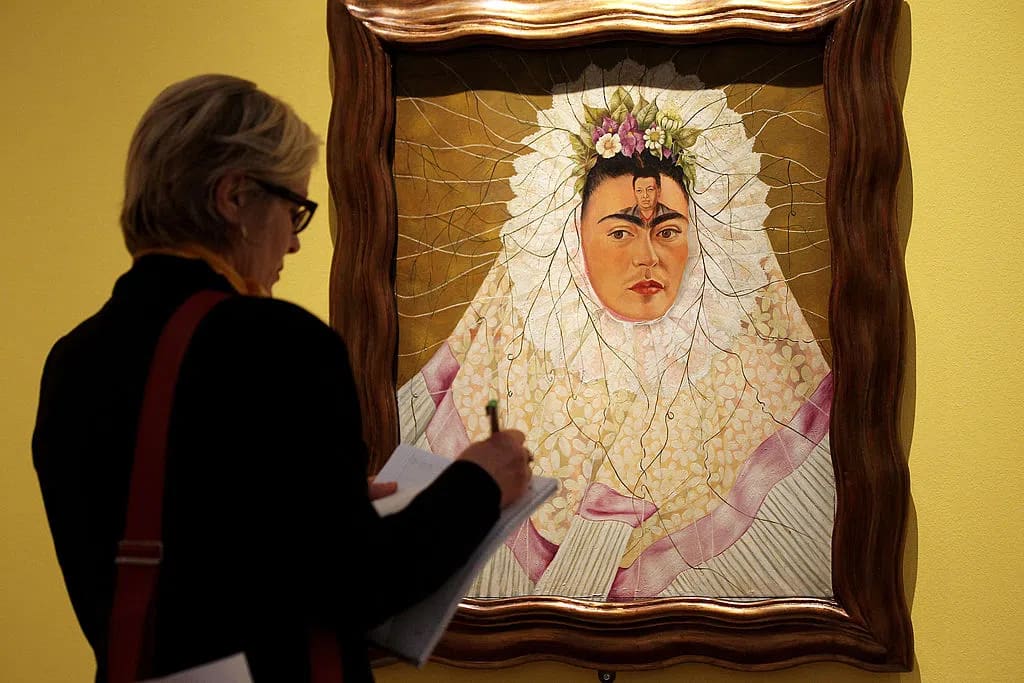
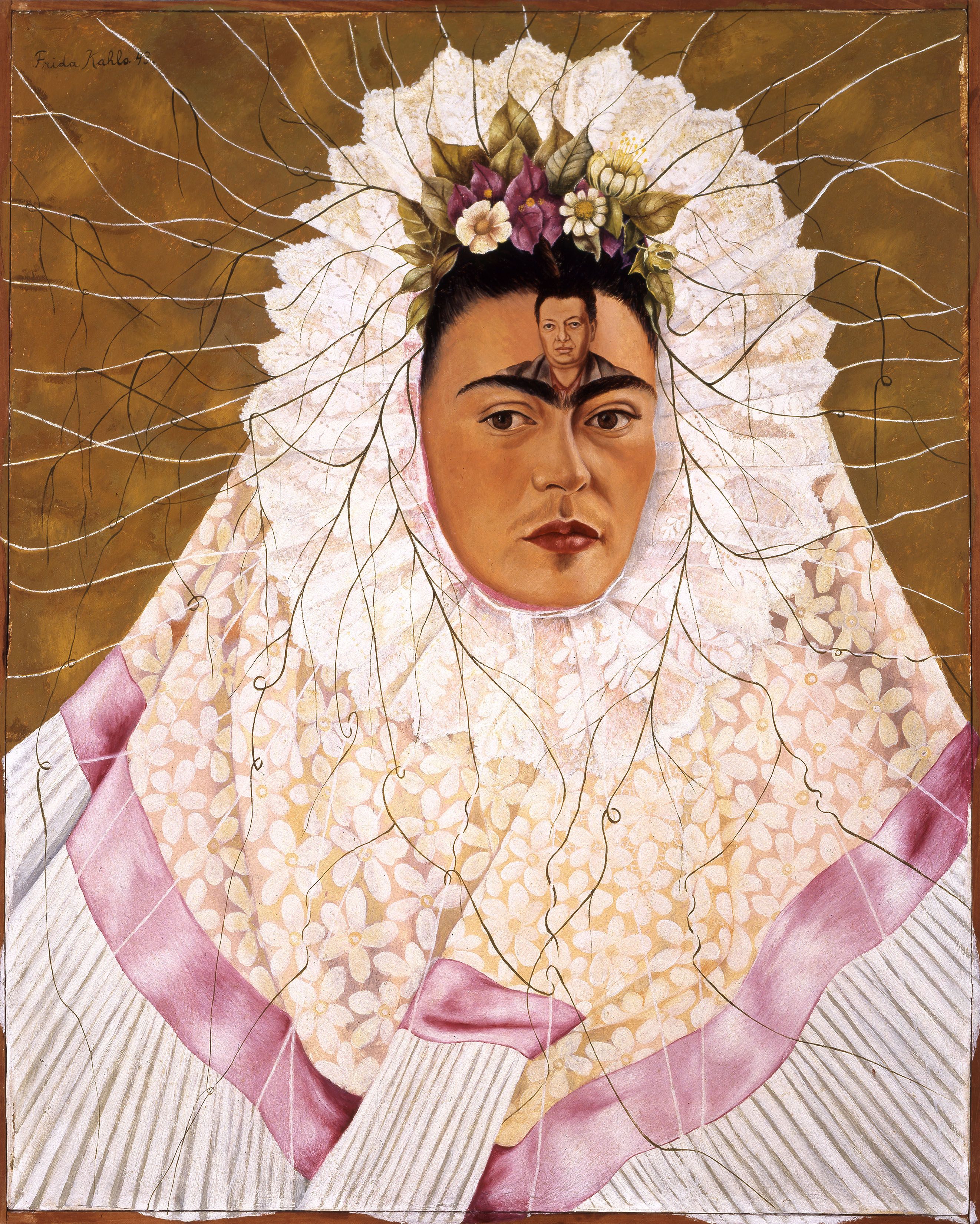
On 8 July, Mexico's Supreme Court agreed to review whether a four-decade-old presidential decree can legally prevent privately owned paintings by Kahlo from leaving the country permanently. Banco Ve Por Más brought the case after the Instituto Nacional de Bellas Artes y Literatura denied its request to permanently export Autorretrato con medallón, a 1948 oil on Masonite self-portrait. The small work, measuring 50 by 39.5 centimetres, depicts Kahlo in Tehuana dress with tears on her face.
At stake is a decree issued by President Miguel de la Madrid on 18 July 1984. Published in the Diario Oficial de la Federación, it declared all of Kahlo's output a national artistic monument, covering easel paintings, graphic works, engravings, and technical documents, regardless of whether they belong to the state or private collectors. Banco Ve Por Más argues the decree exceeds what the 1972 Federal Law on Monuments allows, since that law permits authorized export of privately held artistic monuments.
Minister Giovanni Figueroa Mejía called the case one of national relevance, framing it as a collision between the right to culture and the property right. The ruling could determine whether privately owned Kahlo works may ever permanently leave Mexican soil.
Running in parallel is a separate, equally charged dispute. The activist group Defendamos la Colección Gelman has called for a legal inquiry into the government's handling of the Gelman Collection, a trove of over 300 artworks rich in Kahlo paintings alongside pieces by Diego Rivera, Rufino Tamayo, and José Clemente Orozco. Assembled by European émigrés Jacques and Natasha Gelman, the collection passed after Natasha's death in 1998 to New York curator Robert Littman, sparking an ownership challenge. It was eventually acquired in 2023 by the Zambrano family, who pledged it as collateral for a personal loan managed by Banco Santander.
Under a tripartite agreement between the Zambranos, Santander, and INBAL, the works are currently on show at Mexico City's Museum of Modern Art, where they have drawn more than 300,000 visitors. They are scheduled to travel to Spain in September to inaugurate Faro Santander. Defendamos la Colección Gelman has begun legal proceedings against both the bank and the Mexican state, calling the arrangement "unconstitutional" and demanding a dedicated public museum for the collection.
"Of Kahlo's 152 known works, only seven paintings are in Mexican state collections," Francisco Berzunza, a historian and member of the collective, told The Art Newspaper. That scarcity sharpens every argument. Ten Kahlo paintings sit in the Gelman Collection alone, meaning a prolonged absence from Mexico would halve the number of her works accessible to the public there.
Mexico's culture secretary, Claudia Curiel de Icaza, has tried to draw a distinction between the two cases. She has stated the Gelman Collection "has not been sold and is only temporarily exhibited." Santander, for its part, has insisted the agreement operates in "full compliance with Mexican law." The bank says the collaboration allowed the collection to be exhibited in Mexico for the first time in almost two decades and that its return is planned for 2028.
Neither reassurance has quieted the opposition. Whatever the Supreme Court decides about the 1984 decree will ripple far beyond a single self-portrait. The decision could carry implications for some of the most significant private Kahlo holdings in the country, including the Dolores Olmedo Collection. For a nation that treats Kahlo as cultural patrimony, the legal outcome will set the terms for how that word is defined in practice.
Check topics and authors from this story to see more stories like this in your personalized feed and receive updates when new work is published.