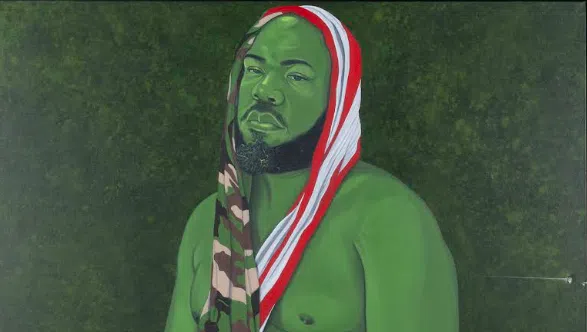

A self-portrait by the painter Clarence Heyward on display at the Houston Museum of African American Culture was intentionally defaced last month by visitors, the Texas institution confirmed this week. The museum announced on June 8 that a museum visitor had damaged the painting on May 21. The harm included a puncture and large cut or scrape in the canvas, inflicted on Heyward's work "Man in the Garden," part of the "Eden" exhibition in the downstairs gallery.
The damage is a slash mark several inches long, punctuated by a deep impression in the green and black background through to bare canvas, with damage continuing to the edge of the canvas and frame. Staff discovered the vandalism during routine gallery monitoring, promptly removed the artwork, filed a police report, and engaged art conservators. What followed, though, was an unusual institutional decision.
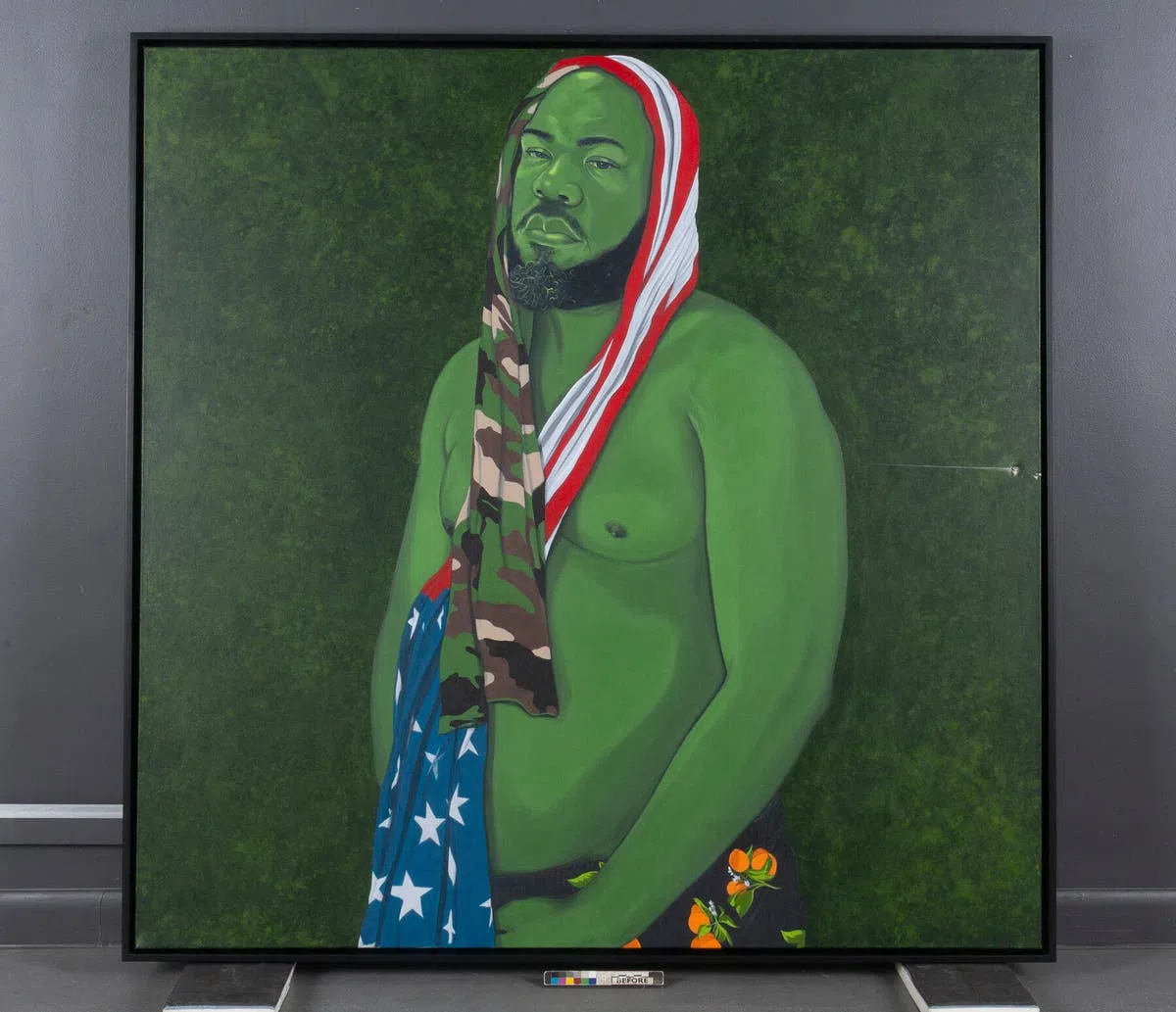
In an unconventional move, museum officials halted the initial restoration process and put the damaged artwork back on display. HMAAC CEO Emeritus and exhibition curator John Guess Jr. explained that the public needs to see the physical consequences when disagreement devolves into destruction.
A spokesperson for the Houston Police Department confirmed that police were investigating a May 21 report of criminal mischief at the museum. The suspects are two men who were seen walking near the museum, one of whom is believed to have damaged the artwork. No arrests have been made.
Two white men visited the HMAAC galleries on May 21, made an obscene gesture while being photographed with an artwork in the Kandy G. Lopez exhibition "Allegiance to the People," then visited Heyward's show before leaving abruptly. The museum's cameras had malfunctioned the day before the attack, and a work order to repair them was placed hours before the suspects arrived.
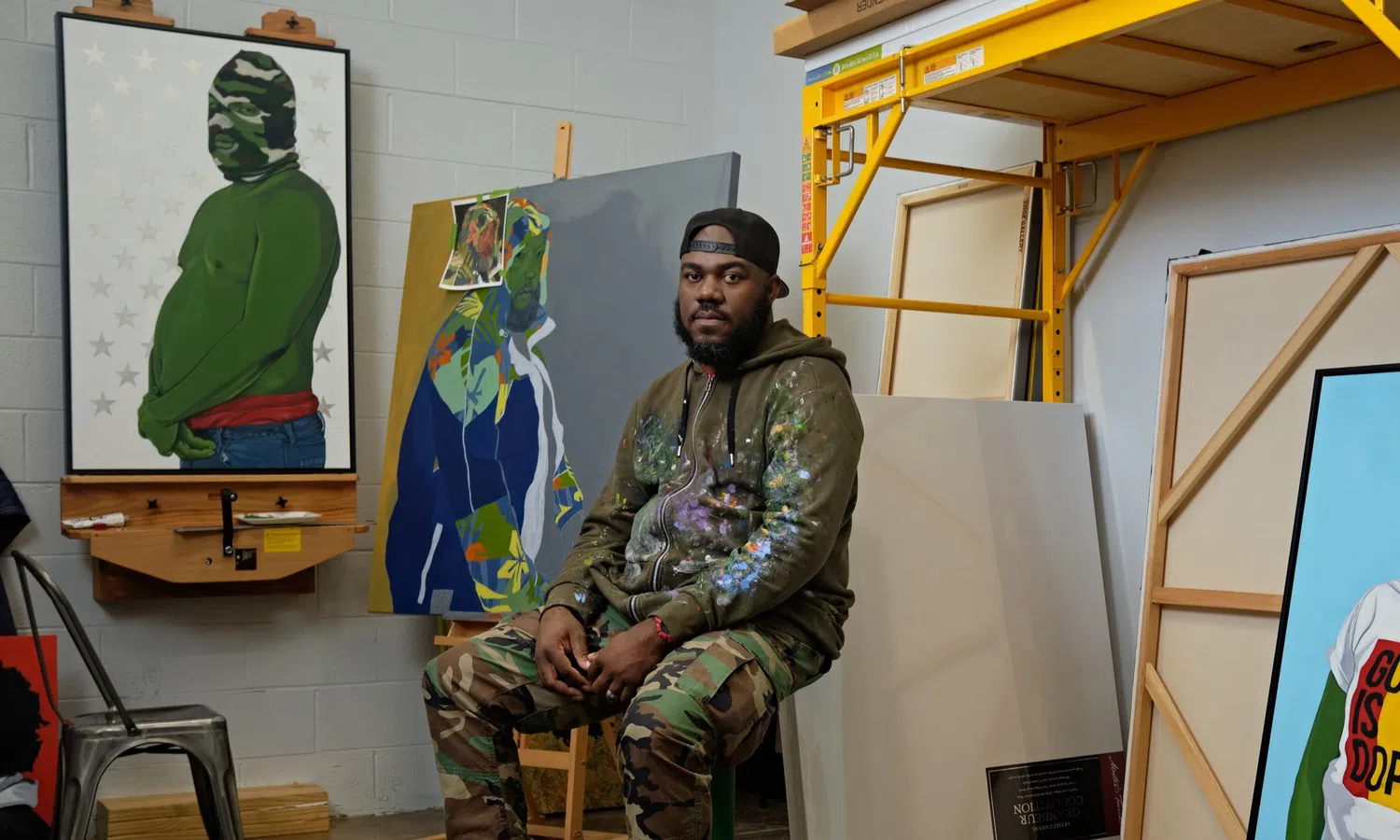
"Man in the Garden" is a large-scale painting depicting a shirtless Black man with an American flag and camouflage cloth draped over his head. The work highlights one of Heyward's signature techniques of portraying Black people with green skin. In his artist statement, the Brooklyn-born Heyward describes the technique as linking skin tone to the cinematic process of green screening, where green backgrounds are used to project computer-generated new realities. He has called it a way that "provides an alternative entry into the conversation of existing while Black in America."
On the HMAAC website, the "Eden" exhibition is described as a reimagining of the biblical Garden of Eden narrative in an African American context, "positioning the story of origin, rupture, and longing within a broader history of forced displacement, survival, and resilience."
Heyward responded carefully. Reacting in an email, he wrote: "I create work that invites reflection, challenges assumptions, and encourages dialogue. My hope has always been that those perspectives lead to conversation rather than destruction."
At the press conference held June 9, Guess said the vandalism was representative of continued bigoted attitudes in Houston. "If we're honest about it, this is a very racist town," he said.
HMAAC CEO Davinia Reed addressed the incident directly. Reed stated: "Our immediate priority is supporting the artist and ensuring the proper restoration of the work. At the same time, we remain committed to presenting exhibitions that encourage learning, reflection, and dialogue. Acts intended to intimidate, censor, or damage cultural expression will not deter us from our mission."
HMAAC is the only African American culture museum in a major United States city that does not receive public funding. This incident is the first time the institution has had a work defaced, though previous threats against the museum have been logged in the past.
Museum officials have emphasized that the incident extends beyond damage to a single work of art and raises broader concerns about how communities engage with ideas, viewpoints, and cultural expression. Across the country, under the Trump administration, local governments and federal agencies have used public arts funding as a bargaining chip to shape American arts institutions along political lines. The decision to display the wound rather than conceal it places HMAAC firmly within that contested landscape, choosing visibility over deference.
Follow topics and authors from this story to see more stories like this in your personalized feed and receive updates when new work is published.