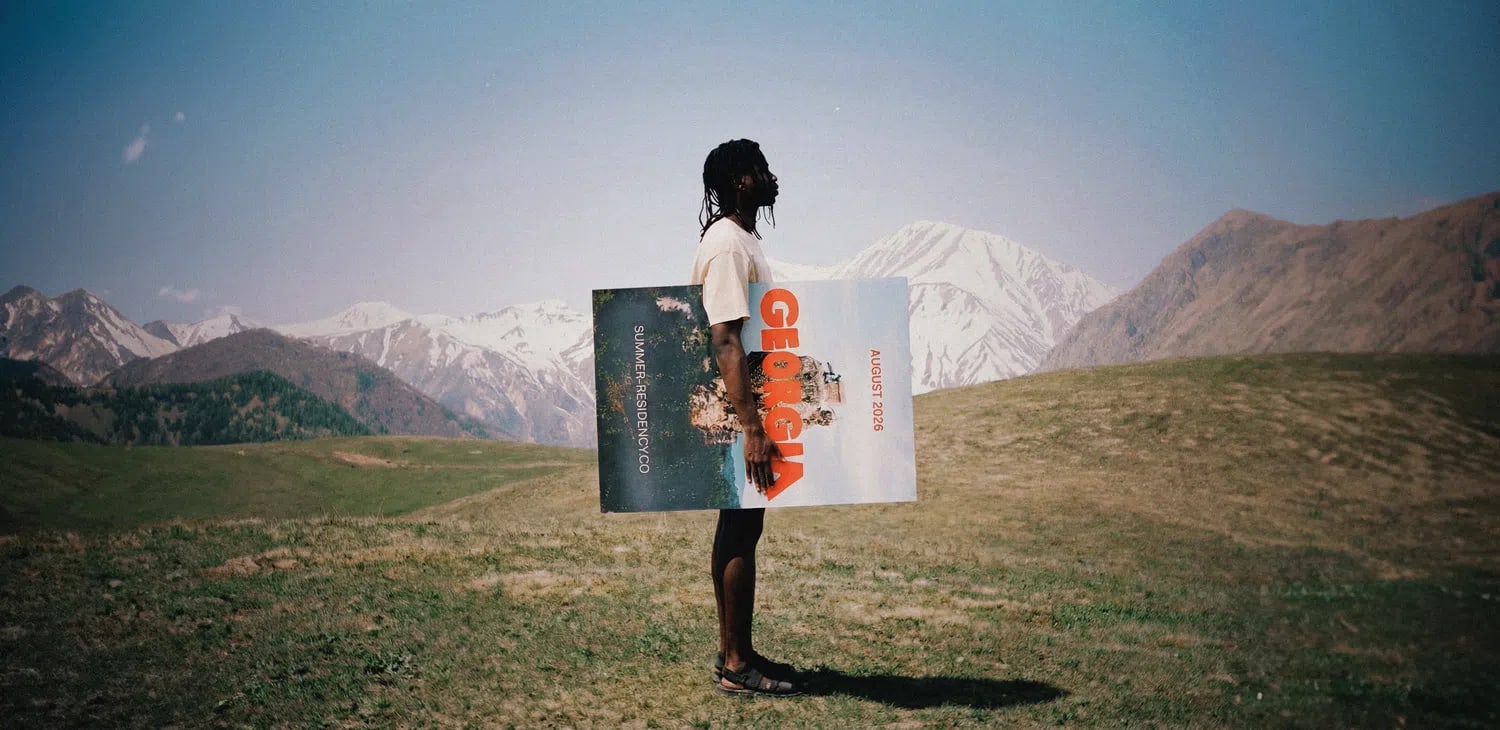
For emerging artists, a fully funded residency remains one of the field's most coveted lifelines. It signals legitimacy, provides time, and offers escape from the financial grind that quietly ends careers before they begin. That longing is precisely what made early June's Abstract Magazine episode land so hard.
Hundreds of artists received what appeared to be personal acceptance letters to a lavish art residency last week, only to discover the emails had gone out to a massive, undisclosed number of people. The messages, sent on June 5 by Emily Hart, a member of the selection team, led many recipients to believe they had been chosen for the program, only for the publication to later say the email meant advancement to the next stage of review, not final selection.
Founded in 2016, the online magazine publishes interviews with emerging abstract artists and facilitates artwork sales. Its residency, launched last year, promised two cohorts of 20 artists each a two-week stay with free travel, meals, and accommodation at an undisclosed location in Georgia. The magazine boasts 1.1 million followers on Instagram, with its Summer ResidencySummer Residency account already amassing 233,000 followers. That platform reach made the emails feel credible, which made the confusion worse.
Many who received Hart's email said they had not applied to the 2026 edition. Others had never applied to any edition. Dozens of frustrated posts flooded Reddit and Instagram, garnering hundreds of thousands of views and likes. Abstract Magazine and Summer Residency closed comment sections and blocked some users who posted criticism, then stayed silent for nearly a week before stating on Wednesday, June 10. The statement read: "Not being immediately selected for a residency is understandably disappointing, but it is not a reason to assume fraud or misconduct."
The response did little to calm the conversation.
London-based artist Yutaro Inagaki commented on a post with 12,700 likes: "I wouldn't call it a complete scam, but there have been enough red flags and questionable behaviors to [make] all of us uneasy." Multiple former residents confirmed that last year's inaugural event did happen, though neither art materials nor gallery representation were furnished, as had been promised. Instead of the promised 50 participants, only 18 attended.

A key element of the residency's promotional pitch involved "Gallery Opportunities," claiming artists would be "considered for future exhibitions by 50 partnering galleries and curators," yet the program's website did not provide a single gallery name. Separate observers flagged that the organization's registered address is in Ukraine, with some characterizing it as a data-mining operation.
The core complaint is that the email campaign appeared to suggest artists had been individually selected, when in reality it was a broad recruitment effort designed to generate paid applications. The residency charges $25 to apply. One artist captioned her video on the incident: "This might be the biggest online art world scandal we have witnessed."
Taos-based painter Boramie Sao, who attended last year's edition, told Artnet News: "It's hard to say why we received such backlash for a residency we applied for, got invited to, and participated in." Her frustration points to a real collateral wound. Actual participants found themselves targeted by the same anger meant for the organizers.
Beyond this particular controversy, the episode has reignited broader conversations about pay-to-play creative opportunities. With an estimated 15 to 30 million artists worldwide and only around 1.2 million registered as exhibiting artists, the gap between aspiration and access represents an enormous and vulnerable target audience. That structural reality is what programs like this one exploit, whether deliberately or through sheer negligence. The distinction, for hundreds of artists still waiting on answers, may matter less than it should.
Check topics and authors from this story to see more stories like this in your personalized feed and receive updates when new work is published.


