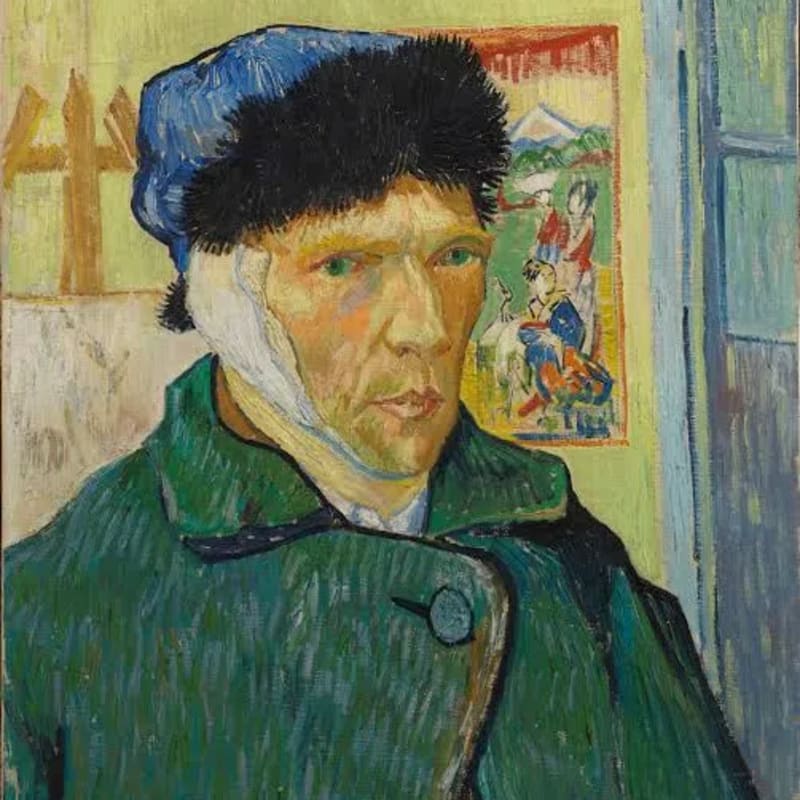
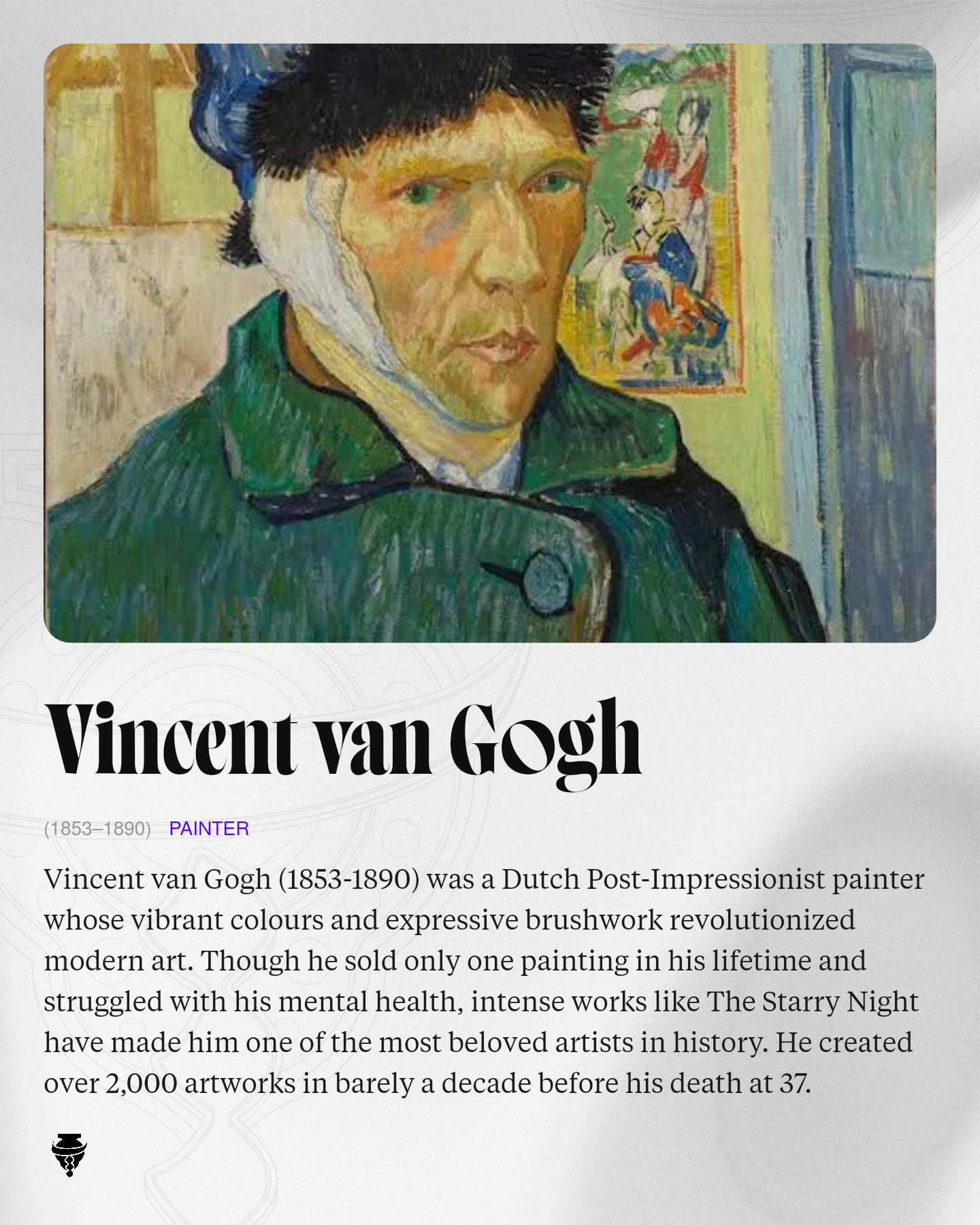
Vincent van Gogh was a Dutch painter whose bold use of color and emotional depth transformed the course of modern art. Born in 1853 in the Netherlands, he turned to painting late in life after trying various careers. His short but explosive career produced masterpieces that capture raw human emotion and the beauty of the everyday world. Today he stands as a symbol of artistic passion and resilience.
Early Life and Education
Vincent Willem van Gogh was born on 30 March 1853 in Zundert, Netherlands. He was the son of a Protestant minister. As a child he was quiet and thoughtful. He attended local schools and a boarding school before leaving at 15. Early jobs included working as an art dealer for Goupil & Cie in The Hague, London, and Paris. He also tried teaching, bookselling, and preaching among miners in Belgium. These experiences deepened his empathy for the working class.
Developing a Practice
At age 27 in 1880, van Gogh decided to become an artist. He taught himself drawing and painting, supported by his brother Theo. Early works focused on dark, realistic scenes of peasants and miners. In 1886 he moved to Paris. There he discovered Impressionism and brightened his palette. He experimented with color theory and Japanese prints. His friendship with artists like Paul Gauguin influenced his bold style.
Major Works and Career
Van Gogh moved to Arles in 1888 seeking light and color. He painted sunflowers, wheat fields, and cypress trees with swirling energy. Famous pieces include The Starry Night, Sunflowers, and Bedroom in Arles. He created over 900 paintings and 1,100 drawings in ten years. His work reflected personal struggles with mental illness yet celebrated life with passion. He died in Auvers-sur-Oise in 1890 at age 37.
Recognition
During his lifetime van Gogh sold almost nothing. Recognition came after death thanks to Theo's widow and exhibitions. His influence shaped Expressionism and modern art. Museums worldwide now celebrate him, especially the Van Gogh Museum in Amsterdam. His letters to Theo remain a profound record of his inner world and artistic vision.