Women have not merely participated in Pakistani art; in crucial periods they have led it. From the pioneers who helped define a modern national art after 1947 to the contemporary figures who today hold the world's most prestigious fellowships and gallery rosters, women artists are central to any honest account of Pakistani art. This guide introduces the artists, the themes that recur across their work, and the institutions and forces that shaped their careers.
A different story than the one usually told
Histories of South Asian art have often relegated women to the margins. The Pakistani case complicates that narrative. The country's art academies — above all Lahore's National College of Arts — produced women artists who became not just successful but foundational, and the contemporary miniature movement in particular has been disproportionately shaped by women. Reading Pakistani art through its women is not a corrective footnote; it is one of the most direct routes into the art's central concerns.
The contemporary leaders
The most internationally celebrated Pakistani artist of her generation is, by many measures, Shahzia Sikander. Trained at NCA, she transformed Indo-Persian miniature painting into a global contemporary language across animation, sculpture, and mural, and became a MacArthur Fellow and the first Pakistani to receive the U.S. State Department Medal of Arts. Her career rewrote what was possible for an artist working from a South Asian tradition.
Aisha Khalid is one of the defining figures of the neo-miniature movement, extending the language of Mughal miniature painting into textiles, video, and site-specific installation to interrogate gender, Orientalism, domesticity, and the politics of beauty. Her work is held in major collections and shown internationally, and it exemplifies how women artists have used inherited forms to ask pointed contemporary questions.
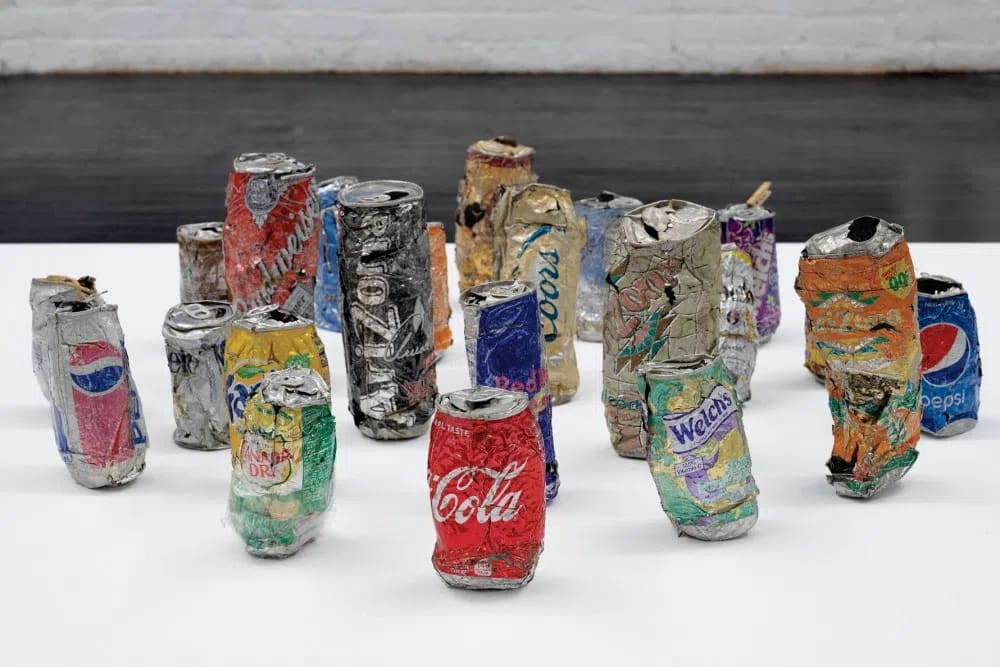
Huma Bhabha, born in Karachi and now based in New York, is among the most important sculptors working anywhere today. Building figures from found materials and casting them in bronze, she conjures post-apocalyptic presences and ancient ruins in the same breath. Represented by David Zwirner and the subject of major museum commissions, Bhabha is proof of the global reach of Pakistani women artists across media well beyond painting.
Recurring themes: the body, the home, the nation
Across generations, certain concerns recur in the work of Pakistani women artists. The body — its representation, its policing, its place in public and private space — is central, as is the domestic interior, reclaimed from decorative cliché and turned into a charged political arena. Questions of gender and of Orientalism (how the East is looked at, and who controls that gaze) run throughout, and the inheritance of tradition is treated not as a constraint but as material to be rewired. These are not narrowly "women's themes"; they are among the defining subjects of Pakistani contemporary art as a whole, and women artists have driven the conversation around them.
The miniature connection
It is no accident that several of the artists above are associated with the contemporary miniature. The revival of the form at NCA created a space in which technical mastery and conceptual ambition were equally prized, and women artists seized it. The result is a body of work in which the most intimate, painstaking craft carries the most public arguments. For the fuller story of that movement, see our guide to miniature painting in Pakistan and our coverage of the Lahore art scene that produced it.
Pakistani women in a global conversation
The achievements of Pakistani women artists are best understood within the wider, and still uneven, story of women in art internationally — a story of belated recognition that the art world is only now beginning to correct. The recent reappraisal of historic women artists abroad, such as the abstract expressionist Lee Krasner, and the rising prominence of contemporary figures like the sculptor Nairy Baghramian, the installation artist Lotus L. Kang, and the painter Michelle Uckotter, set the international backdrop against which Pakistan's women artists have made their mark. PakistaniArt follows that global conversation in our International coverage while keeping the focus on Pakistani talent.
How to follow their work
Start with the profiles of the artists shaping the field — Shahzia Sikander, Aisha Khalid, and Huma Bhabha — and then follow our continuing reviews, interviews, and exhibition reports in the Art section. The careers gathered here are not a special category set apart from Pakistani art; they are, in large part, its leading edge.
Frequently asked questions
Who is the most famous Pakistani woman artist?
Internationally, Shahzia Sikander is among the most celebrated, having transformed miniature painting into a global contemporary language and won both a MacArthur Fellowship and the U.S. State Department Medal of Arts. The sculptor Huma Bhabha is also among the most internationally recognised.
Why are women so central to the Pakistani miniature movement?
The revival of the miniature at the National College of Arts created a discipline in which technical mastery and conceptual ambition were equally valued, and women artists such as Shahzia Sikander and Aisha Khalid became its defining figures.
What themes do Pakistani women artists explore?
Recurring themes include the body, domestic and interior space, gender, Orientalism and the politics of the gaze, and the reworking of inherited tradition — concerns that are central to Pakistani contemporary art as a whole.
Follow topics and authors from this story to see more stories like this in your personalized feed and receive updates when new work is published.