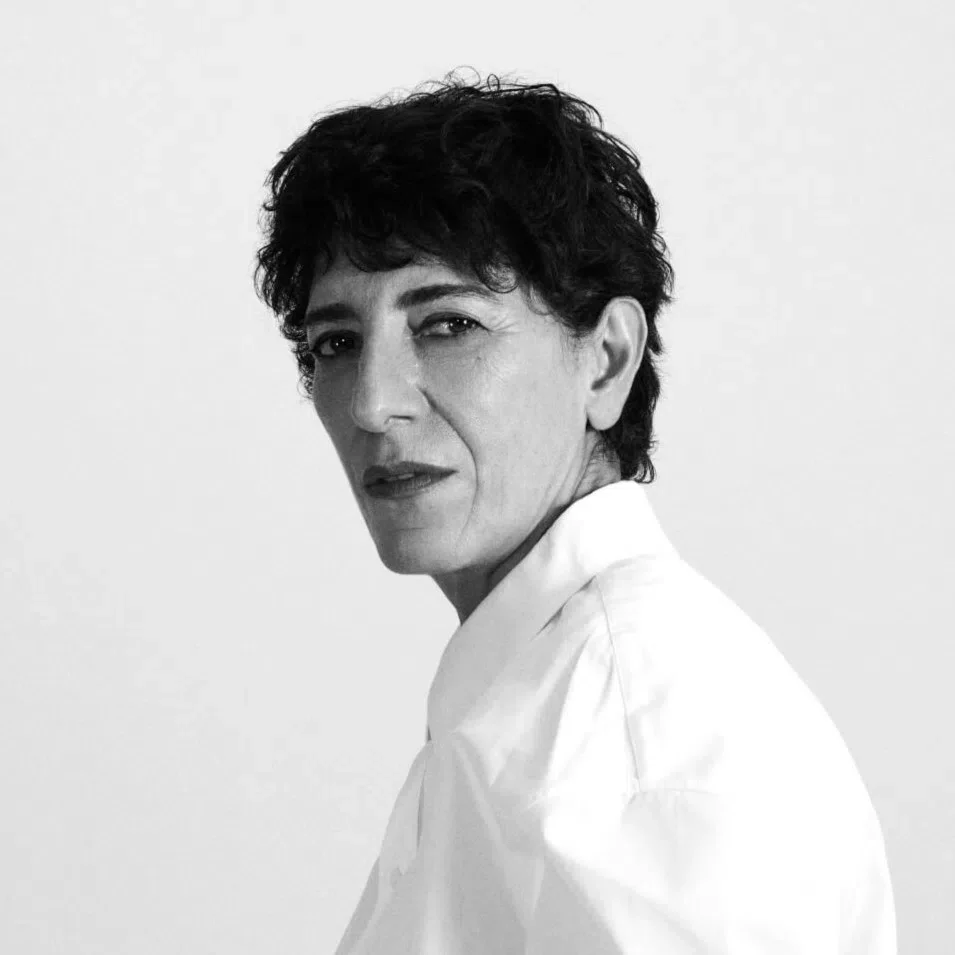
Nairy Baghramian creates sculptures and installations that question the very expectations placed on form, space, and the body. Born in Iran to an Armenian family, she fled post-revolutionary Iran as a teenager and has lived and worked in Berlin since 1984. Her practice stands out for its conceptual rigor and material experimentation. It addresses themes of vulnerability, authority, and the politics of display in contemporary art.
Early Life and Education
Baghramian was born in 1971 in Isfahan, Iran. She grew up in a turbulent period and left the country with her family as a teenager. They settled in Berlin in 1984. There, she studied at the Berlin University of the Arts. In addition to her artistic training, she worked at a women’s shelter founded by her sister. These early experiences shaped her sensitivity to issues of displacement, support, and human fragility.
Developing a Practice
Baghramian began exhibiting in the early 2000s. She quickly gained attention for sculptures that engage with architectural contexts and the history of minimalism and surrealism. Her works often use materials such as silicone, resin, steel, leather, and wax. These evoke body parts, prosthetics, or interior elements while refusing literal representation. She explores how objects lean, depend on supports, or exist in precarious balance. This reflects broader ideas about dependence, autonomy, and social relations.
Major Works and Exhibitions
Key solo exhibitions include presentations at the Nasher Sculpture Center in Dallas, the Aspen Art Museum, the Metropolitan Museum of Art’s facade commission in New York, and the Palacio de Cristal in Madrid. Her site-specific installations, such as those for Art Basel or outdoor sculpture parks, transform public spaces into choreographies of form. Works like the *Modèle vivant* series draw from live modeling traditions. They examine trauma, posture, and the provisional nature of the body. Baghramian has participated in major events including Documenta 14, the Venice Biennale, and Skulptur Projekte Münster.
Recognition
Baghramian has received significant accolades. These include the Nasher Prize in 2022, the Zürich Art Prize, and the Art Basel Awards Gold in 2025. Her pieces are held in prominent collections worldwide, including the Museum of Modern Art, Tate, and Centre Pompidou. Critics praise her ability to blend historical references with fresh, often humorous or critical perspectives on sculpture. She continues to push the medium’s boundaries through ongoing experimentation with site, material, and expectation.